"Je n'oublierai jamais ce ramadan": au Moyen-Orient, un mois sacré sous les bombes
Daily bombings, massive displacements, cash shortages... In the Middle East, millions of Muslims, hit hard by the war, are trying to observe the holy month of Ramadan to the rhythm of sirens and despite the fear.
Just last week, Zainab El Masry was preparing lentil soup and fattoush (an oriental salad) to celebrate iftar, the meal that breaks the fast, with her family. Normally, Ramadan is synonymous with prayer, spirituality, and joyful gatherings at dusk.
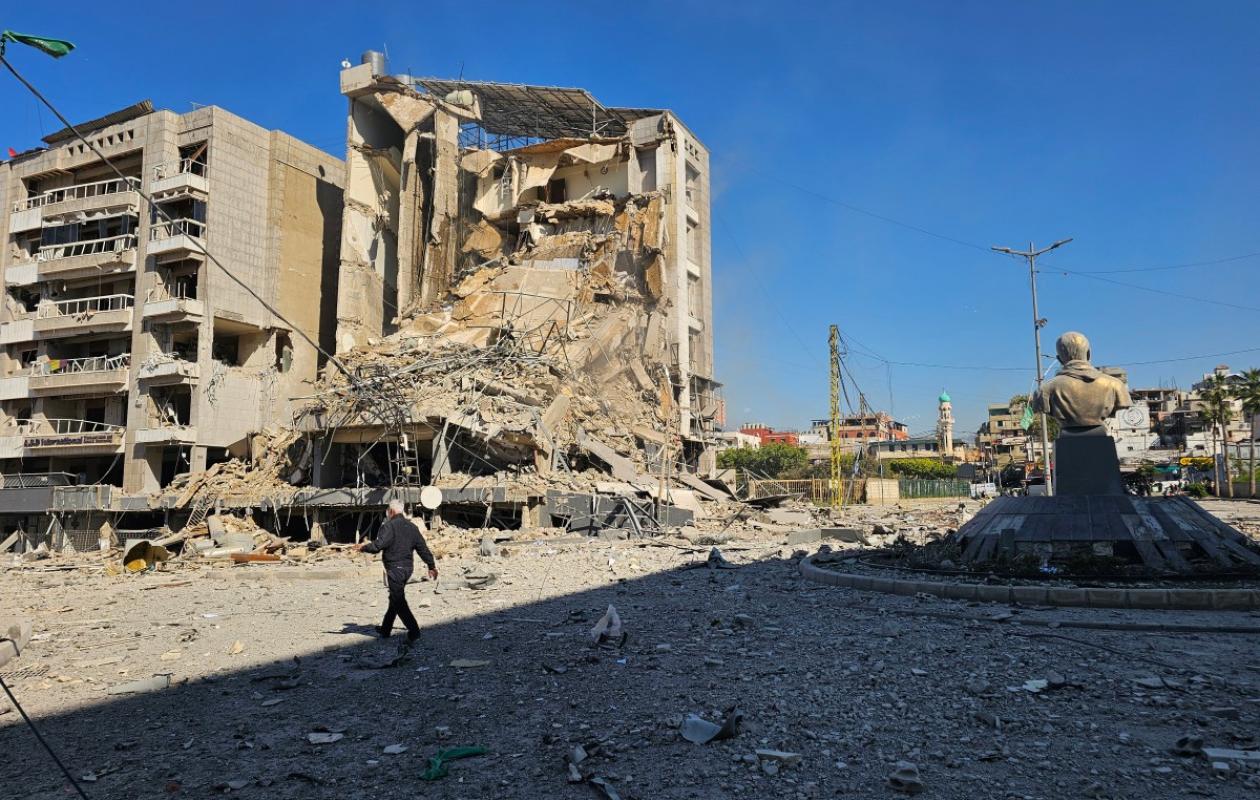
But night falling on Beirut is no longer a celebration: after fleeing their home under Israeli bombing, she sleeps with her husband and their three children on the filthy ground of a square in the Lebanese capital.
Large parts of Lebanon are being shelled by Israel, killing more than 400 people in response to an attack by the pro-Iranian movement Hezbollah, to avenge the death of Ayatollah Ali Khamenei.
"We have nothing to eat or drink, just a little bread," said the 40-year-old woman, her face etched with fatigue. "We're used to war, but this year Ramadan is even sadder."
As the new conflict has forced half a million people onto the roads in this multi-faith country, "everyone would like to fast, pray, perform ablutions, and be able to buy food to cook with," sighs Hala Hawila, 70, amid the cries of children echoing in a school transformed into a shelter.
"I sent my daughter home despite the danger so that she could bring back supplies (...) We have almost exhausted our money, what will we do next?", asks this Shiite woman from the southern suburbs of Beirut.
- "Free coffee" -
In Iran, where war has been everywhere since the air offensive launched at the end of February by Israel and the United States, residents are expressing a mixture of anguish and resentment over rising prices and gasoline shortages.
"Products have become very expensive. For example, the price of a can of oil has gone from 400,000 tomans ($1.56) to 2.2 million tomans ($8.25)," says Mohammad, 38, an employee at a poultry farm in Bandar Abbas (south) who preferred not to give his last name.
But "despite the chaos, the shops are still full. The bombs no longer seem to be enough to break our routine," says Reza, 36, the manager of a cafe the day after strikes pulverized official buildings in Boukan, in the northeast.
"Especially since during Ramadan, people are used to spending their nights in cafes or strolling around town," he continued.
"The real problem is money: banks are no longer distributing cash and many bank cards are blocked," he said. "So, I made a simple decision: for those who can't pay for their coffee, it's free."
In occupied East Jerusalem, the alleyways are almost deserted, especially in the Old City, where the Al-Aqsa Mosque, Islam's third holiest site, has been closed.
Israeli soldiers stationed at the entrances are checking identity cards as part of the state of emergency imposed by the authorities.
Shopkeepers rely on Ramadan to make a profit, but this year, "the situation is desperate," says 83-year-old Abou Imad, fingering his prayer beads in his small shop. "No one from outside enters the (Old) city; only residents have access."
- Shortened prayers -
In the Gulf, worshippers watch anxiously as Iranian missiles and rockets fly overhead. These normally peaceful countries, which host American military bases, are suffering massive reprisals from Tehran.
"Nothing is the same anymore. Our daily lives have been turned upside down," says Hessa Mohamed, 42, who came to participate in collective prayer at a mosque in Bahrain.
Here, as in Kuwait, Qatar or Dubai, streets and shopping centers empty out as soon as the sirens sound and prayers are often shortened, or even limited to the last prayer of the day.
"This Ramadan is marked by mistrust and apprehension," even though people are trying to respect the rituals of the holy month, says Niama Hamdi, a teacher in Kuwait.
Everywhere, conversations revolve around the war. "I will never forget this Ramadan, we are living through it in terrible conditions that we did not choose," Loulwa Hassan confides in Bahrain.
This academic fondly recalls the years when "we eagerly awaited Ramadan." "The current situation deprives us of the joy of seeing our loved ones again," she continues, expressing her "eagerness to resume a normal life."
Ibrahim Ali Ibrahim, a 15-year-old student, is now taking classes remotely, while a drone attack injured another 32 people on Monday in the small Gulf archipelago.
"I'm very tense (...) As soon as the siren sounds, I lose my concentration," the teenager says. "This Ramadan is very different from previous years. I miss my friends and my school."














Commentaires (2)
Participer à la Discussion
Règles de la communauté :
💡 Astuce : Utilisez des emojis depuis votre téléphone ou le module emoji ci-dessous. Cliquez sur GIF pour ajouter un GIF animé. Collez un lien X/Twitter, TikTok ou Instagram pour l'afficher automatiquement.