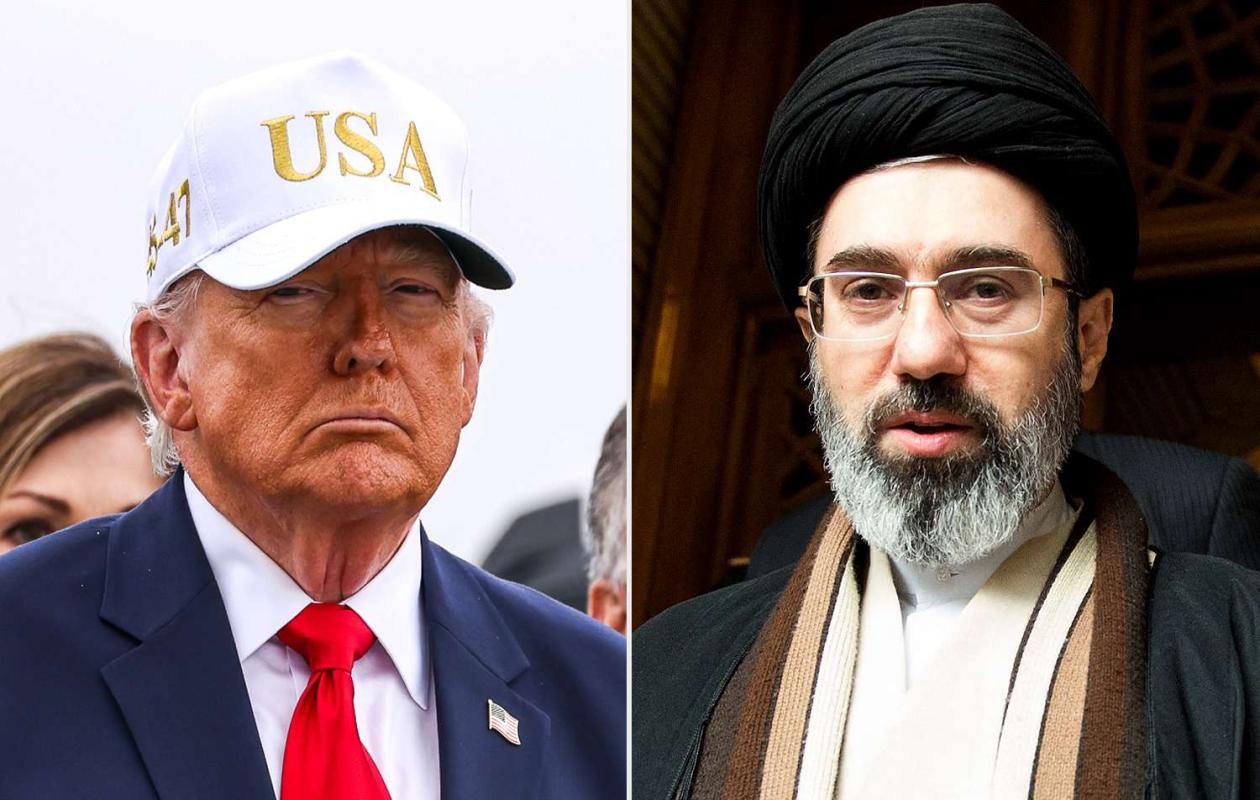
Les Etats-Unis et l'Iran revendiquent chacun la victoire après un cessez-le-feu in extremis
The United States and Iran both claimed victory on Wednesday after agreeing to a two-week ceasefire in exchange for the reopening of the Strait of Hormuz, a truce that Israel said it supported but believed did not apply to Lebanon.
"A total and complete victory. 100 percent. There is no doubt about it," US President Donald Trump told AFP, who contacted him by telephone shortly after the truce was announced.
He stated that the issue of Iranian uranium would be "perfectly resolved," without saying whether he would reiterate his initial threats to destroy Iranian power plants and bridges if the agreement failed.
"Iran has won a great victory," the Supreme Security Council of Iran also proclaimed, stating that "the enemy had suffered an undeniable, historic and overwhelming defeat."
Iranian authorities indicated on Wednesday that talks will begin on Friday with Washington in Pakistan, a key mediator in the Middle East war that began on February 28 and has killed thousands, mainly in Iran and Lebanon.
The Sultanate of Oman, which mediated talks between Iran and the United States before the conflict, called for "intensifying" efforts towards a "lasting end to the state of war" in the region.
In a sign of the fragility of the agreement, two people were injured in Bahrain after an Iranian drone attack, according to authorities, which occurred a few hours after the truce came into effect.
"Provided that the Islamic Republic of Iran accepts the COMPLETE, IMMEDIATE and SECURE OPENING of the Strait of Hormuz, I agree to suspend bombings and attacks against Iran for a period of two weeks," the US president had written a few hours earlier on Truth Social.
He reported "very advanced" discussions aimed at a "long-term" peace agreement with Iran. Tehran has submitted "a 10-point proposal" which "constitutes a viable basis for negotiation," he noted.
The White House then indicated that it was considering "face-to-face discussions" with the Iranians.
The announcement of this ceasefire came an hour before the expiration of the last in a series of ultimatums issued to Iran by Donald Trump, who threatened to eradicate "an entire civilization" if Tehran did not open by 00:00 GMT this strategic maritime passage through which 20% of the world's crude oil passed before the war.
Ormuz under surveillance
For their part, Iranian leaders confirmed that they agreed to reopen the Strait of Hormuz "for a period of two weeks" "if the attacks against Iran cease," Foreign Minister Abbas Araghchi wrote on X.
According to a statement in Persian released by Iranian media, the Iranian military will "monitor" the "limited daily passage of ships" through the Strait during the ceasefire. It also calls for the lifting of sanctions against Iran.
According to this Persian version, the plan proposed by Tehran also provides for Washington to accept uranium enrichment, a mention which is however absent from the English copy transmitted to the UN.
"Iran will engage in negotiations with the American side in Islamabad for a period of two weeks (...)," the Supreme National Security Council added in a statement, specifying that "this does not mean the end of the war" and that this period could be extended "in agreement with both parties."
Markets welcomed the news: oil prices, both WTI and Brent, fell back below $100 a barrel, European gas plunged 20%, and the Tokyo (+5.4%) and Seoul (+7%) stock exchanges surged at the close. However, the return to normal kerosene supplies for the aviation sector will take "several months," warned IATA, the world's leading airline association.
Strikes in Lebanon
Pakistani Prime Minister Shehbaz Sharif stated on X that "Iran and the United States, together with their allies, have agreed to an immediate ceasefire everywhere, including in Lebanon and elsewhere, WITH IMMEDIATE EFFECT," using capital letters at the end of his message.
But Israel, which said it "supported" the American decision to suspend strikes against Iran for two weeks, asserted that this agreement "did not include Lebanon," where it has been at war with the pro-Iranian Hezbollah since March 2, after rocket fire by the movement into its territory.
The Israeli army carried out new strikes on southern Lebanon on Wednesday morning, where eight people were killed in an attack in Sidon shortly before the ceasefire was announced.
The death toll from Israeli strikes in this country since March 2nd exceeds 1,500.
Israel also reported three salvos of Iranian missiles early Wednesday, just after Trump announced the lifting of his ultimatum.
Israeli opposition leader Yair Lapid called the ceasefire a "political disaster," accusing Prime Minister Benjamin Netanyahu of failing to achieve the objectives of the war.
UN Secretary-General Antonio Guterres welcomed the ceasefire, as did many European capitals, and urged the parties to "a lasting peace" in the region.
Iraq also called for the launch of "serious and lasting channels of dialogue", while pro-Iranian Iraqi armed factions announced they were suspending for two weeks attacks against "enemy bases" in the country and the region they had claimed since the beginning of the war.

















Commentaires (9)
Participer à la Discussion
Règles de la communauté :
💡 Astuce : Utilisez des emojis depuis votre téléphone ou le module emoji ci-dessous. Cliquez sur GIF pour ajouter un GIF animé. Collez un lien X/Twitter, TikTok ou Instagram pour l'afficher automatiquement.