L'Iran prêt à une guerre d'usure qui "détruirait" l'économie mondiale
Like its Israeli enemy, Iran asserted on Wednesday that it was ready for a long war, twelve days after the start of the American-Israeli attacks, a regionalized conflict that threatens the oil supply of the world economy.
As oil prices rise, and energy sites are hit in the Gulf, as well as ships in the Strait of Hormuz, a strategic passage for Middle Eastern crude, the American president has, for the second time this week, estimated that the war could end "soon".
Judging that there was "virtually nothing left to strike" in Iran, Donald Trump did not, however, provide any details on his objectives: to destroy Iranian ballistic and nuclear programs, or even to bring down the government.
Displaying their determination, the Iranian Revolutionary Guard Corps, the ideological army of Iran, said they were ready for a long war and to bombard Western interests in order to force Washington to cease its military campaign.
Ali Fadavi, advisor to the commander-in-chief of the Revolutionary Guards, stressed the possibility of a "long-term war of attrition that will destroy the entire American economy as well as the global economy."
On the other side, Israel, which is striking Iran and the pro-Iranian Hezbollah in Lebanon, is displaying a similar determination, with the Defense Minister assuring that there was "no time limit".
- Office evacuation in Dubai -
In the Iranian capital, explosions continue to be heard regularly by AFP journalists. But life goes on.
"We have put our faith in God. For now, there is food in the shops," said Mahvash, 70, who lives in Tehran.
In the Gulf States, airstrikes have also become a daily reality, worrying many governments that are closely monitoring oil prices.
But other sectors are now affected. Following Iranian threats, the American banking giant Citi and the British consulting firms Deloitte and PwC evacuated or closed their offices in Dubai on Wednesday.
Two drones also crashed near Dubai airport, injuring four people.
An Indian freight terminal worker, speaking on condition of anonymity, testified: "It was flying so low that I saw it very clearly. But there was no loud bang when it hit the building."
Iran, ignoring American warnings, also said it had struck two ships in the Strait of Hormuz.
Donald Trump nevertheless promised the press at the White House that "great security" would soon reign in this bottleneck which usually sees a fifth of the world's oil and liquefied natural gas (LNG) production pass through.
Fuel tanks were also hit in Oman, and Saudi Arabia indicated that it had neutralized aircraft targeting the Shaybah oil field.
- Ports -
Americans and Iranians judged that the ports could become "legitimate targets".
The U.S. Central Command (Centcom) on Wednesday called on Iranian civilians to stay away from the ports of the Strait of Hormuz, because if they are "used for military purposes, (they) lose their protected status."
The Iranian armed forces responded that in the event of an attack, "all ports and docks in the region would become legitimate targets."
Tehran had already said the same thing about any oil shipment or ship belonging to the United States, Israel or their allies.
According to the British maritime agency UKMTO, three ships were affected and images obtained by AFP show a Thai bulk carrier engulfed in smoke.
Israelis and Americans, for their part, struck Iranian energy sites 13 times, according to an AFP tally on Wednesday.
And at least 25 Iranian attacks have targeted American sites or sites housing American military personnel in the Middle East, according to an AFP count conducted from February 28 to March 11 at 15:00 GMT.
- Record unlocking -
Faced with the escalation, the 32 member countries of the International Energy Agency (IEA) have decided to draw 400 million barrels from their strategic reserves, the "largest" release in its history.
Following the first G7 summit held by videoconference since the start of hostilities, French President Emmanuel Macron hailed "a clear signal to bring down global prices".
The announcement was anticipated, so around 3:00 PM GMT, the price of Brent crude from the North Sea rose by 3.30% to $90.70.
Inflation, however, is already being felt far from the area of hostilities.
"Diesel has reached a price that is quite critical for us," storms net fisherman David Le Quintrec in Brittany, while unloading his night's catch.
The situation is forcing many countries to react, such as India or Greece, which has capped profit margins on fuel.
- Injured guide -
In Iran, the government continues to defy American-Israeli pressure.
Appointed on Sunday to succeed his father, who was killed on the first day of the war, the new supreme leader Mojtaba Khamenei has still not appeared in public.
He was reportedly "injured" in the conflict, according to state television, which was confirmed by the Iranian ambassador to Cyprus to the Guardian, who mentioned injuries to his limbs.
Emile Hokayem, of the International Institute for Strategic Studies, estimated that he was probably "in a bunker" because Israel would want to "eliminate him quickly".
Tehran also intends to prevent opposition demonstrations, with police chief Ahmad-Reza Radan asserting that his forces had "their finger on the trigger".
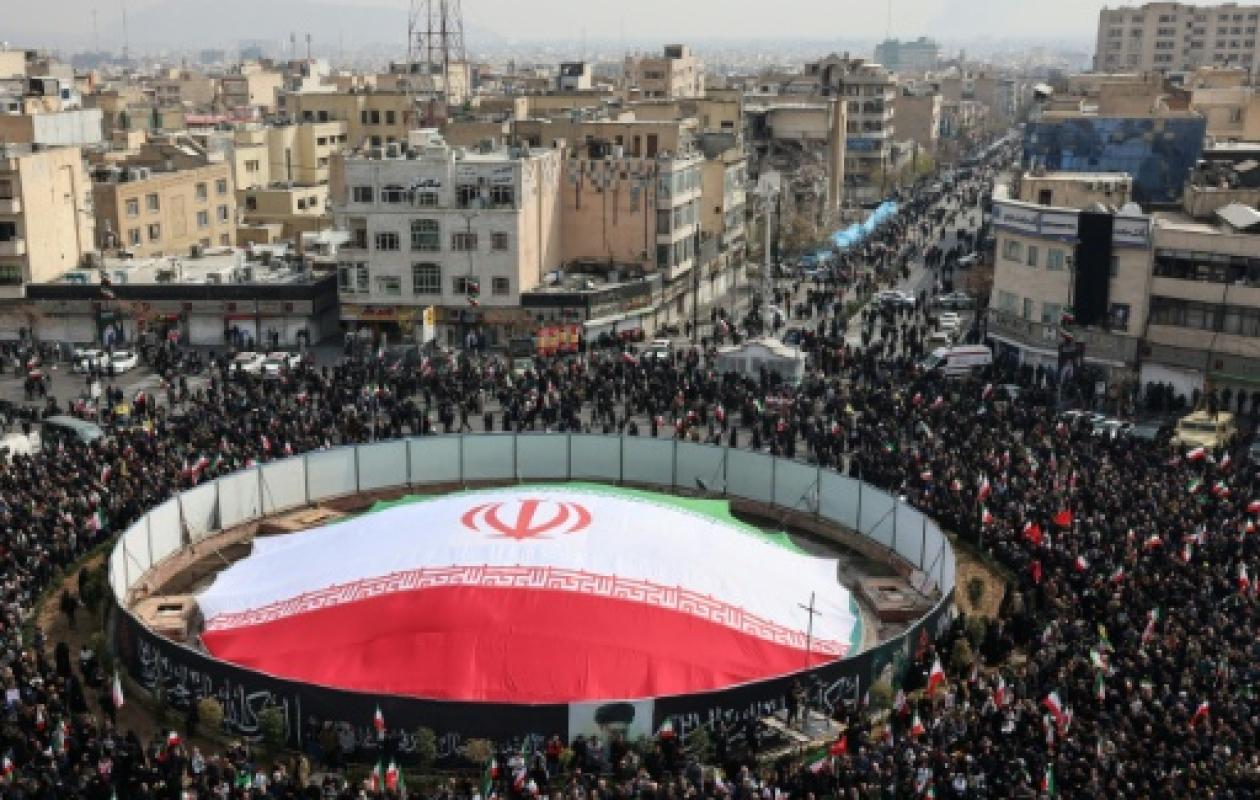
Crowds of pro-government Iranians turned out in the capital, despite the bombings, for the funerals of senior officials, according to AFP journalists, an event overseen by heavily armed special forces.
For its part, Israel continues its attacks on the southern suburbs of Beirut, a Hezbollah stronghold, and elsewhere.
According to a new tally from Lebanese authorities on Wednesday, 634 people have been killed by Israeli operations since March 2, and more than 800,000 people displaced.




















Commentaires (5)
Participer à la Discussion
Règles de la communauté :
💡 Astuce : Utilisez des emojis depuis votre téléphone ou le module emoji ci-dessous. Cliquez sur GIF pour ajouter un GIF animé. Collez un lien X/Twitter, TikTok ou Instagram pour l'afficher automatiquement.