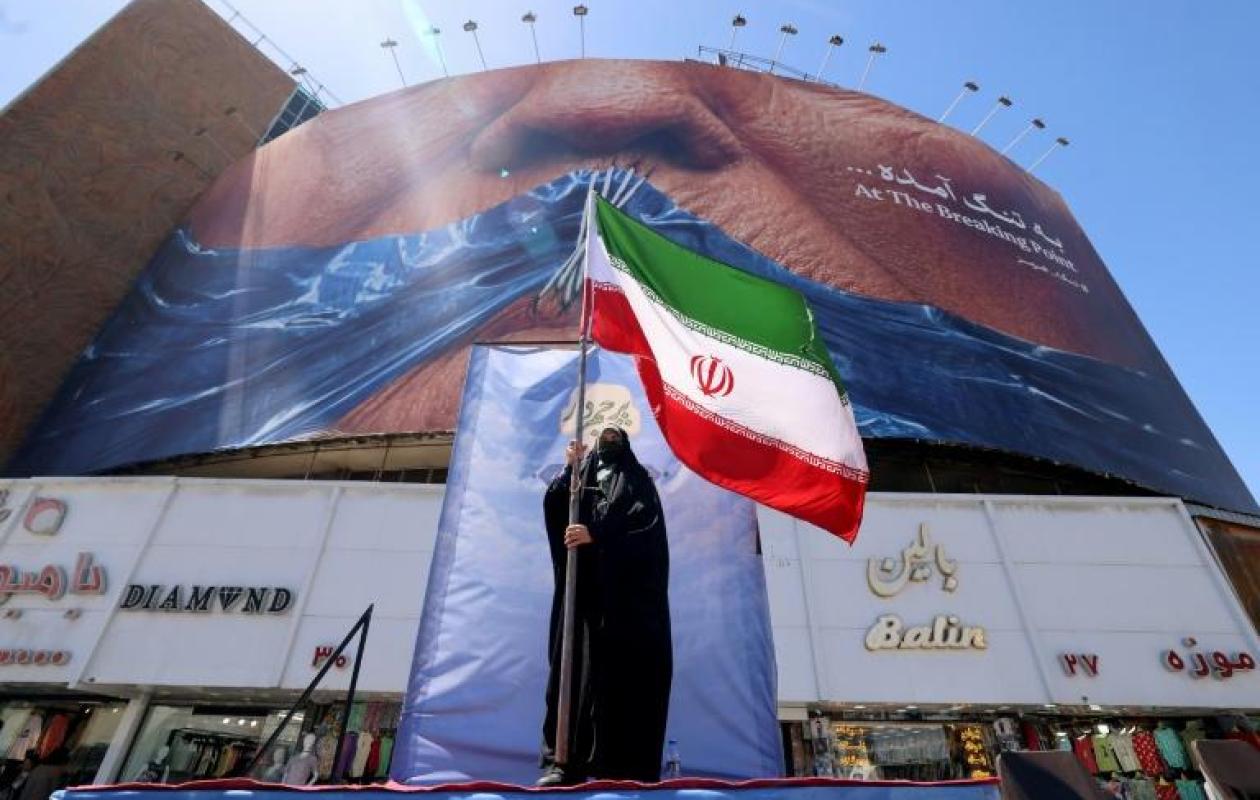
L'Iran refuse tout compromis après le rejet de sa proposition par Donald Trump
Iran reiterated its 14-point proposal to end the war in the Middle East on Tuesday, despite its rejection by the United States. In Lebanon, the Ministry of Health announced the deaths of 13 people in Israeli airstrikes in the south of the country.
The diplomatic impasse continues in the Middle East: the Iranian government on Tuesday, May 12, dismissed the idea of amending its proposals to bring a lasting end to the war, which President Donald Trump deemed fit "to be thrown in the trash".
"There is no alternative but to accept the rights of the Iranian people, as outlined in the 14-point proposal. Any other approach would be futile," wrote the Islamic Republic's chief negotiator, Mohammad Bagher Ghalibaf, on X, more than a month after the establishment of a fragile truce. Ghalibaf, who is also the Speaker of Parliament, challenged the American negotiators, stating that "the longer they drag their feet, the more American taxpayers will pay," at a time when oil prices remain at consistently high levels.
These statements sound like a response to Donald Trump, who the day before had dismissed Iranian proposals and likened the ceasefire in effect since April 8 to a patient "on life support".
The contents of the initial American proposal have not been made public. According to some media outlets, it contains a memorandum of understanding to end the fighting, which has claimed thousands of lives since the start of the war on February 28, and to establish a framework for negotiations on the Iranian nuclear issue.
In its response, Iran called for an immediate end to hostilities in the region, including in Lebanon, where Israeli and pro-Iranian Hezbollah attacks continue despite another ceasefire. Tehran also demanded an end to the US naval blockade of its ports and the unfreezing of Iranian assets held abroad, according to the Foreign Ministry.
Emmanuel Macron wants to launch an initiative at the UN on Hormuz
On the American side, Donald Trump brandished the threat of relaunching his operation to protect ships from passing through the Strait of Hormuz, which is blocked by Iran.
During a visit to Kenya, French President Emmanuel Macron reiterated the need for "the unconditional reopening, without tolls, of the Strait of Hormuz." He stated that France would launch an initiative at the UN to establish a framework for a completely neutral and peaceful mission to this end.
In Tehran, Maryam, a 43-year-old painter, is despairing of the situation: she tells an AFP journalist based in Paris that she is "living from day to day" because "the future is very uncertain".
All eyes are now on President Trump's visit to Beijing, scheduled to begin on Wednesday, where he is to meet with his counterpart Xi Jinping. According to the US administration, he intends to pressure China, the main importer of Iranian oil, to use its influence over Iran.
Donald Trump said he expected a "long conversation" with Xi Jinping about the war. Then, a few minutes later, he declared the exact opposite: "We have a lot of things to discuss. And I wouldn't say Iran is one of them." The US president asserted that he didn't "need help with Iran" anyway.
13 dead in Lebanon
The near paralysis of the Strait of Hormuz, strategic for the global trade of hydrocarbons, is again driving up the price of black gold on Tuesday, to nearly $108 a barrel of Brent, around 8 p.m. GMT.
"Iran should not use the strait as a weapon to exert pressure," denounced Sheikh Mohammed bin Abdulrahman Al Thani, Prime Minister of Qatar, who is at the forefront of this blockade.
In Lebanon, the Ministry of Health announced on Tuesday the deaths of 13 people, including a soldier and two paramedics, in Israeli airstrikes that targeted three locations in the south of the country. The ministry had previously announced that, since the ceasefire was implemented on April 17, 380 people had died in Lebanon in Israeli airstrikes.
New talks intended to pave the way for peace negotiations are scheduled to take place Thursday and Friday in Washington between the two countries. But Hezbollah leader Naim Qassem stated on Tuesday that the issue of his organization's disarmament, demanded by Israel, was not part of the "negotiations with the enemy."













Commentaires (2)
Participer à la Discussion
Règles de la communauté
💡 Astuce : Utilisez des emojis depuis votre téléphone ou le module emoji ci-dessous. Cliquez sur GIF pour ajouter un GIF animé. Collez un lien X/Twitter, TikTok ou Instagram pour l'afficher automatiquement.
Se connecter
Commentez avec votre profil, votre photo, et soyez averti des réponses.