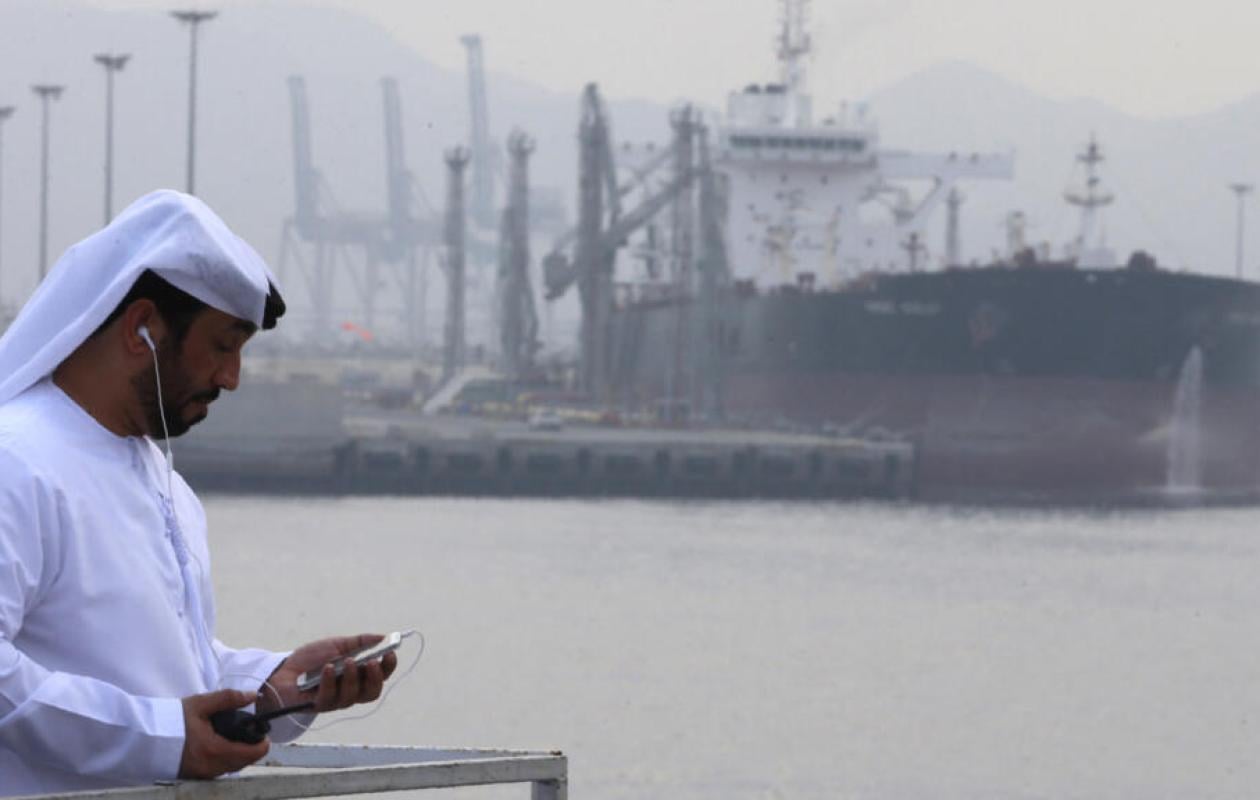
Pétrole: les Emirats annoncent leur retrait surprise de l'Opep
The United Arab Emirates announced on Tuesday their surprise withdrawal from the Organization of the Petroleum Exporting Countries (OPEC) in the name of "national interest", marking a setback for the alliance, already shaken by the war in the Middle East.
The Gulf country, which is among the world's largest producers, will leave the group led by Riyadh and its extension OPEC+ which also includes Russia, from May 1, the official news agency Wam reported.
"This decision reflects the long-term strategic and economic vision of the United Arab Emirates," Wam stated, amid "accelerated investments in energy production."
The Emirates, which joined the cartel in 1967, have "made significant contributions and even greater sacrifices in the interest of all. But the time has come to focus our efforts on what dictates our national interest," she added.
This break from an OPEC dominated by Saudi Arabia comes at a time when disputes between the two Gulf powers, long allies, have come to a head in recent months.
From Libya to Yemen and the Horn of Africa, Riyadh views the regional ambitions of its small neighbor with suspicion, according to analysts.
Now their discord is also playing out on the economic front.
After Qatar's departure in 2019, followed by Ecuador and Angola, Abu Dhabi's announcement comes as a surprise, even though the monarchy, eager to produce more to generate more revenue, had made a dissenting voice heard within the group in recent years.
It had even received preferential treatment to increase its production quotas more than its partners. But these concessions were clearly not enough, at a time when the impact of the war in the Middle East poses new challenges.
The Emirates are among the countries most affected by the attacks carried out by Iran in the Gulf in retaliation for the Israeli-American offensive launched on February 28 against the Islamic Republic.
The conflict has brought the Strait of Hormuz, through which a fifth of the world's crude oil normally passes, to a virtual standstill, causing prices to skyrocket. It has also exposed divisions between the Gulf neighbors, with Abu Dhabi adopting a more aggressive stance towards Tehran.
Given the current restrictions in the strait, the United Arab Emirates no longer wants to be subject to quotas once the situation returns to normal, according to a source close to the Ministry of Energy.
For Jorge Leon, an analyst at Rystad Energy, this withdrawal marks a major turning point for OPEC. "Along with Saudi Arabia, it is one of the few members to have significant reserve capacity — the mechanism by which the group exerts its influence on the market," he told AFP.
While the effects may be limited in the short term, due to disruptions related to the war, "this will translate in the longer term into a structural weakening of OPEC," he believes.
This raises "questions about the sustainability of Saudi Arabia's role" and suggests a "potentially more volatile" oil market.
Founded in 1960, OPEC, which currently has 12 members under Riyadh's leadership pending the departure of the Emirates, formed an alliance in 2016 with ten other countries, including Moscow, in the form of an agreement called OPEC+, with the aim of limiting supply and supporting prices in the face of challenges posed by American competition.
Before the Middle East conflict, the United Arab Emirates ranked fourth among the 22 producers in the alliance, behind Saudi Arabia, Russia and Iraq, with approximately 3.5 million barrels per day (mb/d).
According to David Oxley, an expert at Capital Economics, "when energy flows return to normal, the departure of OPEC+ could lead the United Arab Emirates to pump an additional 1 million barrels."















Commentaires (2)
Participer à la Discussion
Règles de la communauté :
💡 Astuce : Utilisez des emojis depuis votre téléphone ou le module emoji ci-dessous. Cliquez sur GIF pour ajouter un GIF animé. Collez un lien X/Twitter, TikTok ou Instagram pour l'afficher automatiquement.