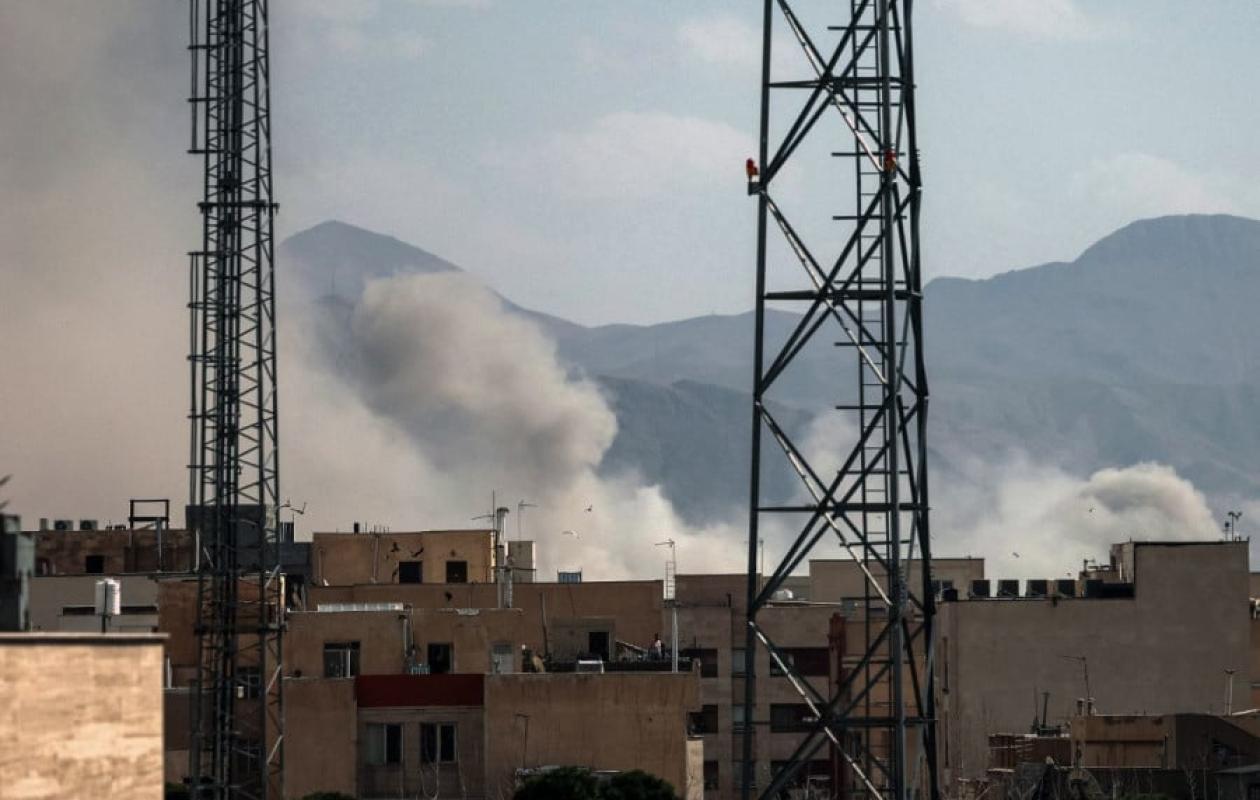
Frappes contre l'Iran: quel impact sur le pétrole ?
The conflict that began on Saturday with US and Israeli strikes against Iran could severely disrupt the global supply of black gold and send barrel prices soaring to levels not seen for years.
Iran, whose economy is largely dependent on oil revenues, is among the world's top ten producers with approximately 3.1 million barrels per day (mb/d), according to the Organization of the Petroleum Exporting Countries (OPEC).
It produced almost twice as much in the 1970s, before the 1979 Islamic Revolution and the imposition of various waves of US economic sanctions, including the recent "maximum pressure" policy on Iranian oil sought by Donald Trump.
"In 1974, Iran was the third largest producer in the world after the United States and Saudi Arabia, ahead of Russia," recalls Arne Lohmann Rasmussen, an analyst at Global Risk Management, interviewed by AFP.
Its black gold is relatively easy to extract, with "a cost that can be as low as $10" a barrel, or even less, according to the analyst, a price that only the Gulf countries manage to compete with, when it takes between $40 and $60 to produce a barrel of Canadian or American oil.
The country is believed to have the world's third largest crude oil reserves, making it a strategic player in the long term, and US strikes on its well-maintained infrastructure would not be without consequences.
The country currently exports between 1.3 and 1.5 million barrels per day, but because of US sanctions, its commercial outlets are very limited: more than "80% of its exports end up in China", says Ole Hansen, an analyst at Saxo Bank.
The main risk to the oil market remains that of a blockage of the Strait of Hormuz, which connects the Gulf to the Indian Ocean.
This passage, the main shipping route connecting the rich oil-producing countries of the Middle East to the rest of the world, is "de facto closed", the Revolutionary Guards said on Saturday, according to Iranian media.
Around 20 million barrels of crude oil were circulating there daily in 2024, according to the U.S. Energy Information Administration (EIA), the equivalent of nearly 20% of global liquid oil consumption.
The strait is particularly vulnerable due to its narrow width, approximately 50 kilometers, and its depth, which does not exceed 60 meters.
And "even a simple doubt about safety in the strait would cause many ships, for insurance reasons, to encounter difficulties in crossing it, because premiums would increase sharply," emphasizes Arne Lohmann Rasmussen of Global Risk Management.
According to data shared by the specialist website Marine Traffic, some of the oil tankers turned back or stopped before passing through the Strait of Hormuz on Saturday.
Washington, for its part, called on commercial ships to "stay away" from the Gulf.
But "within a few days, American air and naval superiority could restore a level of security allowing the resumption of commercial shipping" in the area, according to Jakob Larsen, head of safety and security at Bimco, one of the world's leading shipowners' associations.
No country is spared from Iranian reprisals in a region where the United States has military bases.
Major oil producers, the United Arab Emirates, Kuwait, and Iraq were all targeted by Tehran's airstrikes. Several explosions were heard in Saudi Arabia.
"The risk of escalation is greater than that seen in recent regional conflicts," says Jason Bordoff, president of the Center on Global Energy Policy at Columbia University.
When markets open after the weekend, oil prices could surge due to the risk of energy supply disruptions.
"More than $100 a barrel soon," Kremlin economic advisor Kirill Dmitriev asserted on X. Such a level has not been seen since the start of the war in Ukraine four years ago.
For Iran, driving up the price of a barrel of oil would also be a way to put pressure on Washington, especially since Donald Trump has promised his electorate low energy prices.
A meeting is scheduled for Sunday morning between eight members of the Organization of the Petroleum Exporting Countries and its allies (OPEC+).




















Commentaires (18)
Participer à la Discussion
Règles de la communauté :
💡 Astuce : Utilisez des emojis depuis votre téléphone ou le module emoji ci-dessous. Cliquez sur GIF pour ajouter un GIF animé. Collez un lien X/Twitter, TikTok ou Instagram pour l'afficher automatiquement.