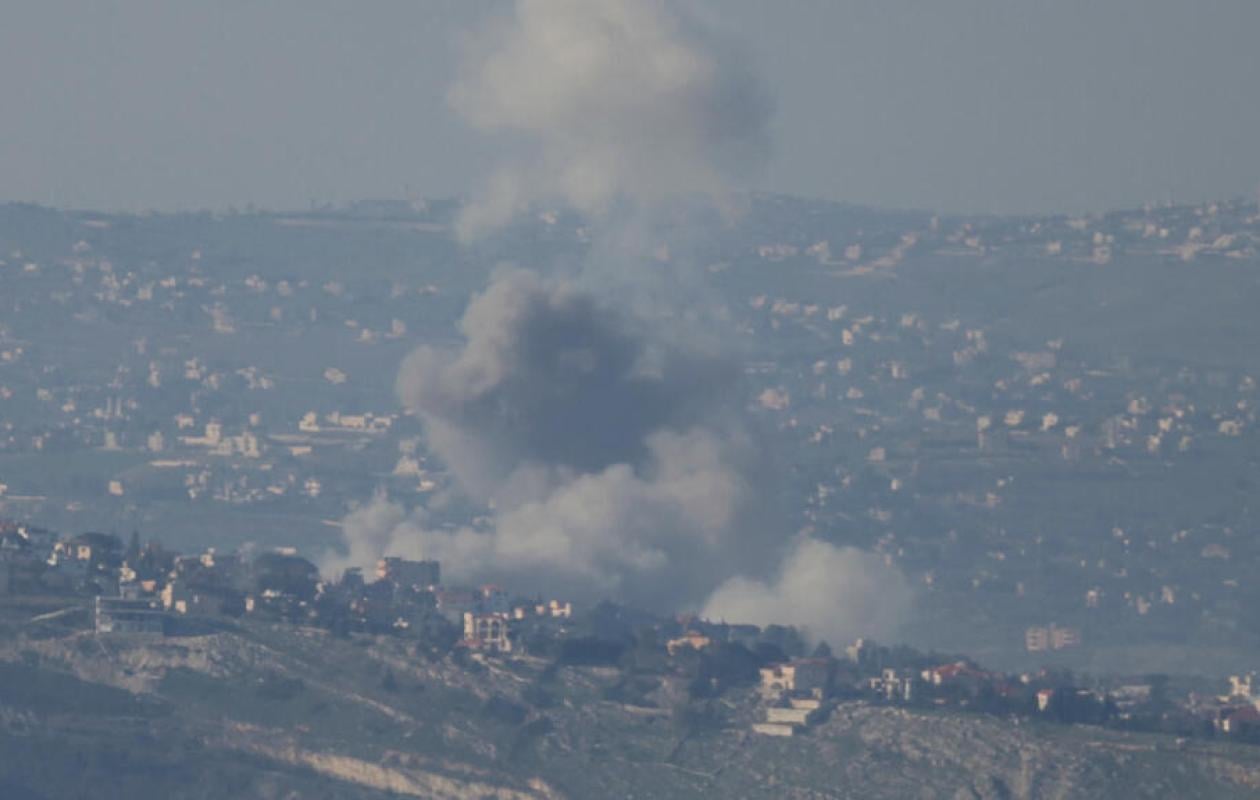
Le Moyen-Orient s'embrase, du Golfe au Liban
The war in the Middle East worsened and expanded on Monday on multiple fronts with new US and Israeli raids on Iran, which continues to target Gulf countries and even European Union territory in Cyprus.
On the third day of the war, each side displayed its determination to continue hostilities and the Gulf countries threatened to retaliate if necessary against Iranian "aggression".
Israel has expanded its operations in Lebanon, carrying out deadly mass strikes there in response to an attack by the Shiite movement Hezbollah in support of Tehran.
In Iran, violent explosions rocked various districts of Tehran. Strikes were also reported in the center and west of the country.
"They are hitting very hard today. Every two or three hours, and it lasts about half an hour. The windows are shaking. Almost everyone is giving in to fear," Elnaz, a 39-year-old resident of Tehran, told AFP.
The capital has the air of a ghost town, deserted by many of its inhabitants. The only signs of activity are customers stocking up on supplies in the few open shops and motorists waiting in line at petrol stations.
In some neighborhoods "where there have been attacks, people are understandably afraid (...) But we try to get together in the evening to play cards, drink wine," says Nastaran, 33. But "our mothers are afraid."
In Lebanon, the Lebanese government reacted strongly to Hezbollah's entry into action against Israel, which risks provoking a new deadly war after the one in 2023-2024.
He proclaimed the "immediate ban" on all military activities of the Shiite militia.
In response, the head of Hezbollah's parliamentary bloc, Mohammad Raad, denounced "the government's boasting," "while the Lebanese were waiting for a decision rejecting the aggression" from Israel.
The Israeli army stated on Monday evening that "all options were on the table," when asked about the possibility of a ground attack against Hezbollah.
The Islamic Republic continued to launch missiles and drones toward Israel, which extended the closure of schools and offices and the ban on gatherings until Saturday. Explosions were heard repeatedly in Jerusalem.
According to the Revolutionary Guards, Iran has "attacked 60 strategic targets and 500 military targets" belonging to the United States and Israel since Saturday, including the offices of Prime Minister Benjamin Netanyahu.
The Islamic Republic's ideological army, the Revolutionary Guards, claimed responsibility for the attack on an oil tanker, presented as being linked to the United States, in the Strait of Hormuz, and again targeted the wealthy Gulf countries, which host several American military bases.
But "Iran's defensive response against American military bases (...) should not be considered an Iranian attack against these countries," argued its foreign minister, Abbas Araghchi.
Qatar, however, shot down two bombers from Iran - a first since the start of the war - after drone attacks on sites belonging to its company QatarEnergy, which suspended its production of liquefied natural gas (LNG).
Kuwait was among the hardest hit. Thick black smoke rose in the morning over the American embassy and a power plant in the north.
In Abu Dhabi, a fire broke out at a fuel storage site targeted by a drone.
AFP journalists also witnessed explosions in Saudi Arabia, Bahrain and the United Arab Emirates, where Dubai airport suspended all flights.
"We are waiting to be able to leave and above all, we are waiting for information," Raphaëlle, a 37-year-old French woman confined to her hotel, told AFP.
In Cyprus, the EU country closest to the Middle East, a British base was targeted by three drones fired from Lebanon, one of which hit a runway, leading to evacuations in the south of the island.
London announced on Sunday that it would allow the United States to use its British bases in the war against Iran, for a "defensive" purpose.
Faced with the expansion of a multifaceted conflict, anxiety has gripped financial markets, driving up hydrocarbon and dollar prices. International stock exchanges posted significant losses on their first day of trading since the start of hostilities, but without succumbing to panic.
Despite the deaths of numerous Iranian officials, including Supreme Leader Ali Khamenei, the head of the Supreme National Security Council, Ali Larijani, affirmed that his country would fight "whatever the cost" to "fiercely defend" its "6,000-year-old civilization."
"Iran, unlike the United States, has prepared itself for a long war," he declared, rejecting any negotiations with Washington.
Israel warned that "many days" of war are looming. Donald Trump, for his part, anticipates "four to five weeks," while asserting that the United States could "go well beyond that."
The US president also stated that he would not hesitate to send ground troops "if necessary".
Following the announcement of the death of Ali Khamenei, who ruled Iran with an iron fist for nearly 37 years, the Iranian government called on the population to gather Monday evening across Tehran to pay him tribute.
Rallies were held in various cities across the country, according to images from Iranian television.


















Commentaires (3)
Participer à la Discussion
Règles de la communauté :
💡 Astuce : Utilisez des emojis depuis votre téléphone ou le module emoji ci-dessous. Cliquez sur GIF pour ajouter un GIF animé. Collez un lien X/Twitter, TikTok ou Instagram pour l'afficher automatiquement.