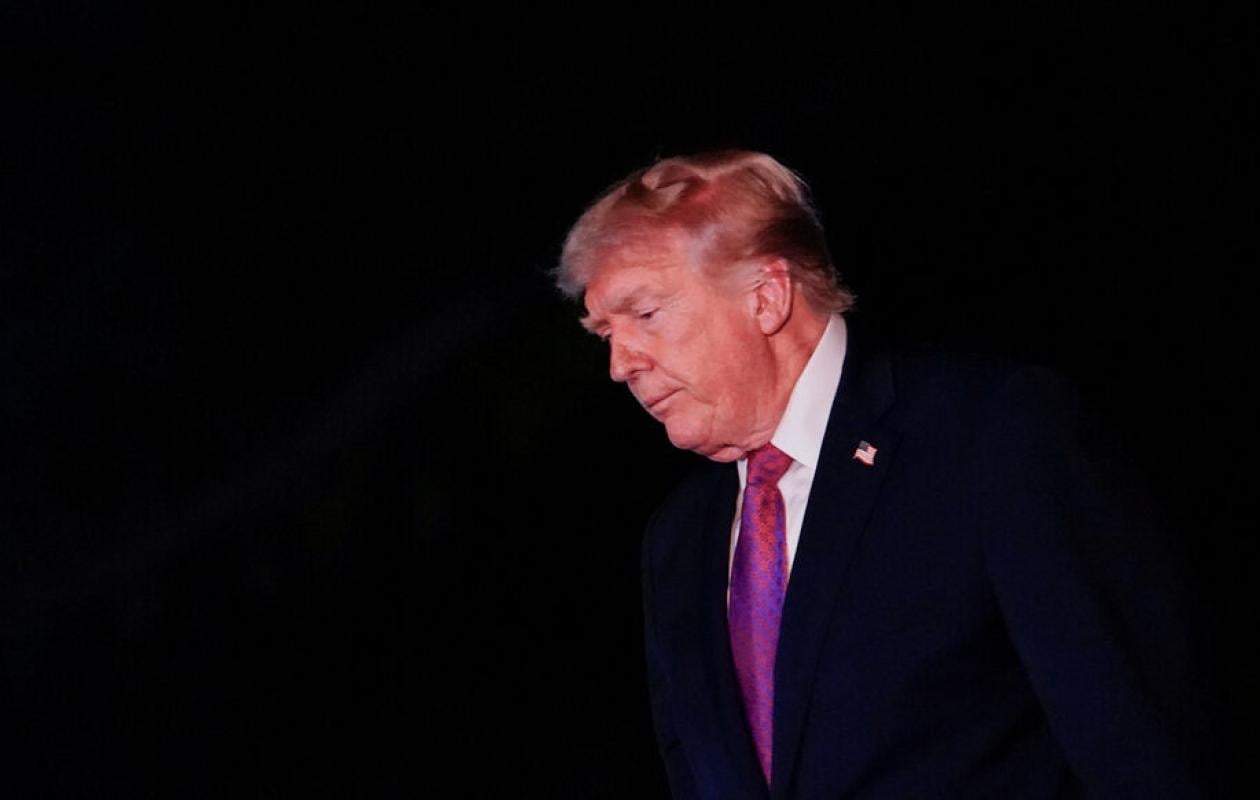
Trump envoie une délégation au Pakistan lundi et menace de nouveau l'Iran
Three days before the ceasefire expired, Donald Trump announced the dispatch of an American delegation to Pakistan on Monday to revive peace talks with Iran, while brandishing new threats against the enemy country's infrastructure in the event of failure.
"My representatives are going to Islamabad (...) — they will be there tomorrow night for negotiations," the US president wrote Sunday on his Truth Social platform.
He added that he was offering Iran a "reasonable deal" and that if they refused, "the United States would destroy all power plants and bridges in Iran. NO MORE PLAYING THE GOOD GUYS!"
Tehran, for its part, has not confirmed a date for the resumption of talks.
Unsuccessful talks had taken place on April 11, also in Pakistan, with an American delegation led by Vice President JD Vance.
Roads closed, traffic restrictions, armed guards: in the Pakistani capital, security was visibly reinforced on Sunday, AFP journalists observed.
On the Iranian side, the powerful Speaker of Parliament, Mohammad Bagher Ghalibaf, head of the negotiating team, warned that a peace agreement with the United States was still a long way off.
"We are still far from having concluded the debate," he said. "We have made progress, but many differences remain and some fundamental points are still unresolved," he added.
During the Islamabad meeting, at an unprecedented level between the two countries since the 1979 Islamic Revolution, "we stressed that we have absolutely no confidence in the United States," Mr. Ghalibaf emphasized.
In Tehran, under a rainy sky, residents patiently endured massive traffic jams on Sunday, a sign of a certain return to normalcy. But anxiety remains, and uncertainty about the coming days dominates conversations.
Distrust of Washington is strong in the country, which was the target of Israeli-American strikes in June 2025 and then from February 28 to April 8, at a time when Iran and the United States were engaged in a series of discussions.
The last war engulfed the Middle East, caused thousands of deaths, mainly in Iran and Lebanon, and severely disrupted the global economy.
Although the bombings have stopped, the blockade persists in the Strait of Hormuz.
Faced with the continued US blockade of its ports, Iran announced on Saturday that it was regaining "strict control", reversing its decision of the previous day to reopen this maritime route through which normally a fifth of the world's oil and gas trade passes.
Shortly afterwards, at least three merchant ships attempting to cross the strait came under fire.
These attacks are "a total violation of the ceasefire!", Donald Trump protested, with Iran in turn blaming Washington for the naval blockade, an act deemed "illegal and criminal".
US President Donald Trump had denounced it as "blackmail".
Transit through the Strait was at a standstill on Sunday, according to the Marine Traffic website. Two LNG carriers approached the Iranian island of Larak early in the morning before turning back, according to data from this ship movement tracking platform.
The announcement of the Strait's reopening on Friday boosted financial markets and triggered a sharp drop in oil prices. But the renewed tightening of trade tensions risks causing turmoil on Monday when talks resume.
Donald Trump asserted that the main sticking points had been resolved, particularly regarding the nuclear issue, which lies at the heart of the disputes between the two countries. According to him, Iran has agreed to hand over its highly enriched uranium, a crucial matter, a claim Tehran has denied.
"Trump says that Iran should not use its nuclear rights (...) What makes him want to deprive Iran of its rights?" Iranian President Massoud Pezeshkian asked on Sunday, as quoted by the Isna news agency.
The Islamic Republic, which denies wanting to acquire the atomic bomb, defends its right to civilian nuclear power.
In Lebanon, the other front of the war, the situation remains very unstable. A French soldier was killed on Saturday and three others were wounded, two seriously, in an ambush against UN peacekeepers in the south of the country.
The attack, which occurred the day after a ten-day ceasefire came into effect in Lebanon, was attributed to the pro-Iranian Hezbollah, which denied any involvement.
Despite the truce, the Israeli army remains present on Lebanese soil: it has established a "yellow line" of demarcation in the south of the country, as in the Gaza Strip, and claims to have "eliminated a terrorist cell" operating near its troops. It also announced the deaths of two of its soldiers in the region since Friday.
Many residents, displaced by the strikes, seem hesitant to return home, given the fragility of the ceasefire that suspended hostilities that have been ongoing since March 2.
"If we return permanently, we are afraid of losing our place in the school where we have taken refuge," in the event of renewed strikes, says Hassan, 29, in the capital.










Commentaires (14)
Participer à la Discussion
Règles de la communauté :
💡 Astuce : Utilisez des emojis depuis votre téléphone ou le module emoji ci-dessous. Cliquez sur GIF pour ajouter un GIF animé. Collez un lien X/Twitter, TikTok ou Instagram pour l'afficher automatiquement.