Etats-Unis : Trump impose un droit de douane mondial de 10 % après une sévère réprimande judiciaire
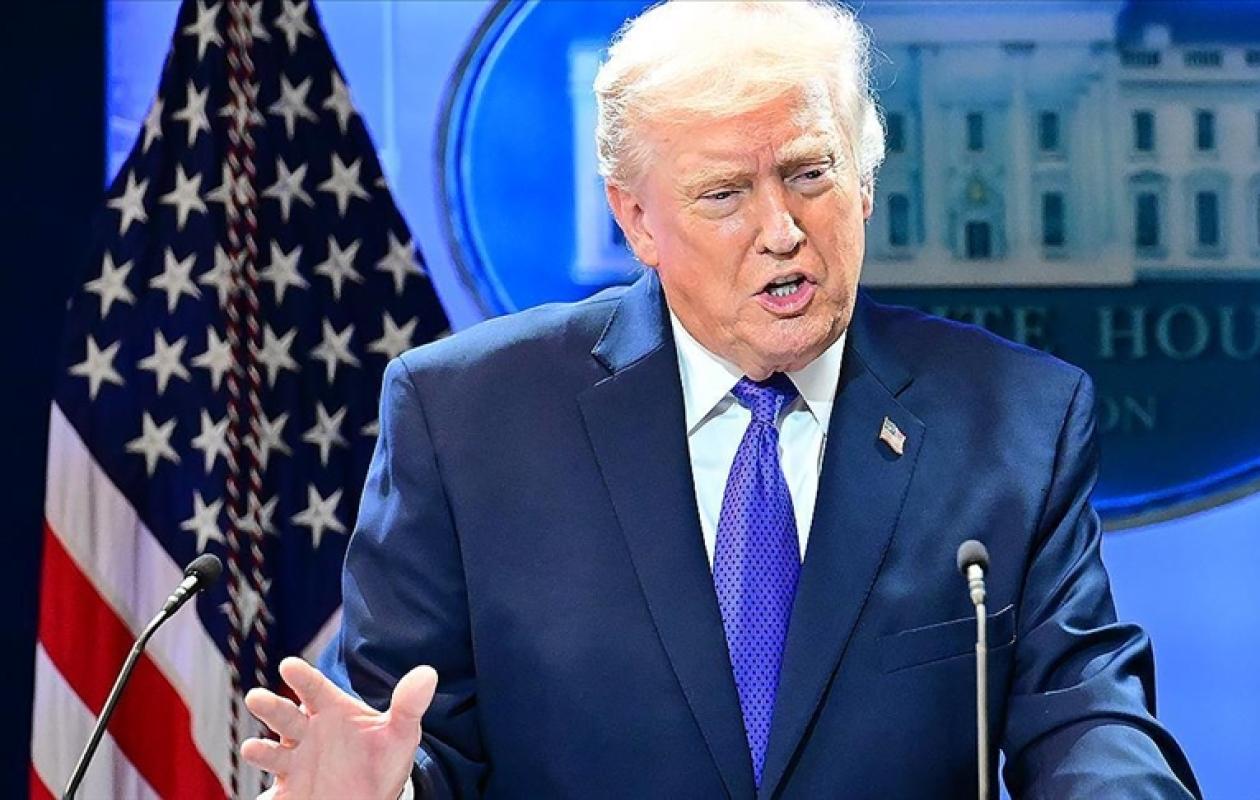
Donald Trump announced on Friday that he had signed an executive order imposing a new 10% global tariff, after lashing out at the Supreme Court justices who struck down his tariff policy.
The decree will take effect on February 24, for a period of 150 days, with exemptions for certain sectors, including the pharmaceutical industry, as well as for goods entering the United States under the United States-Mexico-Canada Agreement, according to a White House statement.
These new rates also apply to countries or blocs that have signed trade agreements with Washington, such as the European Union (EU), Japan, South Korea or Taiwan, which had, for example, accepted a maximum rate of 15% customs surtax.
The 10% does not apply to products subject to sectoral tariffs, nor to Canadian and Mexican products imported into the United States under the North American Free Trade Agreement (CUSMA).
Speaking of a "terrible decision," the US president had previously attacked the judges who ruled against his tariffs, accusing the Court of having bowed to "foreign influences" during an impromptu press conference at the White House.
"Powers" and "counter-powers"
Financial markets reacted favorably, both in Europe and the United States, but with measured enthusiasm. E-commerce giants such as Amazon and Shopify were among the main beneficiaries.
The United States' main trading partners welcomed the news with interest but caution.
French President Emmanuel Macron welcomed this, judging it "good" that there are "powers and counter-powers in democracies".
"We want to continue exporting (...) and do so with the fairest rules possible (...) and not be subject to unilateral decisions," Mr. Macron said on Saturday, adding that it is necessary "to be in a logic of appeasement."
According to the decision rendered by a majority of six out of nine judges, Donald Trump cannot justify these tariffs by an economic emergency.
This strong opinion is all the more remarkable given that the Supreme Court is composed mostly of conservative judges and has repeatedly sided with Donald Trump.
Donald Trump imposed these tariffs based on a 1977 law that theoretically allowed the executive branch to act in the economic sphere without prior approval from Congress when an "economic emergency" was identified.
"Victory for consumers"
But according to Chief Justice John Roberts, the president must "justify clear authorization from Congress" to implement tariffs.
"This is a victory for American consumers," declared Senate Majority Leader Chuck Schumer. His counterpart in the House of Representatives, Hakeem Jeffries, called on Donald Trump to "refrain from any further unilateral action on tariffs."
The Speaker of the House, Republican Mike Johnson, assured that "Congress and the government will determine the best course of action in the coming weeks."
This decision opens the way to possible refunds of surcharges already paid by companies.
When asked about this, Donald Trump stressed that this issue had "not been addressed" by the Court and believed it would occupy the courts for years.
The tariffs collected by US authorities and targeted by the Supreme Court decision have exceeded $130 billion by 2025, according to analysts.
One of the dissenting judges, Brett Kavanaugh, notably justified his position by the fact that the decision "says nothing about how the government should proceed to repay the billions collected."
"It's going to be chaos," he warned.
Trade agreements
Announced in April, the tariffs targeted countries with which the United States had a trade deficit in goods, with the American president seeing them as a tool to rebalance them.
Donald Trump's objective was also to provide additional resources to the federal government to compensate for tax cuts.
However, it has partially reversed course by adding exceptions for a number of products, particularly those that cannot be manufactured or grown in the United States.
These surtaxes had also served as a basis for negotiations for the signing of trade agreements with the United States' main partners.
AFP


















Commentaires (1)
Participer à la Discussion
Règles de la communauté :
💡 Astuce : Utilisez des emojis depuis votre téléphone ou le module emoji ci-dessous. Cliquez sur GIF pour ajouter un GIF animé. Collez un lien X/Twitter, TikTok ou Instagram pour l'afficher automatiquement.