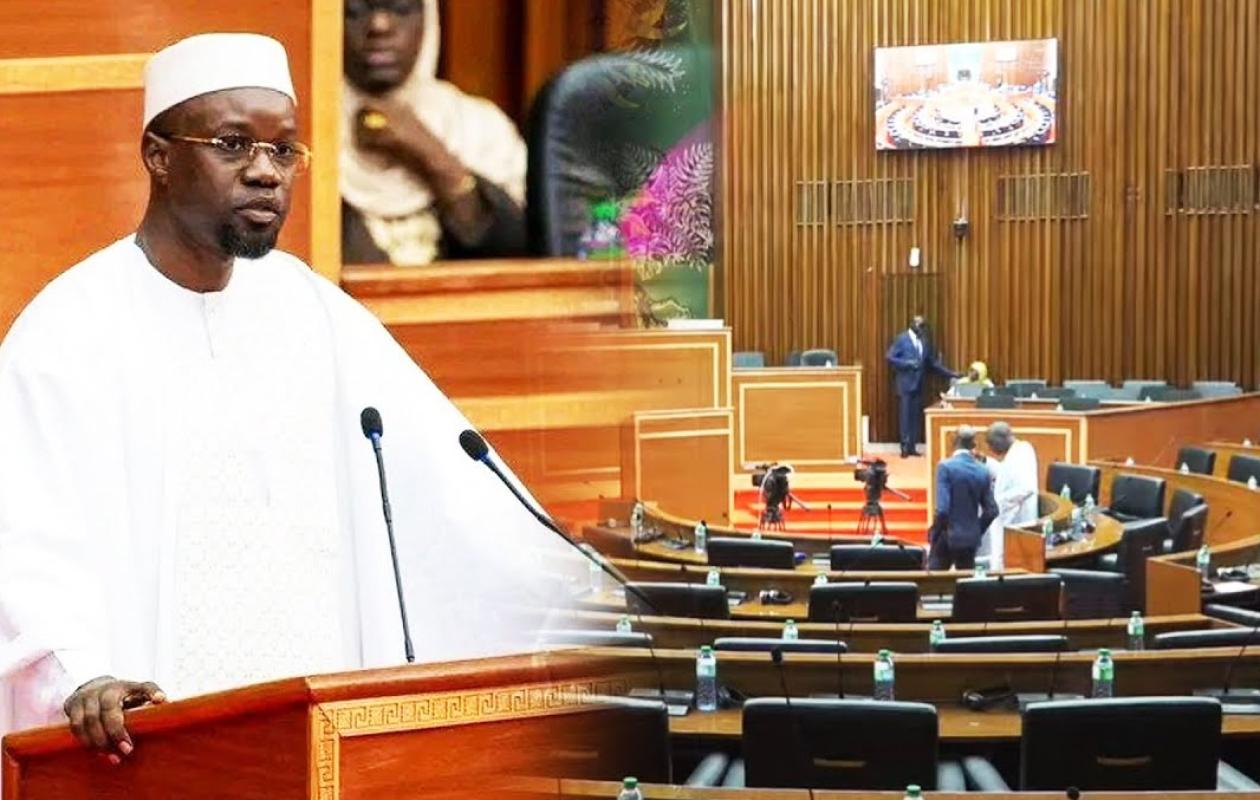
Assemblée nationale : La loi "spéciale Sonko" votée ce mardi ? Tout ce qu'il faut savoir
Presented as a major step towards greater democratic fairness, the reform of the Electoral Code adopted in committee sparked heated controversy during the debates, according to the report of the Law Commission. This text is being examined in plenary session this Tuesday, April 28, 2026, at the National Assembly. Behind the argument of a "general and impersonal" text, many voices denounce a law that they believe bears the imprint of a very specific political destiny: that of Ousmane Sonko. Adopted by the Law Commission, bill no. 11/2026 aims to correct what its proponents describe as "abuses" in the application of the rules of ineligibility, particularly targeting articles L.29 and L.30.
A reform in the name of inclusivity
The removal of Article L.30, which could lead to disqualification from voting for minor offenses punishable by simple fines, is one of the most significant changes. The text also introduces a five-year limit on periods of ineligibility, starting from the date of the final conviction. For the members of parliament who support the reform, these adjustments aim to strengthen citizen participation and prevent disproportionate sanctions from unduly depriving Senegalese citizens of their political rights. "This is about protecting democratic vitality," the authors argue, emphasizing the universal nature of the law.
However, this argument has failed to convince the opposition and a segment of public opinion. In the report of the debates, one name recurs insistently: that of Ousmane Sonko. The former leader of Pastef appears to many as the main potential beneficiary of this reform. Consequently, the question becomes unavoidable: can we truly speak of an impersonal law when its effects seem to coincide with the situation of a major political player? Some commissioners do not hesitate to call it a "disguised ad personam law," denouncing a manipulation of the law. For them, the speed of the procedure and the lack of consultation reinforce the suspicion of a text designed to respond to a political emergency.
Between legal principle and political reality
On the majority side, the response is firm. Those behind the bill reject any personalized interpretation, reiterating that a law, by definition, applies to everyone. They insist that hundreds of citizens could be affected, far beyond media figures. However, in such a polarized context, the line between legal principle and political reality is blurring. A law can be formally impersonal while producing highly personalized effects. "Beyond the content, it is also the method that raises questions. The use of emergency procedures and the lack of broad consensus break with Senegalese tradition," some commissioners believe. As the bill is put to a vote in plenary session, one thing is certain: far from calming the political situation, this reform could become a new point of contention.



















Commentaires (4)
Participer à la Discussion
Règles de la communauté :
💡 Astuce : Utilisez des emojis depuis votre téléphone ou le module emoji ci-dessous. Cliquez sur GIF pour ajouter un GIF animé. Collez un lien X/Twitter, TikTok ou Instagram pour l'afficher automatiquement.