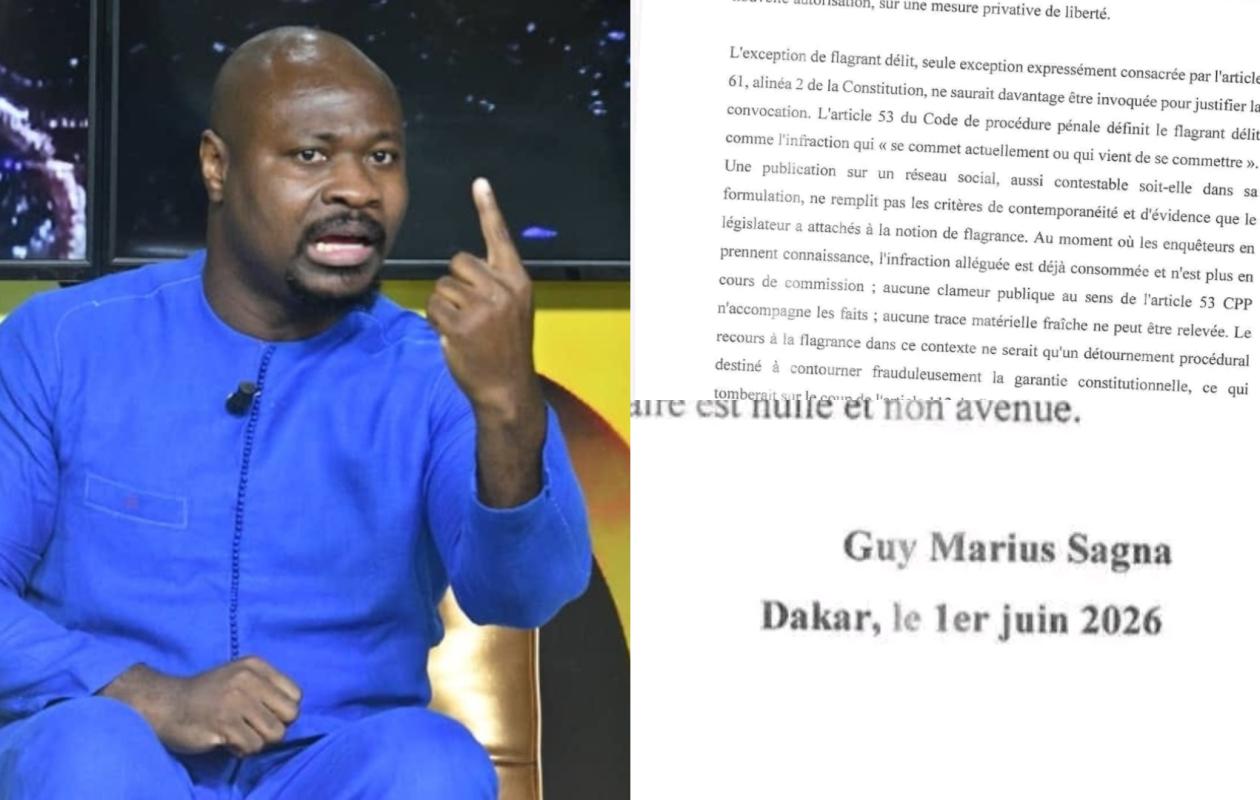
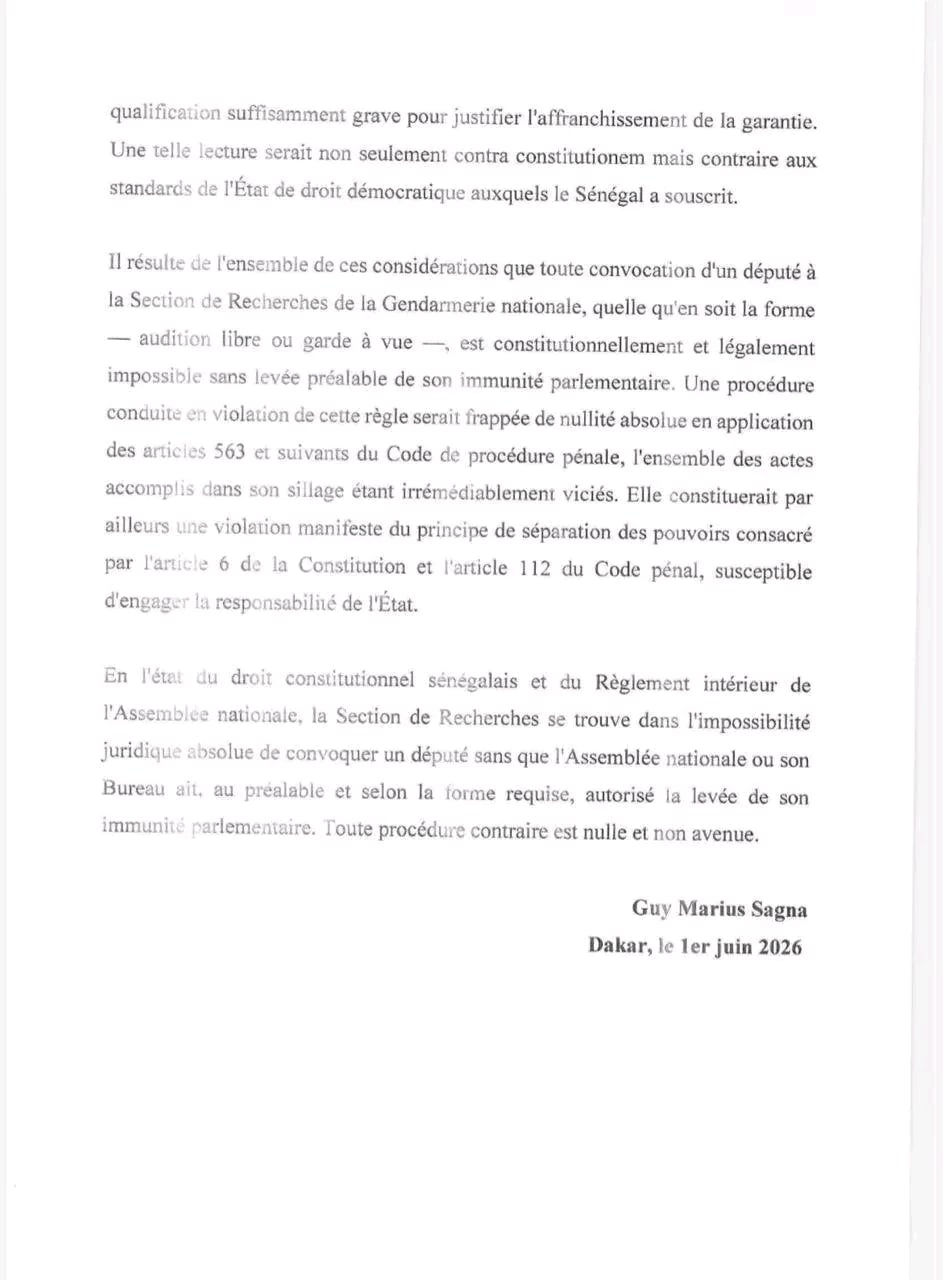
Découvrez le document de 4 pages envoyé par Guy Marius Sagna à la gendarmerie !
MP Guy Marius Sagna, a member of the National Assembly of Senegal and the ECOWAS Parliament, refused to respond to a summons from the Research Section (SR) of the Colobane gendarmerie, citing a flagrant violation of his parliamentary immunity, according to his statement read by Seneweb.
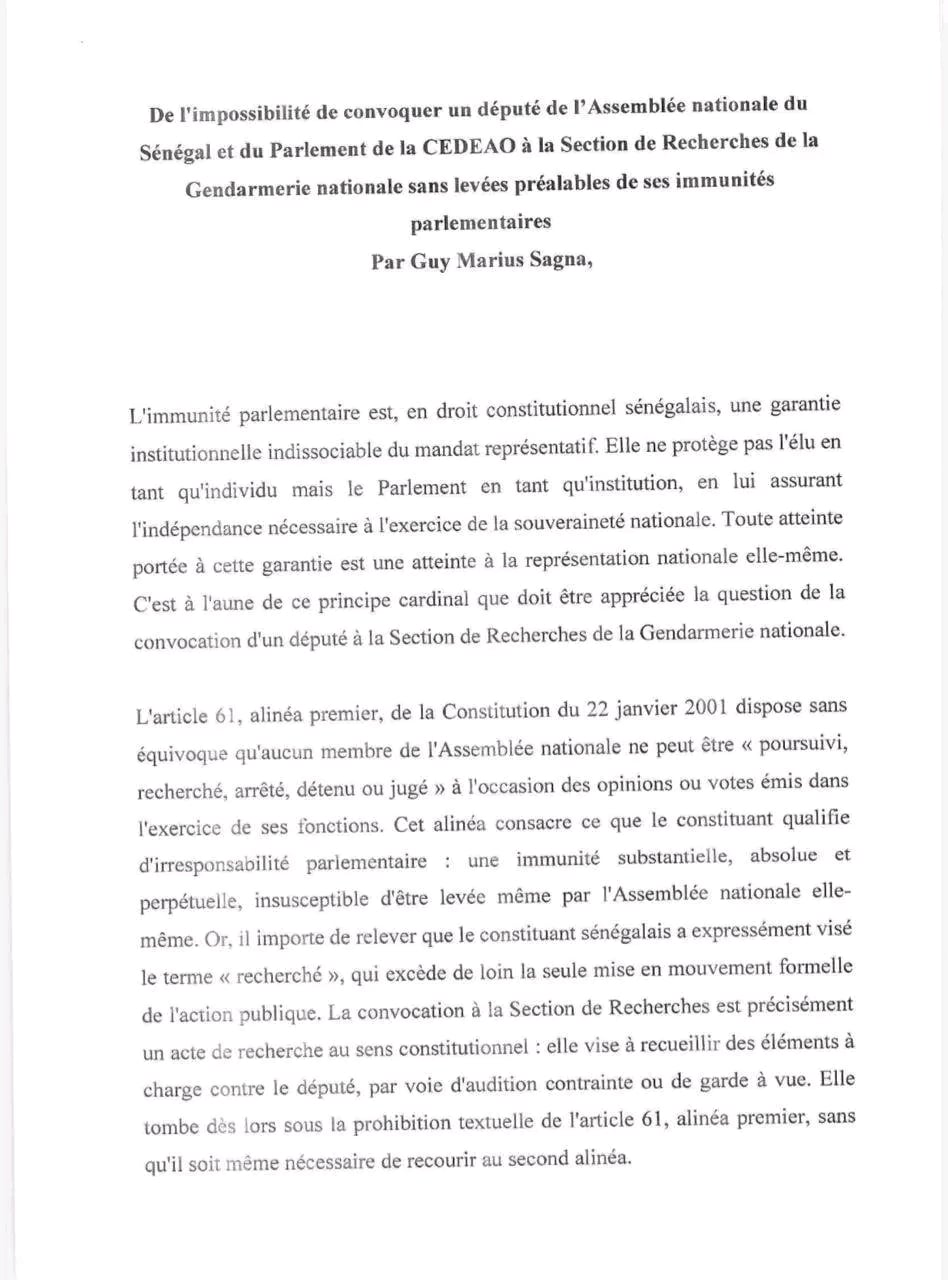
Summoned this Monday at 10:00 AM by the Colobane Gendarmerie Research Section regarding a "matter concerning him," Member of Parliament Guy Marius Sagna chose not to comply with the summons. He took the precaution of informing the gendarmerie beforehand, sending them a four-page document outlining the legal grounds for his refusal.
The parliamentarian was keen to clarify the reasons for his actions:
"This is not out of disrespect for the men and women of the gendarmerie. It is not out of distrust of the Senegalese justice system. On the contrary, it is to refuse and prevent the gendarmerie and the justice system from being involved in an undertaking that will discredit them because it violates both the Constitution of Senegal, the Rules of Procedure of the National Assembly of Senegal, and the Rules of Procedure of the ECOWAS Parliament."
In his document addressed to the gendarmerie, Guy Marius Sagna develops a constitutional argument along three lines:
1. Parliamentary irresponsibility (Article 61, paragraph 1 of the Constitution)
Article 61, paragraph 1 of the Constitution of January 22, 2001, stipulates that no member of the National Assembly may be "prosecuted, investigated, arrested, detained, or tried" for opinions expressed or votes cast in the exercise of their duties. The member of parliament emphasizes that the term "investigated" explicitly covers a summons to the Special Investigation Unit (SR), which constitutes an investigative act in the constitutional sense.
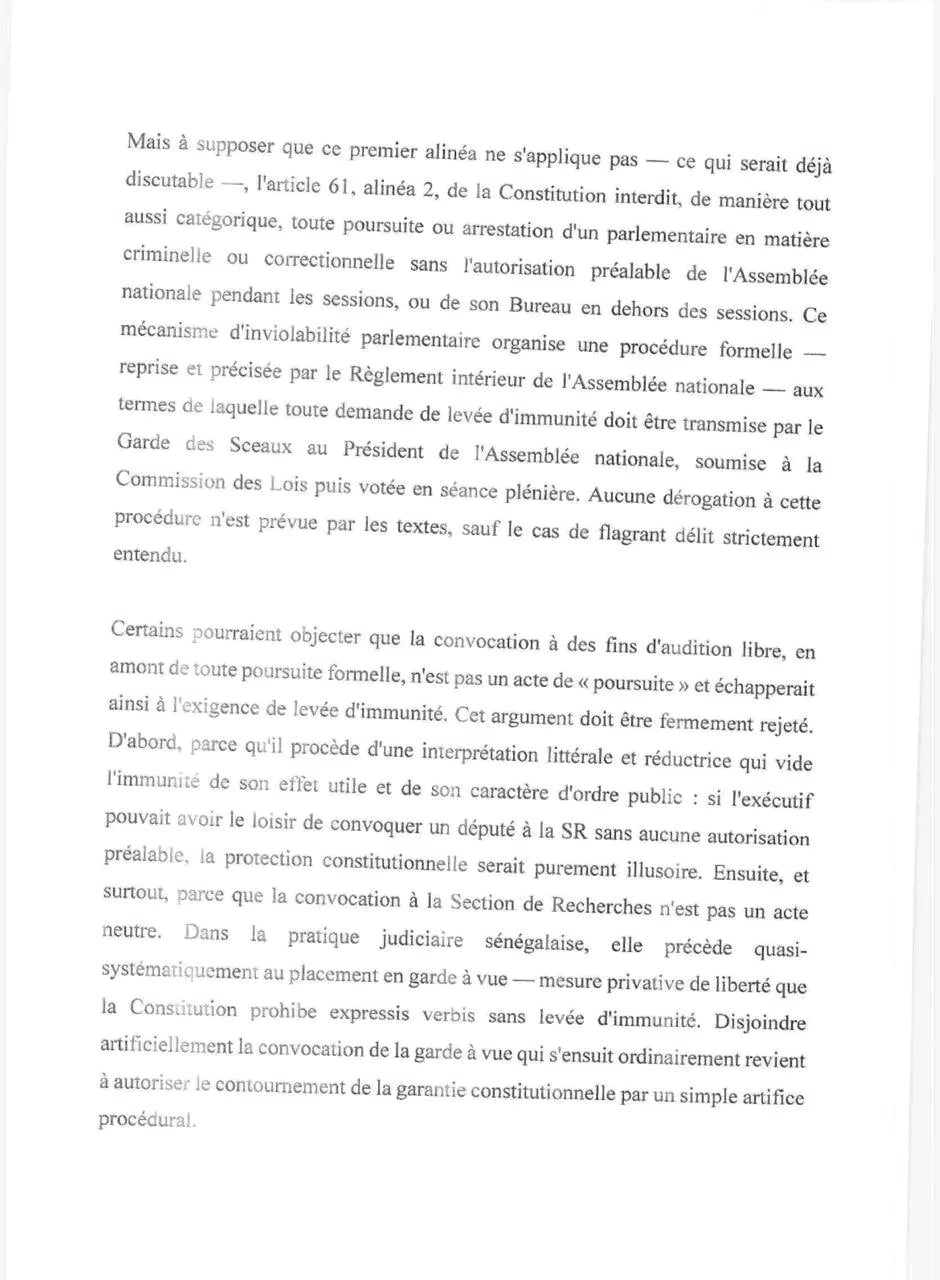
2. Parliamentary inviolability (Article 61, paragraph 2)
Even outside the scope of immunity, Article 61, paragraph 2 prohibits any prosecution or arrest in criminal or correctional matters without prior authorization from the National Assembly or its Bureau during its session. Any request to lift immunity must follow a formal procedure: transmission by the Minister of Justice to the Speaker of the Assembly, review by the Committee on Laws, and then a vote in plenary session.
3. The rejection of the exception of flagrant offense
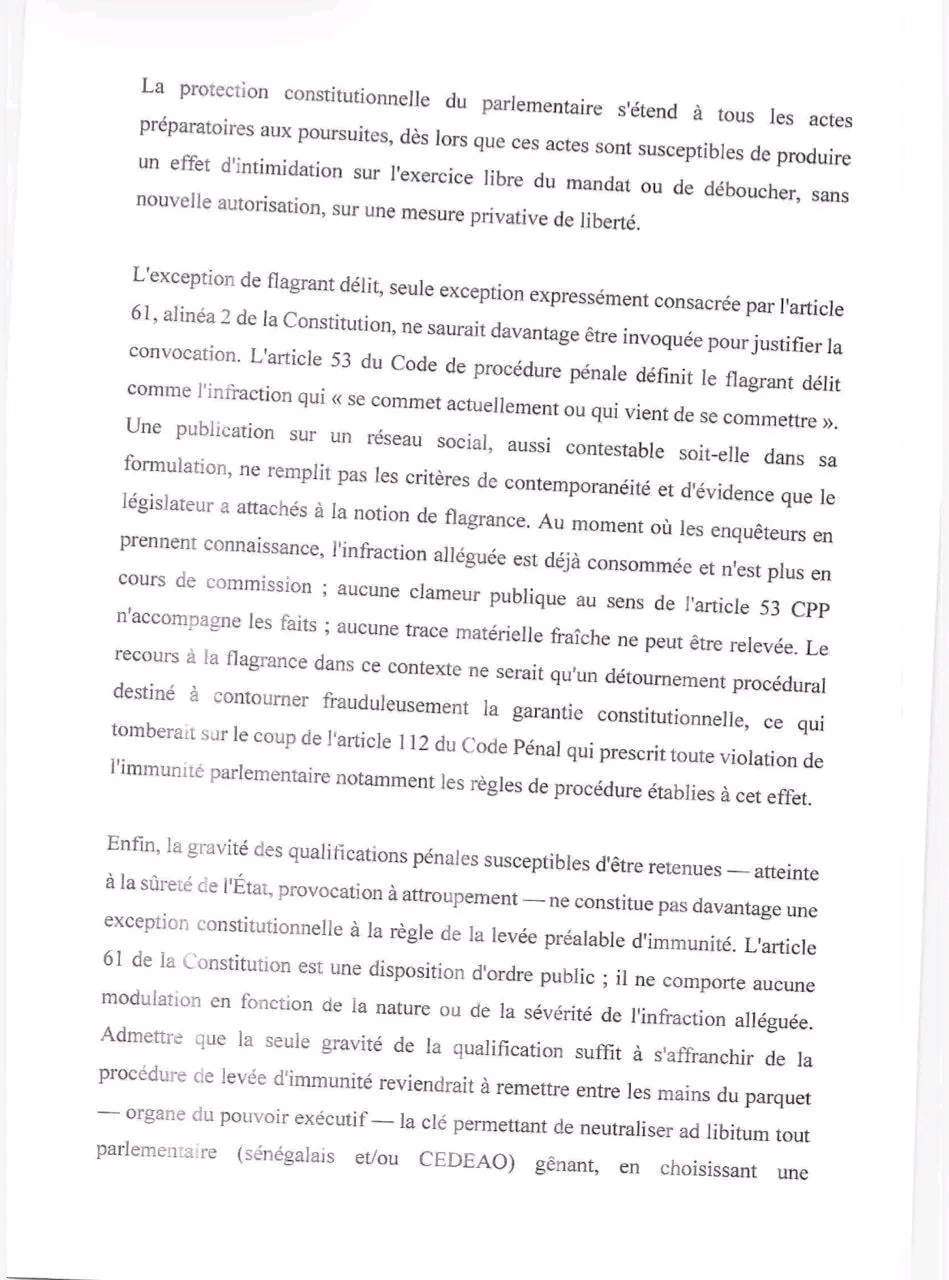
The sole constitutional exception of flagrant offense cannot be invoked here. Article 53 of the Code of Criminal Procedure defines flagrant offense as an offense "currently being committed or having just been committed." However, a social media post does not meet the required criteria of immediacy: by the time investigators become aware of it, the alleged offense has already been completed.
The MP also warned that abusing the concept of flagrante delicto would constitute a procedural abuse likely to fall under Article 112 of the Penal Code, which penalizes any violation of parliamentary immunity.
The seriousness of the alleged charges changes nothing.
Sagna also refutes the argument that the seriousness of the proposed criminal charges—undermining state security or inciting a public gathering—justifies bypassing the procedure for lifting immunity. He reminds us that Article 61 of the Constitution is a matter of public policy and is not subject to any modification based on the nature or severity of the alleged offense.
In concluding his statement with a "Focus on the PASTEF Congress!", Guy Marius Sagna said he hoped that the arguments given to the gendarmerie "will convince them of the mistake they made" in issuing this summons.



















Commentaires (13)
Participer à la Discussion
Règles de la communauté :
💡 Astuce : Utilisez des emojis depuis votre téléphone ou le module emoji ci-dessous. Cliquez sur GIF pour ajouter un GIF animé. Collez un lien X/Twitter, TikTok ou Instagram pour l'afficher automatiquement.