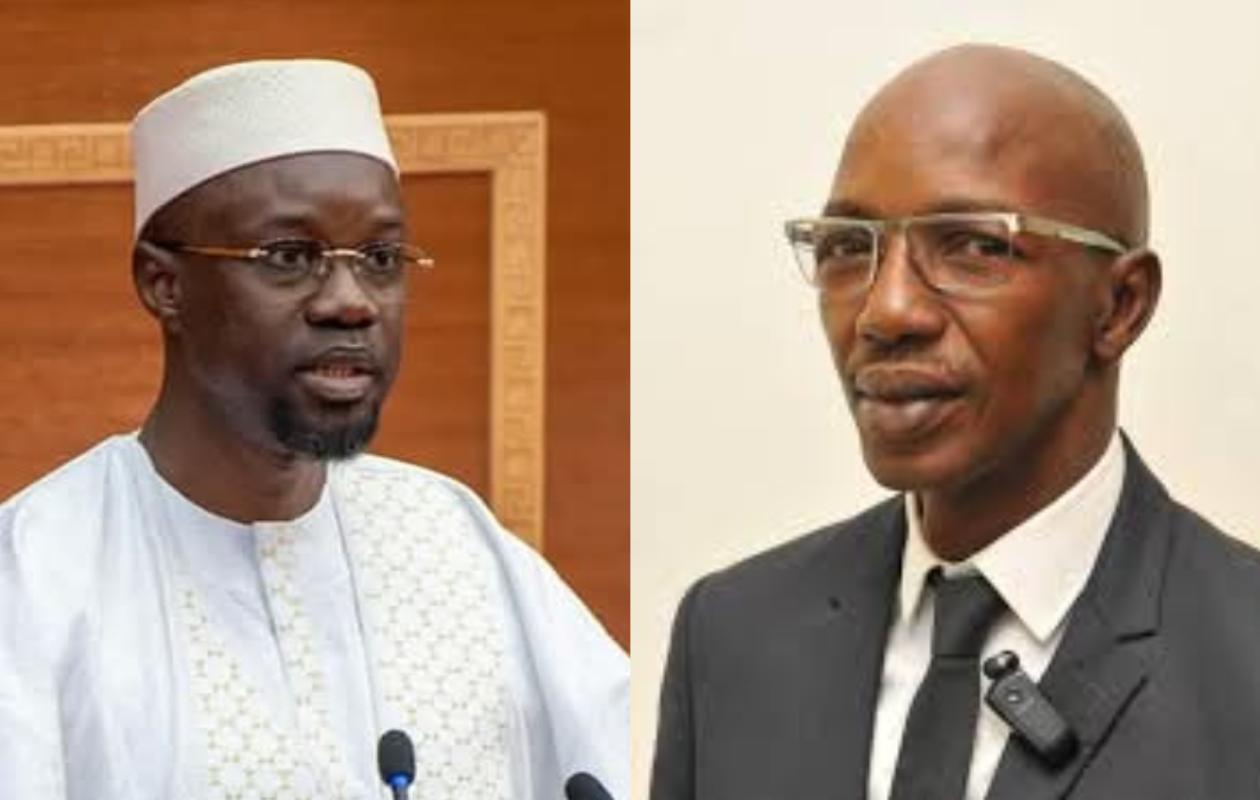
Retour d’Ousmane Sonko à l’Assemblée : Me Demba Ciré Bathily tranche le débat juridique
Since the announcement of the end of Ousmane Sonko's duties as Prime Minister on Friday, May 22, 2026, a question has been stirring up the Senegalese political and legal sphere: can the former head of government regain his seat as a member of parliament in the National Assembly or has he definitively renounced it in December 2024?
In a detailed legal analysis posted on his Facebook page, Maitre Demba Ciré Bathily, a lawyer at the court, believes that the debate must be stripped of all political passion and reduced to its purely legal dimension.
According to him, Senegalese law is unambiguous: Ousmane Sonko never resigned from his parliamentary mandate, he simply suspended it because of his government functions.
"An incompatibility is not a disqualification."
The lawyer first cites the provisions of Article 56 of the Senegalese Constitution, which makes the functions of a minister incompatible with a parliamentary mandate. However, this incompatibility does not entail the loss of the parliamentary seat.
"This is a temporary suspension of the exercise of the mandate and not a definitive renunciation," explains Mr. Bathily.
The legal expert also relies on Article 124 of the National Assembly's rules of procedure, which stipulates that a member of parliament appointed to the government is temporarily replaced by their substitute for the entire duration of their ministerial duties. Once these duties are completed, the original member of parliament is automatically reinstated.
According to Mr. Bathily, this mechanism is constant in Senegalese institutional practice and in parliamentary systems of Romano-Germanic inspiration.
Resignation or suspension: confusion at the heart of the debate
According to the lawyer, the current controversy essentially stems from a confusion between two distinct legal concepts: resignation and suspension. Resignation, he points out, is an irrevocable act by which the member of parliament definitively relinquishes their seat.
Conversely, suspension is only a temporary interruption of the exercise of the mandate. "To confuse the two would be to consider that a leave of absence and a resignation produce the same effects," he argues.
What really happened in December 2024
The controversy stems from a public statement made by Ousmane Sonko during the installation of the 15th legislature. He had stated to the press that he had "submitted his letter of resignation".
But for Mr. Bathily, this media statement has no legal standing. "In law, only the official procedure counts," he insists. The lawyer asserts that at the same time, Ousmane Sonko had sent the Speaker of the National Assembly a formal letter requesting not his resignation, but the suspension of his parliamentary mandate. This document, duly registered by the relevant authorities, constitutes, according to him, the only legally binding act. "Scripta manent: only written records remain," he reminds us.
An automatic reintegration
Based on this observation, Mr. Bathily believes that the cessation of the Prime Minister's functions automatically entails the end of the suspension of the parliamentary mandate.
Thus, since May 22, 2026, the official end date of his government functions, Ousmane Sonko would be legally entitled to regain his seat as a member of parliament.
The lawyer clarifies that the National Assembly's bureau has a maximum of thirty days, until June 22, 2026, to confirm this reinstatement. "This is not a discretionary power, but a mandatory one," he emphasizes, arguing that a refusal of reinstatement could be considered an abuse of power. The substitute who held the seat during the suspension would then automatically lose their mandate.
The organic law of 2025 would not be applicable
Some voices, however, cite the organic law of June 27, 2025, concerning the application of Article 56 of the Constitution. But for Mr. Bathily, this law cannot apply to a situation that arose in December 2024, by virtue of the fundamental principle of non-retroactivity of laws. "A legal situation duly established under an older text continues to produce its effects," he explains.
"The law must prevail over passions."
In conclusion, Attorney Demba Ciré Bathily believes that the case is not a matter of political debate, but rather a strict interpretation of constitutional and parliamentary texts. According to him, Ousmane Sonko legally retains his mandate as a member of parliament, which was merely suspended during his time as Prime Minister.
"The National Assembly bureau does not have to arbitrate a political controversy. It simply has to acknowledge an already established legal situation," the lawyer concluded.















Commentaires (31)
Participer à la Discussion
Règles de la communauté :
💡 Astuce : Utilisez des emojis depuis votre téléphone ou le module emoji ci-dessous. Cliquez sur GIF pour ajouter un GIF animé. Collez un lien X/Twitter, TikTok ou Instagram pour l'afficher automatiquement.