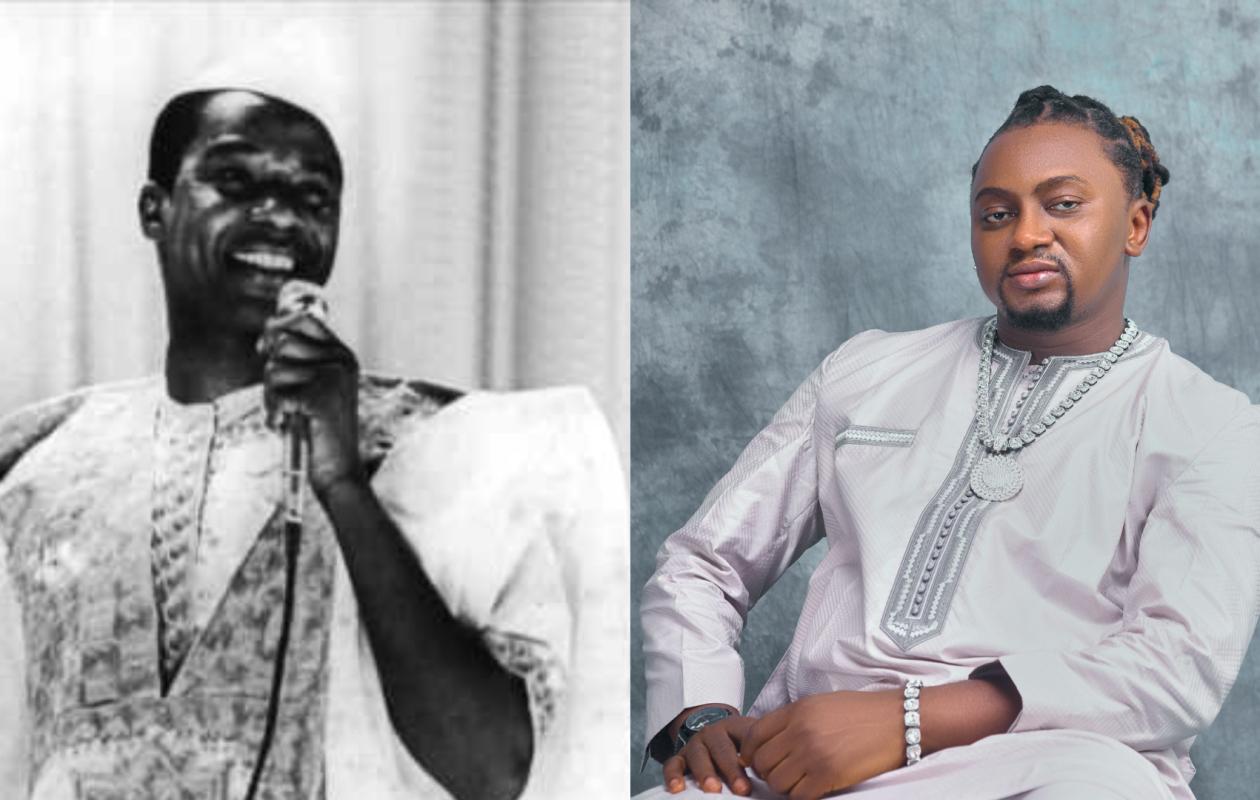
Guinée : De Sory Kandia Kouyaté à Azaya, le parcours d’une nation à travers ses sons
Guinean music is not just an art. It is a memory, a cry, a mirror of the nation. From the strings of the kora to the electronic settings of auto-tune, it has traversed eras, embraced social changes and told, in its own way, the story of a century of a people in search of balance between tradition and modernity.
Sacred Roots: The Voice of the Griots
It all begins with the griots, these guardians of collective memory. In Mandinka villages, the sound of the kora, the balafon or the djembe accompanied the stories of the ancestors.
At that time, music was not entertainment: it was transmission, education, spirituality.
Legendary figures like Sory Kandia Kouyaté, nicknamed the golden voice of Africa, gave Guinean music a universal dimension. Through his powerful voice, he carried the dignity of a people and the grandeur of a culture beyond borders.
The years of independence: music as a flag
In the 1960s and 1970s, under Sékou Touré, music became a political tool and a symbol of national unity.
The State supports the creation of regional orchestras: Bembeya Jazz National, Keletigui and his Tambourinis, Bala and his Baladins… These groups tell the story of national pride, revolutionary hope and post-colonial cultural renaissance.
The rhythms were rich, the lyrics were politically engaged, and the Guinean music scene shone throughout the continent.
Modernity and fusion: between heritage and influence
From the 1990s onwards, a new generation emerged, marked by openness to the world. Sounds blended: reggae, RnB, zouk, afrobeat, rap.
Guinean urban music is becoming a sonic laboratory, a fusion between the griot and the asphalt.
Artists like Mouctar Soumah (Takana Zion), Fish Killer, Instinct Killers, Banlieuz'art, or Singleton translate the realities of youth: resourcefulness, love, faith, disillusionment.
They no longer sing only to glorify, but to demand, to question, to heal.
The digital age: auto-tune and the emotional renaissance
With the arrival of digital technology, another turning point occurred. Auto-Tune became an instrument in its own right. Artists like Azaya, Djelykaba Bintou, Manamba Kanté, Oudy 1er, and Grand P combined technology with vocal tradition.
Far from being a mere fad, this transformation reveals a new Guinean sensibility: the desire to modernize without erasing.
Azaya, often nicknamed the Messi of Guinean music, embodies this generation capable of making people dance to a Mandingue rhythm transformed by urban sounds, while retaining the emotional depth of the griot.
Music that mirrors the people
From the kora to auto-tune, Guinean music tells the story of the evolution of the entire country:
The melody has changed, but the message remains the same: sing to exist, sing to remember, sing to unite.
And as long as a voice rises somewhere between the hills of Fouta, the forests of Kankan or the streets of Conakry, Guinea will continue to tell its story through music.


![[EXCLUSIF] Expulsion de la famille Srour : L'accusée Khady Diagne se prononce, documents à l'appui](https://image.seneweb.com/content/news/2026-20-14//thumb_1260x800_6a05cc2715573_a9nMMiStMC.jpg)







Commentaires (1)
Participer à la Discussion
Règles de la communauté :
💡 Astuce : Utilisez des emojis depuis votre téléphone ou le module emoji ci-dessous. Cliquez sur GIF pour ajouter un GIF animé. Collez un lien X/Twitter, TikTok ou Instagram pour l'afficher automatiquement.