
« Atténuer la concentration des pouvoirs entre les mains du Président »: le Pr Sidy Alpha Ndiaye explique la «légitimité politique» de la révision constitutionnelle
The political and institutional reforms resulting from the 2024 Justice Conference and the 2025 consultations on the political system will be presented to the Council of Ministers and then transmitted to the National Assembly in the first quarter of 2026, President Bassirou Diomaye Faye announced in his speech to the nation on December 31.
True to his commitment to consolidating the rule of law, the Head of State specified that the draft texts relating to the revision of the Constitution, the Constitutional Court, the High Council of the Judiciary, the Independent National Electoral Commission (CENI), as well as the draft Electoral Code, will be submitted to the government before being sent to Parliament. He assured that the ad hoc committees resulting from the National Consultations and consultations have completed their work and that the discussions have laid the groundwork for the legal implementation of the consensus-based recommendations formulated in a spirit of fundamental reform. President Faye added that the other reforms will be part of a coherent agenda, aligned with the length of the presidential term and the pace of national development.
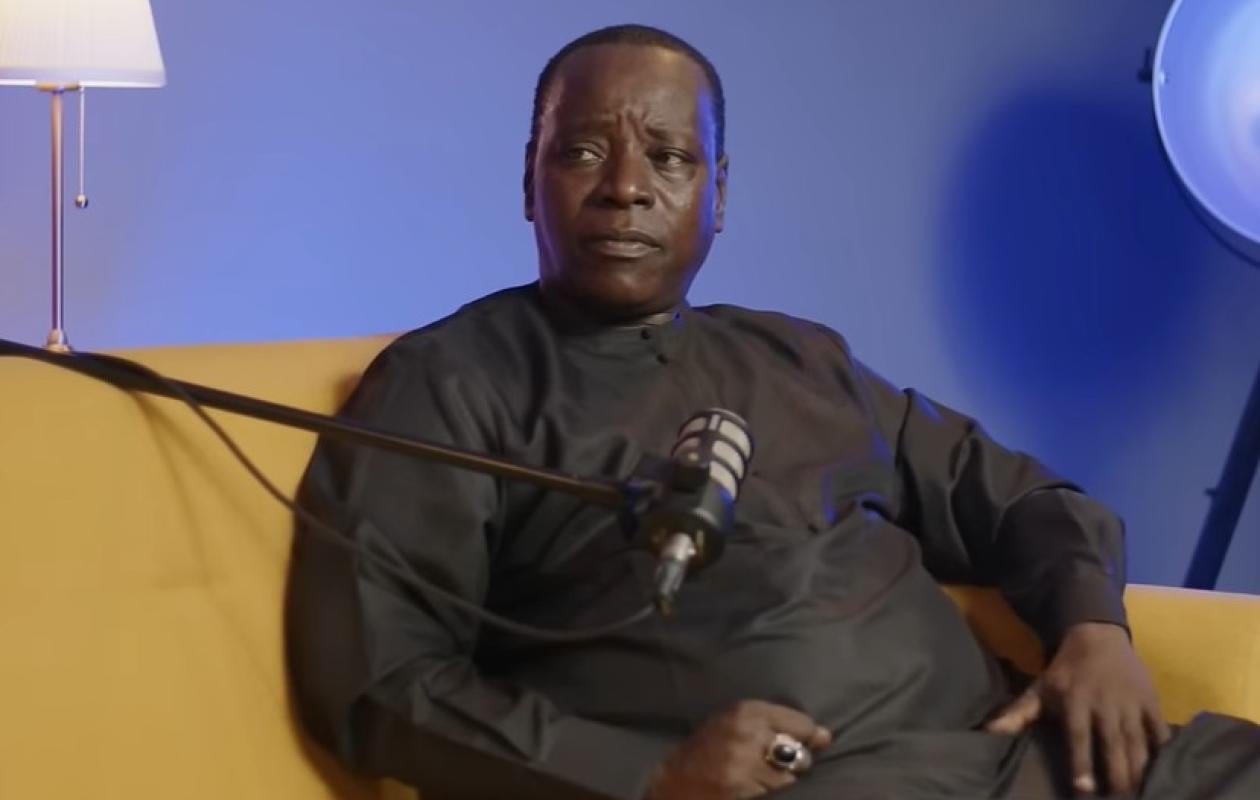
In an article entitled "The Making of Institutional and Normative Reforms for a Break with the Past," constitutional expert Professor Sidy Alpha Ndiaye examines the political implications of these reforms. According to him, Senegal has had four major constitutions (1959, 1960, 1963, and 2001), each of which has undergone multiple revisions. The announced reforms, far from being merely nominal, are part of the Pastef party's platform, both for the 2019 and 2024 presidential elections.
Professor Ndiaye recalls that "as early as 2019, the JOTNA program unequivocally proclaimed the desire to mitigate the concentration of power in the hands of the President of the Republic: Today, hyper-presidentialism is no longer in doubt; the legislative and judicial institutions are totally under the control of the President of the Republic. This must be stopped. The administration of our country must be republican, exclusively oriented towards user satisfaction and put at the service of development," he writes.
The constitutional expert also stressed that the program addressed the transition from the Constitutional Council to a Constitutional Court, and that "the political endorsement of these reforms, initiated by Pastef, fully reflects the party's reformist ideology."
More recently, during the 2024 presidential election, the party's platform addressed, in turn, reducing the excessive concentration of power, establishing a Constitutional Court, reforming the High Council of the Judiciary, overhauling the Electoral Code, and creating an independent Independent National Electoral Commission (CENI). "To say that these reforms are rooted in Pastef's political base is stating the obvious," insisted the Minister, Legal Advisor, and Deputy Chief of Staff to the President of the Republic.
The presidential election, the ultimate forum for validating and legitimizing reforms
Professor Ndiaye explains that every reform, even one inspired by history, necessarily bears "the imprint of a party or a political ideology" and is based on "a political doctrine endorsed by the people." He adds that the mandate of a political party is not limited to the conquest of power, but rather that it formalizes "the relationship between representatives and the sovereign people, with the aim of establishing a substantive democracy," citing as examples the revision of the Constitution, the Constitutional Court, the Independent National Electoral Commission (CENI), the High Council of the Judiciary, and the transparency laws.
According to Professor Ndiaye, the reforms constitute a genuine governance contract which provides for "the elimination of anachronistic institutions of the Republic, the systematization of calls for applications for certain positions, the adoption of four laws on transparency, the limitation of the excessive concentration of powers in the hands of the President of the Republic, the creation of a constitutional justice open to different norms, including socio-anthropological ones, the decompartmentalization of the High Council of the Judiciary to consolidate the sociological grounding of justice, the in-depth overhaul of the Electoral Code to integrate it into political modernity and give it an inclusive virtue, and the establishment of a CENI to break with past practices."
For this member of Moncap, these reforms are rooted in the popular will and cannot be appropriated by any external body. "These reforms, endorsed by the people, are not confined to dialogue spaces, even those of the 2009 National Consultations, which made them their guiding thread. They are embedded in the general, militant will of the people. No appropriation, by any body of civil society whatsoever, is permitted when it comes to questioning the popular axiology of the reforms," the jurist emphasized.
The constitutional expert finally emphasized the role of the presidential election as the ultimate moment of legitimation. "In itself, an election, especially a presidential one, is the ultimate forum for validating and legitimizing major reforms. It is because the representative mandate requires a constant return to the nation, through its vital forces, and because the gift of consent must be continually renewed, that the two National Conferences organized in 2024 and 2025 were designed to confer a certain methodological legitimacy on these reforms," he suggested.


















Commentaires (4)
Continuez vos manipulations rek. Vous allez détruire ce pays mais vous n’en réchapperez pas
Participer à la Discussion
Règles de la communauté :
💡 Astuce : Utilisez des emojis depuis votre téléphone ou le module emoji ci-dessous. Cliquez sur GIF pour ajouter un GIF animé. Collez un lien X/Twitter, TikTok ou Instagram pour l'afficher automatiquement.