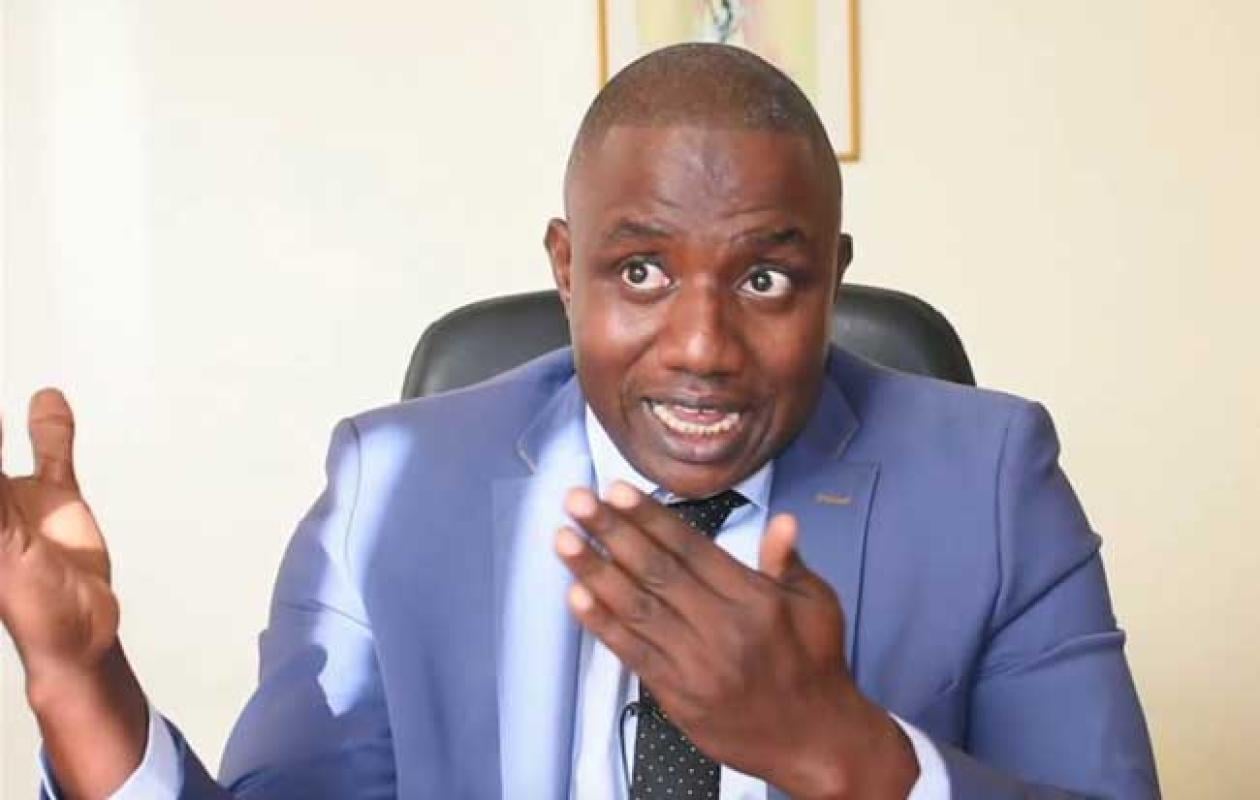
Notes de lectures : Le Prix de la Liberté du Dr Cheikh Kanté (par Dr Yoro Dia)
The continent's poverty: an African paradox
The price of freedom that Dr. Cheikh Kante demands is a departure from the path of servitude, as Frederic Hayek would have said. For Hayek, servitude lies in central planning, statism, and socialism, whereas for Dr. Kante, who thinks on a continental level, it is akin to Adam Smith's paradox in the African context: a continent with immense wealth that continues to "sink into intergenerational poverty." After diagnosing this intergenerational poverty, Dr. Kante proposes a "new beginning," that is, ceasing to "endure" and instead "fulfilling" the continent's destiny. The continent must cease being a mere vehicle to be pulled along or an "arena of prosperity where great powers clash," as was the case at the time of the Congress of Berlin.
In the book, the author presents figures illustrating the African paradox of structural and intergenerational poverty, despite development aid exceeding the amounts allocated to the Marshall Plan. These figures are starkly clear: over 40% of the world's extreme poverty rate, 60% of the 1.3 billion poor in sub-Saharan Africa, and the second most unequal region in the world according to the Gini coefficient. For Dr. Kanté, so fascinated by Keynes, the cause of this chronic and intergenerational poverty, despite the continent's potential, lies in the inefficiency of outdated models and the impact of harmful debt and underinvestment.
Dr. Kante raises a very interesting debate on debt, pitting neoclassical economists like Schumpeter, Friedman, and Hayek, who view debt as a "courageously transferred" tax on future generations, against Keynesians, who believe debt can be leverage if judiciously invested. In other words, "Can one get rich by borrowing?" Dr. Kante believes so, but demonstrates that this was not the case for African debt, which, if not diverted, was mostly used for unprofitable expenditures. Overall, our continent is lagging behind, and the objective should be to "catch up," for example, with South Korea, which had the same per capita income as Ivory Coast and Senegal in 1960. This lag is explained, among other things, by a lack of industrialization and an economy reduced to the export of raw materials.
The Washington Consensus (neoliberalism, with Hayek, Friedman, and Schumpeter), which inspired the conservative revolution of Reagan and Chachter and restored growth to Pinochet's Chile, has, however, shown its limitations in Africa with Structural Adjustment Programs that have further impoverished the continent. This is why Dr. Kanté proposes the Dakar Consensus in place of the Washington Consensus. The Dakar Consensus claims historical lineage from the Bandung Congress and seeks a "new order" where the continent is no longer on the periphery but at the center, as the BRICS, according to Kanté, are trying to achieve, continuing the spirit of the Bandung struggle.
After Bandung, the Third World emerged, becoming an African club because Asia and Latin America left it for the First World, the world of development and emergence. One of the key ideas of the Dakar Consensus was the creation of an African rating agency because, according to Dr. Kanté, the continent's ratings often rely more on prejudice and preconceived notions than on economics.
Dr. Kanté's book confirms René Dumont's observation at the time of independence that "Black Africa is off to a bad start," and seems to vindicate Axelle Kabou's assertion ("What if Africa refused development?" when one considers the paradox and the gap between the continent's potential and its current state. However, the author, a realistic Afro-optimist, believes that solutions lie in the reforms proposed by the Dakar Consensus, as well as in the rediscovery and reappropriation of Nkrumah's philosophy, to whom the author dedicates the book. Nkrumah tells us from the very first pages that "We are not turning eastward, nor westward, but looking forward." The continent continues to move forward despite slavery, colonization, and its poor start, because Africa does not reject development. It is searching for its path, and the one proposed by Dr. Kanté deserves to be explored.
Dr. Yoro Dia, Political Scientist, Former Minister
















Commentaires (13)
Participer à la Discussion
Règles de la communauté
💡 Astuce : Utilisez des emojis depuis votre téléphone ou le module emoji ci-dessous. Cliquez sur GIF pour ajouter un GIF animé. Collez un lien X/Twitter, TikTok ou Instagram pour l'afficher automatiquement.
Il connaît son sujet et le manipule avec art dans la simplicité.
C’est une seule personne qui a fait 3 posts successifs mais il n’est pas allé assez loin
Il faut dire que Cheikh Kanté est un penseur planétaire, qu’il est le plus grand intellectuel du continent, non du monde entier.
Voilà ce qu’il faut écrire quand on décide d’être un courtisan ou un complaisant qui encense n’importe quel Gus qui se prend pour une référence mondiale
Se connecter
Commentez avec votre profil, votre photo, et soyez averti des réponses.