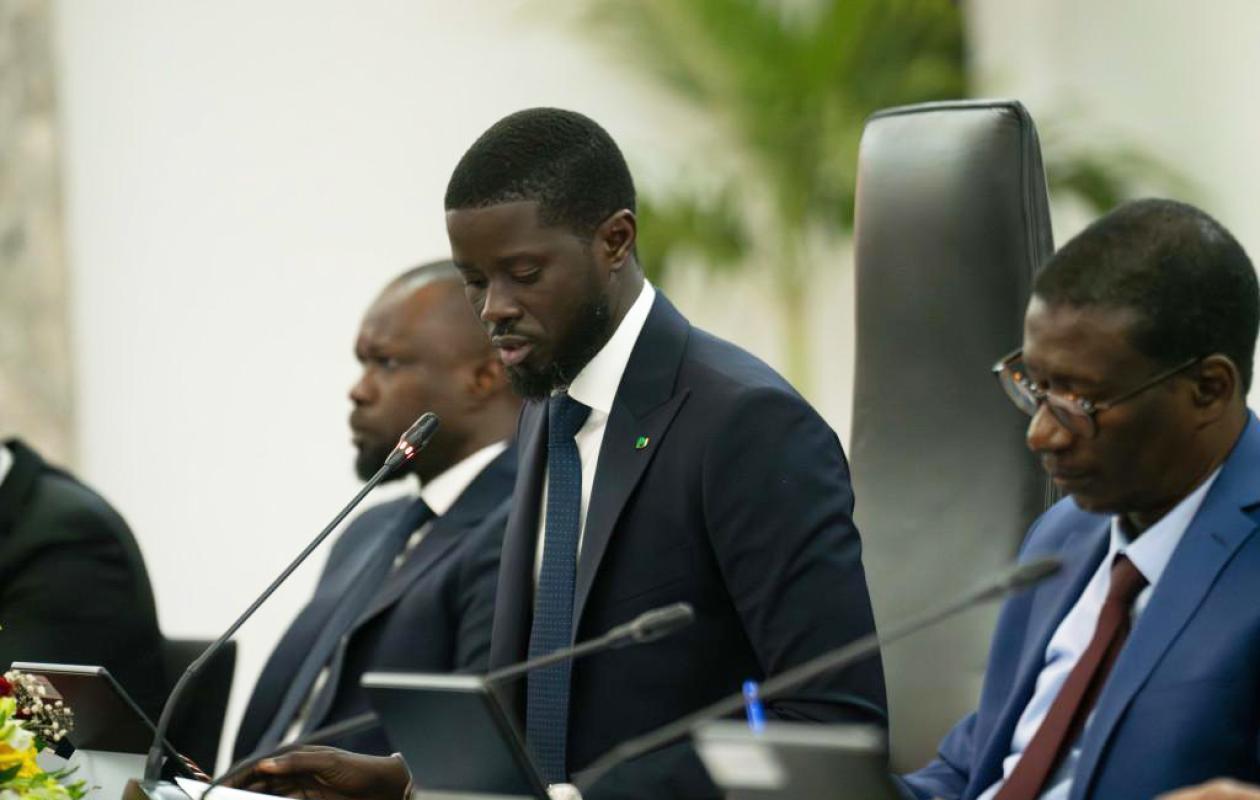
Communiqué du Conseil des Ministres du Mercredi 1er Avril 2026
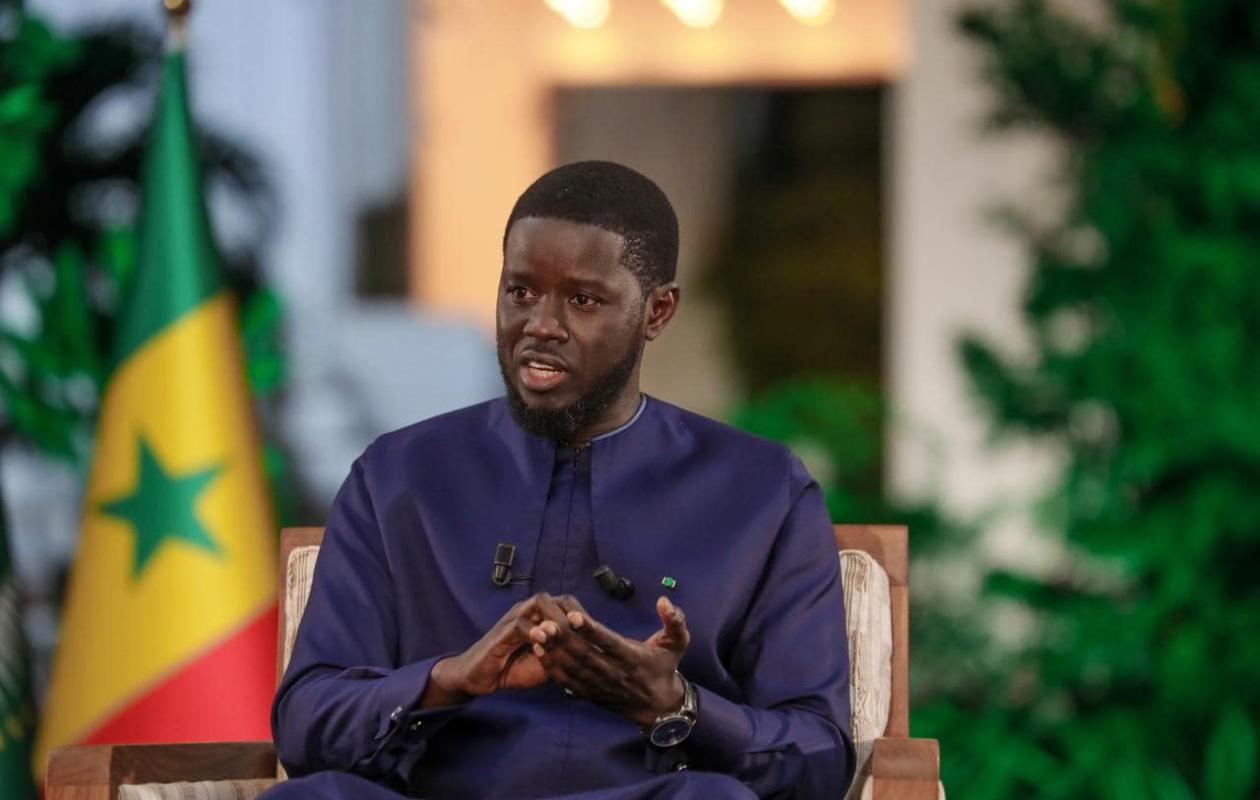
The Council of Ministers was held on Wednesday, April 1, 2026, under the chairmanship of His Excellency Mr. Bassirou Diomaye Diakhar FAYE, President of the Republic.
UNDER THE HEADING OF THE PRESIDENT OF THE REPUBLIC'S COMMUNICATION
The Head of State made a statement covering the following points:
Celebration of Easter
The President of the Republic begins his communication by mentioning Holy Week, in prelude to the celebration of Easter, and sends his congratulations and best wishes to the Christian community, before praying, with the whole nation, for a Senegal of peace and prosperity in solidarity.
He asks the Government to implement the appropriate measures for the smooth running of Easter celebrations throughout the national territory.
Year II of the accession to the highest office and implementation of the National Transformation Agenda
Recalling his oath of office before the Nation on April 2, 2024, the President of the Republic thanks the Senegalese people for their trust and commitment to realizing the project for a sovereign, just, and prosperous Senegal. In this regard, he congratulates the Prime Minister, ministers, and secretaries of state for their efforts to accelerate the country's recovery, improve the well-being of the population, and drive the systemic transformation of Senegal, despite the unprecedented economic, financial, and social situation inherited from the previous regime.
He emphasized the delicate nature of the ongoing correction and restructuring phase, noting significant progress, including the presentation of the public finance audit, the publication of the "Senegal 2050" Vision, and the implementation of the Masterplan, the National Development Strategy (NDS), the New Deal for Technology, and the sectoral national consultations. The President of the Republic believes that these guiding and framework documents have enabled the country to undergo a genuine transformation in all its dimensions and components.
With this in mind, he reiterates his commitment to accelerating reforms for the modernization of Justice, transparency in public governance and systematic accountability, as evidenced by the laws on OFNAC, asset declaration, whistleblowers and access to information.
In this context, he instructed the Government to accelerate the implementation of the Economic and Social Recovery Plan (PRES), the introduction of new agricultural and industrial policies, the development of the social and solidarity economy, and the regulation of market prices. He also asked it to ensure the strengthening of social dialogue and the stability of key sectors, as well as the improvement of the quality of public services, within the framework of an intensive decentralization of public projects and investments, with the progressive establishment of regional hubs.
The centrality of youth in public policies
After presiding over the opening ceremony of National Youth Week in Thiès on March 30, 2026, the Head of State congratulated the Minister of Youth and Sports, the administrative and local authorities of this region, and the delegations from each region for the quality of the organization of this event, marked by the massive mobilization of young people.
Given the importance of youth in the implementation of public policies and their crucial role in national development, the President reminded the Prime Minister of the urgent need to strengthen education, mentoring, vocational and technical training, and youth employability. Furthermore, the President instructed the Government to accelerate the development of sports infrastructure and youth promotion programs in every department and to ensure youth participation in the Youth Olympic Games (YOG Dakar 2026). He directed the Government to involve young people in public governance by activating municipal, departmental, regional, and national youth consultation bodies. In this regard, the President asked the Minister of Youth and Sports to prepare for the establishment of the Senegalese Youth Advisory Council, which he will chair no later than the end of June 2026.
Major role of daaras in the transformation of the national education system
At the conclusion of the National Daara Day, which he chaired with the participation of all stakeholders, the President of the Republic congratulates the Minister of National Education, the officials, partners and actors of the Daara, for their effective involvement in the successful conduct of the consultations organized within the framework of the National Daara Conference, the conclusions of which were presented during the said day.
He calls on the Government to continue the ongoing dialogue with all stakeholders in the Daara system, with a view to the effective implementation of the consensus recommendations stemming from the National Consultations. Accordingly, the Minister of National Education and the Minister of Employment and Vocational and Technical Training will implement an integrated support program for the Daara system, in order to solidify their crucial role in strengthening the education system and their contribution to economic and social development.
Strengthening transparency in the extractive industries
Recalling that transparency in natural resource management remains a priority, the Head of State congratulated the Government, the National EITI Committee and its Chair, and all public and private stakeholders involved, whose joint work enabled Senegal to improve its overall score (89/100) to a "Very Good" rating during the 2025 validation exercise. He instructed the Prime Minister to work with the relevant ministries to consolidate these achievements and the positive impact of the extractive sector on communities and stakeholder engagement by implementing the necessary recommendations and corrective measures. In this regard, he emphasized the importance of natural resource control, the governance of state-owned enterprises in the hydrocarbon and mining sectors, the allocation of funds for environmental management and the development of local authorities and grassroots communities affected by mining operations, as well as the resources and means allocated to the functioning of the National EITI Committee.
Agenda of the President of the Republic, monitoring of integration, cooperation and partnerships
The Head of State informs the Council that he made an official visit to the Kingdom of Spain from March 24 to 26, 2026, at the invitation of His Majesty King Felipe VI. He reiterates his thanks to King Felipe, the President of the Spanish Government, Pedro Sanchez, and all the friendly Spanish people, for the warm welcome and all the expressions of attention.
This visit, which attests to the quality of relations between the two countries, was mainly marked by the reception at the Royal Palace and resulted in appreciable outcomes including the elevation of cooperation to the level of a comprehensive strategic partnership and the adoption of the Spain-Senegal 2026-2030 partnership framework for sustainable development, with a budget of 180 million euros, the alignment of Spanish investments with the Senegal 2050 Vision and priority projects, support in the organization of the Youth Olympic Games, the decision to strengthen cooperation in key areas and the signing of five (05) legal instruments of cooperation.
Alongside this visit, the Head of State presided over the Economic Forum dedicated to Senegal and received investors and leaders of Spanish companies, politicians including the President of the Government of the Canary Islands region as well as the Senegalese community established in Spain.
UNDER THE HEADING OF THE PRIME MINISTER'S COMMUNICATION
The Prime Minister presented his statement on the following points:
The role of youth in Senegal's transformation policy through national civic service
For the Prime Minister, guiding and mobilizing young people to ensure their optimal contribution to nation-building remains an absolute priority for the Government. He believes that a nation's sustainable development depends as much on its economic performance as on the quality of its human capital and the strength of its civic values, essential pillars of social cohesion and institutional stability. In this regard, civic service and volunteering appear as key instruments for civic education, collective engagement, and mobilizing young people, particularly around projects beneficial to society.
The Prime Minister highlighted ongoing initiatives, including the establishment of a Systemic Transformation Center with an African focus and Civic Skills Centers in various regions. He also outlined actions to promote civic engagement and volunteerism, notably civic and patriotic education, civic and citizenship awareness programs, the mobilization of agricultural and consumer volunteers, the celebration of National Volunteer Week, the call to action for the International Year of Volunteers for Sustainable Development and International Volunteer Day, the active citizenship awareness tour, and the civic agricultural holidays. In addition, he announced the measures to be implemented, including the establishment of a Senior Volunteer Program, the strengthening of civic education within the framework of the revision of teaching curricula, the development of documentation relating to the national framework for consultation on civic responsibility and active citizenship, the finalization of the implementing decree of the general orientation law on volunteering and the decree relating to the organization and operation of the Directorate General of National Civic Service and Volunteering (DGSCNV) and the establishment of the National Committee of Volunteering Actors and the Single Window for Volunteering, involving the main non-state actors.
Refounding of Science, Technology, Engineering and Mathematics (STEM) within the framework of the national transformation agenda
The Prime Minister noted that the transformation requires a substantial pool of technical and scientific talent, highlighting the need for senior technicians, engineers, researchers and professionals capable of carrying out the major structuring projects that mark the roadmap of the National Transformation Agenda.
However, according to him, the 2025 baccalaureate results reveal a situation unfavorable to science-related fields. Humanities tracks alone account for almost all registered candidates. Furthermore, entire academic regions, such as Kaffrine, Louga, Matam, and Sédhiou, were unable to present any candidates for the technical baccalaureate. Similarly, science tracks represent only a marginal number of students. Of the 77,388 baccalaureate recipients expected in 2025, only 15,888 are in the Science and Technology track, compared to 59,575 in the humanities track.
Deploring this structural mismatch between our education system and the needs of our economy, and recalling that the National Transformation Agenda requires advanced technical skills in sectors as vital as agriculture, health, innovation, energy, mining and industrial transformation, the Prime Minister gave instructions:
- to the Minister of National Education to proceed, as soon as possible, with a thorough review of the guidance and recognition mechanisms for the S, S1 and S3 streams;
- to the Minister of Higher Education, Research and Innovation, in conjunction with the Minister in charge of Vocational Training, to restructure the training offer to align it with the needs of the National Transformation Agenda, the objective being to increase the rate of candidates in technical fields from 2.07% to at least 15% within five (05) years;
- to the Minister of Higher Education, Research and Innovation to develop the preparatory classes for the Grandes Écoles (CPGE).
The Prime Minister emphasized that he is considering organizing a national tour of universities. He mandated the Minister in charge of Higher Education, in conjunction with the Prime Minister's office, to handle the technical and logistical preparations, define a national framework for exchanges, and organize, at the end of the tour, a strategic debriefing accompanied by operational recommendations and a follow-up plan.
UNDER THE HEADING OF COMMUNICATIONS FROM MINISTERS
The Minister of Economy, Planning and Cooperation gave a presentation on recent economic developments and prospects.
The Minister of Communication, Telecommunications and Digital Affairs gave a statement on the follow-up of requests on e-Senegal.
The Minister of National Education made a statement on the planned changes to the entrance exam for sixth grade at the Middle School level.
Marie Rose Khady Fatou FAYE,
Secretary of State to the Prime Minister,
Head of Institutional Relations,
Government Spokesperson









Commentaires (9)
Participer à la Discussion
Règles de la communauté :
💡 Astuce : Utilisez des emojis depuis votre téléphone ou le module emoji ci-dessous. Cliquez sur GIF pour ajouter un GIF animé. Collez un lien X/Twitter, TikTok ou Instagram pour l'afficher automatiquement.