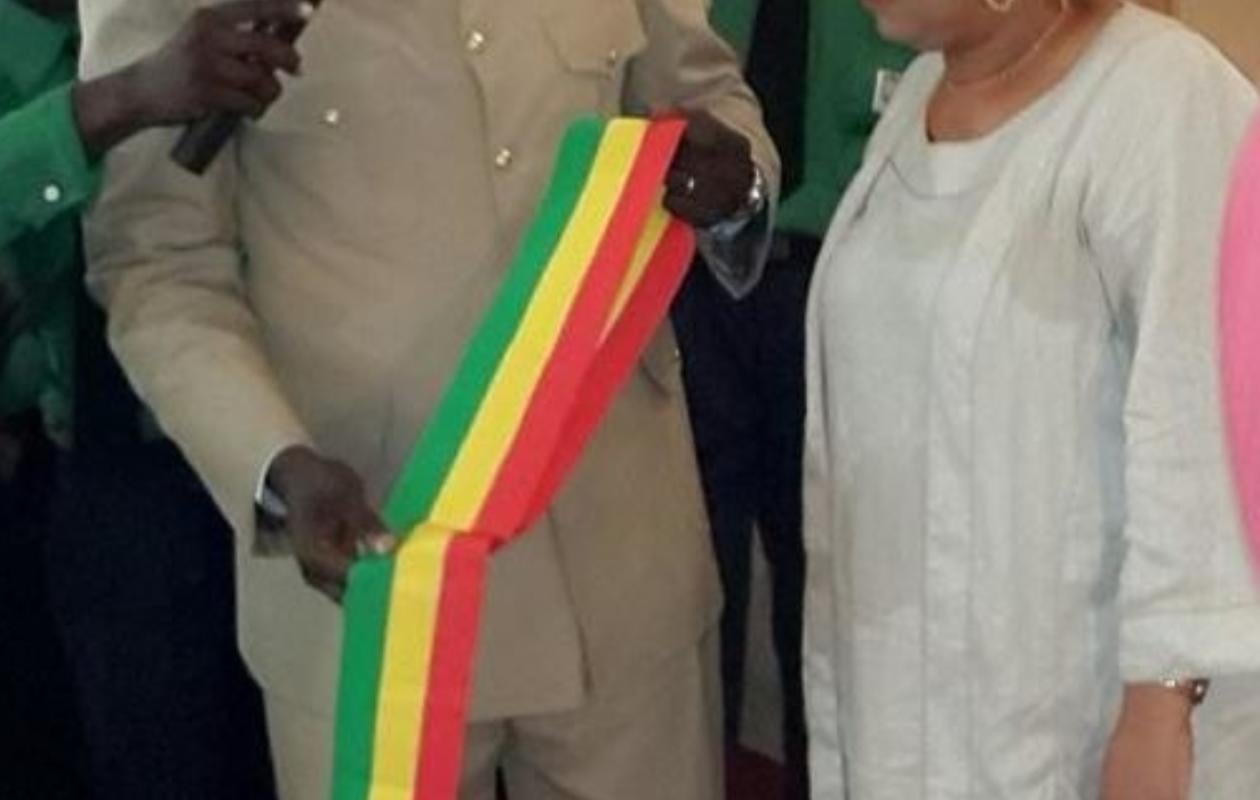
Seulement 18 mairesses sur 558 communes : le constat accablant d'une gouvernance masculine
Parliamentarians, local elected officials, political leaders, activists, and representatives of civil society met in Dakar on Tuesday to discuss "women's political participation and inclusive governance." The meeting, organized by the Network of Women Leaders for Development (RFLD), also welcomed members from across the sub-region. At the heart of the discussions were the decline in women's representation in the National Assembly, which fell from 44.2% to 41% following the snap elections of November 17, 2024, as well as the persistent limitations to gender parity in decision-making bodies.
Representing the Ministry of Women and Solidarity, Mama Diouf Fall emphasized that women's political participation "should be considered neither a favor nor a mere matter of representation." According to him, it constitutes "a requirement for social justice, institutional performance, and democratic consolidation." "Truly inclusive governance cannot be built without the full participation of women in decision-making bodies," he asserted, while commending the efforts of the RFLD and its partners in promoting women's leadership.
The ministry representative reviewed the progress made thanks to the parity law adopted in 2010, which led to a significant increase in women's representation in elected assemblies. However, he stated that "digital parity alone is not enough to guarantee women's effective and equitable participation in decision-making processes." Among the main challenges identified were women's limited access to strategic positions, insufficient funding for women's leadership, gender-based violence in politics, and social and cultural resistance. Mama Diouf Fall also emphasized the importance of strengthening women's capacities, particularly in the areas of leadership, public governance, political communication, negotiation, and digital literacy.
"The figures reflect structural obstacles."
Bator Ndiaye, the RFLD's focal point in Senegal, painted a worrying picture despite Senegal's legal progress regarding women's rights. "The early legislative elections of November 17, 2024, showed a decline in female representation in the National Assembly, from 44.2% to 41%. Even more alarming, only 13% of the lead candidates were women," she stated.
She also highlighted the disparities at the territorial level: of Senegal's 558 municipalities, only 18 are led by women, while only 3 women preside over the 43 departmental councils. For Bator Ndiaye, these figures "reflect structural obstacles, cultural resistance, and persistent inequalities in access to power, political funding, and decision-making spaces." "The question is no longer whether women are capable of governing. The real question is: why do political systems continue to limit their access to leadership?" she declared.
A plea for an extension of the parity law
Fanta Gueye Ndiaye, honorary president of the Association of Senegalese Women Jurists (AJS), believes that while the parity law has led to significant progress, its scope remains limited. "Today, the major challenge is parity in power," she stated, noting the underrepresentation of women in executive positions: mayoral offices, presidencies of departmental councils, and ministerial posts.
According to her, the law should now be extended to all decision-making levels to guarantee women more equitable access to public responsibilities. She also called on women's organizations and partners to maintain momentum around this reform, stating that "just as we had to fight to obtain the parity law, we must now fight to broaden its scope."
Structural reforms demanded
According to Sadikh Niass of the AfrikaJom Center, Senegal already has a solid legal framework with its Constitution, parity law, and ratified international conventions. However, he believes that "the gap between law and reality remains significant." He identified several structural obstacles: the high cost of politics, socio-cultural constraints, the internal workings of political parties, and the limited democratization of decision-making bodies. "Politics is still perceived as a male domain," he lamented.
Among the solutions discussed were electoral reform, funding for women's leadership, the institutionalization of political mentorship, and the internal transformation of political parties. Participants also emphasized the need to build lasting women's solidarity networks and strengthen support for young women involved in politics. "The decline from 44.2% to 41% is a warning sign. But these figures are not our destiny. They must be the starting point for a new mobilization," concluded Sadikh Niass.


![[ EXCLUSIF] Escroquerie au visa : Ass Dione passe aux aveux, le montant du préjudice dévoilé](https://image.seneweb.com/content/news/2026-21-21//thumb_1260x800_6a0e4fa45e2f9_JtdXe63zlf.jpg)










Commentaires (4)
Participer à la Discussion
Règles de la communauté :
💡 Astuce : Utilisez des emojis depuis votre téléphone ou le module emoji ci-dessous. Cliquez sur GIF pour ajouter un GIF animé. Collez un lien X/Twitter, TikTok ou Instagram pour l'afficher automatiquement.