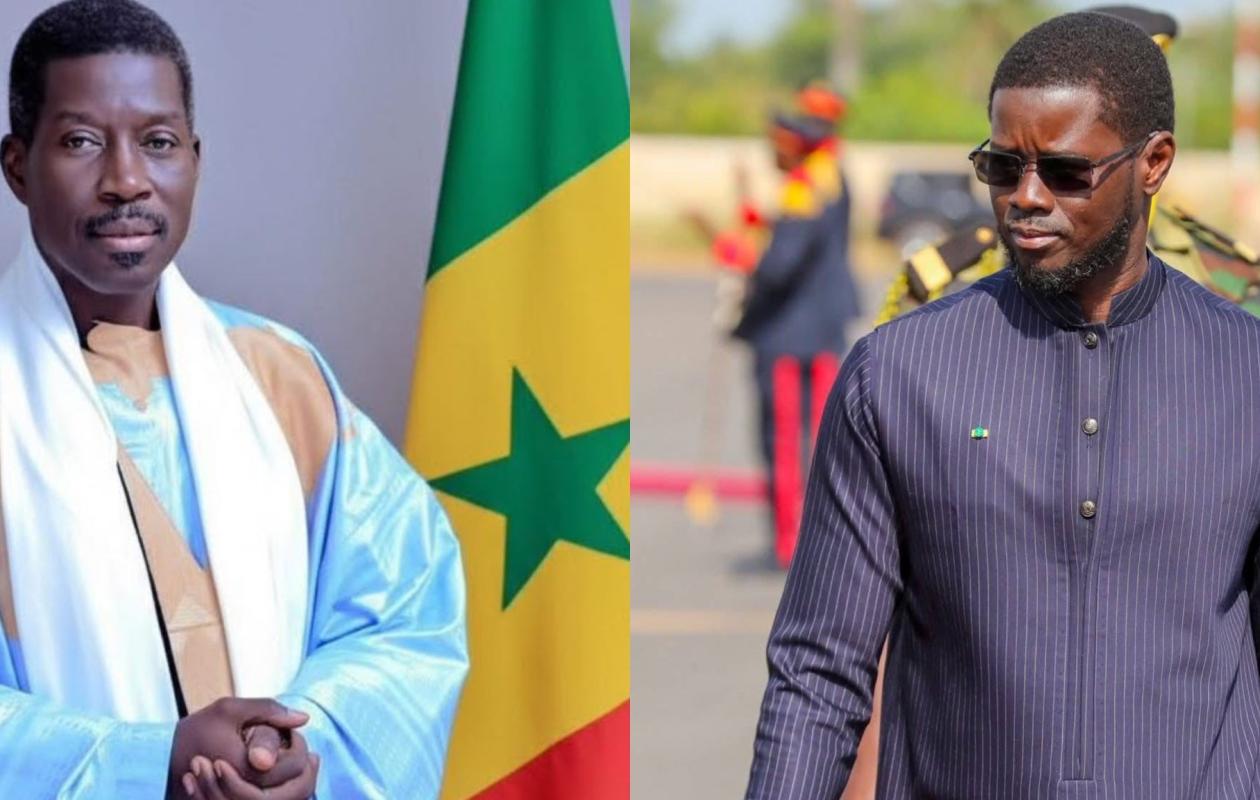
Talla Sylla pour une Casamance moteur de la dédakarisation : "De la reconstruction à la souveraineté territoriale"
While the Head of State is undertaking a crucial economic tour of Casamance, and while, as the former mayor of Thiès and advisor to President Macky Sall notes, "the initial results of the 'Diomaye Plan' (46% implementation) demonstrate a genuine commitment to healing the wounds of the past," Talla Sylla has chosen to speak out. Not, he clarifies, "to oppose, but to offer solutions."
“Years ago, in the Émile Badiane square in Bignona, I theorized the “De-Dakarisation”. This concept was not a cry of revolt against the capital, but a call for equity for the Nation.
Today, faced with the challenges of lasting peace and the return of displaced people to Nyassia and elsewhere, I reaffirm that the solution for Casamance lies not only in assistance, but in empowerment.
Senegal will not develop if Casamance remains an "emergency" to be managed from Dakar. It must become a "solution" for the whole of Senegal.
That is why, beyond infrastructure and assistance with return, I submit to the Nation and its President three concrete proposals to make Casamance the laboratory of Dédakarisation and territorial emergence.
1. Institutional De-Dakarization: Relocating for Better Management
The State must not only "visit" Casamance, it must "reside" there. I propose the effective and permanent transfer of the headquarters of certain strategic national structures to Ziguinchor and Sédhiou.
Why would ANRAC (National Agency for the Revival of Economic and Social Activities in Casamance), or the departments related to ecotourism and water and forests, still be based in Dakar?
• Proposal: Make Ziguinchor the Agricultural and Tourist Capital of Senegal.
In concrete terms, this involves the physical establishment of the national directorates of Horticulture and Tourism Promotion in the region. This strong signal will create a local decision-making ecosystem, reduce Dakar's bureaucracy, and bring the administration closer to the realities on the ground—as exemplified by the recent 10,000-hectare agro-industrial project with Italian cooperation.
2. An Ecological and Solidarity Free Zone (ESFZ)
The return of displaced populations, as observed in Nyassia, is fragile. To ensure its sustainability, a massive sedentarization economy is needed.
• Proposal: Create an exceptional tax status for the regions of Ziguinchor, Sédhiou and Kolda.
Any company that sets up there and processes local products (cashews, mangoes, seafood) on-site—without shipping them raw to Dakar—will benefit from a total tax exemption for 10 years. The goal is to shift from a "harvesting and transport" model to one of industrialization at the heart of the local area.
3. The National Civic Service for Reconstruction
Peace is consolidated through integration. The scars of conflict and landmines should not be the sole responsibility of the people of Casamance or foreign partners.
• Proposal: Establish a Civic Service for Reconstruction.
Young people from Saint-Louis, Thiès, Louga or Matam come to spend six months in Casamance to participate in community work (reconstruction of huts in Nyassia, rehabilitation of the eco-museum, reforestation).
It is by combining our efforts that we will build an indestructible brotherhood. Peace is not signed merely on paper; it is built through collective work.
The "Diomaye Plan" is a necessary step, a bandage on an open wound. But my ambition for Senegal, my ambition for Casamance, is complete healing and the march towards power.
That Casamance should no longer be seen as a region to be helped, but as the model of what every region of Senegal can become: free from its constraints, master of its riches, and a pillar of national stability.
This is the true Dédakarisation. This is a Senegalese destiny fulfilled.










Commentaires (13)
La sonacos à kaolack ou sedhiou
Les départements des chemins de fer à thies
Tout ce qui lié à l élevage à louga ou saint Louis
La pêche à thies ......
La force du propos réside d’abord dans la réhabilitation politique de la Casamance.
Elle n’est plus présentée comme une périphérie meurtrie à assister, mais comme un levier stratégique de souveraineté nationale. En cela, la « Dédakarisation » n’est ni un slogan ni une revanche contre Dakar ; elle devient un principe d’équité territoriale, presque un impératif républicain.
Les trois propositions avancées forment un triptyque cohérent :
Institutionnelle, en affirmant que l’État doit vivre les territoires qu’il gouverne, et non les administrer à distance ;
Économique, en liant paix durable et création de valeur locale, condition sine qua non du retour des populations déplacées ;
Civique, en rappelant que la réconciliation ne peut être seulement technique ou financière, mais profondément humaine et nationale.
Le texte réussit ainsi à dépasser la logique de l’urgence sécuritaire ou humanitaire pour inscrire la Casamance dans une stratégie de puissance territoriale. Il interpelle subtilement le pouvoir exécutif : les 46 % d’exécution du « Plan Diomaye » sont reconnus comme un effort, mais présentés comme insuffisants sans une transformation structurelle de la gouvernance.
Enfin, ce plaidoyer rappelle une vérité souvent oubliée : la paix ne se décrète pas depuis un bureau ministériel, elle se construit par la responsabilité, la proximité et le partage du destin national. En appelant au brassage des jeunesses et à la coproduction de la reconstruction, le texte replace la fraternité sénégalaise au cœur du projet politique.
En somme, cette tribune est moins un manifeste régional qu’un projet national. Elle pose une alternative sérieuse : soit la Casamance reste une exception à gérer, soit elle devient la preuve que le Sénégal peut enfin se penser à partir de tous ses territoires.
C’est dans ce choix que se joue, peut-être, la maturité de l’État sénégalais.
Je mets un peu de sel dans la soupe.
Pour que la Casamance ne soit plus une enclave, elle doit devenir un hub de connexion entre la Gambie, la Guinée-Bissau et la Guinée-Conakry en créant un Port Franc Fluvial et Maritime à Ziguinchor spécialisé dans le cabotage. L'objectif est de transformer la région en plateforme de réexportation vers la sous-région (OMVG/CEDEAO), transformant le handicap géographique en avantage géostratégique.
Pour parachever cette vision, la dédakarisation doit s'appuyer sur une ouverture logistique sous-régionale (port franc), une souveraineté intellectuelle (pôle de recherche environnemental), une valorisation numérique du terroir (label certifié) et une autonomie énergétique verte (biomasse et solaire). Il s'agit de transformer la Casamance en une vitrine technologique et écologique pour l'Afrique de l'Ouest.
Participer à la Discussion
Règles de la communauté :
💡 Astuce : Utilisez des emojis depuis votre téléphone ou le module emoji ci-dessous. Cliquez sur GIF pour ajouter un GIF animé. Collez un lien X/Twitter, TikTok ou Instagram pour l'afficher automatiquement.