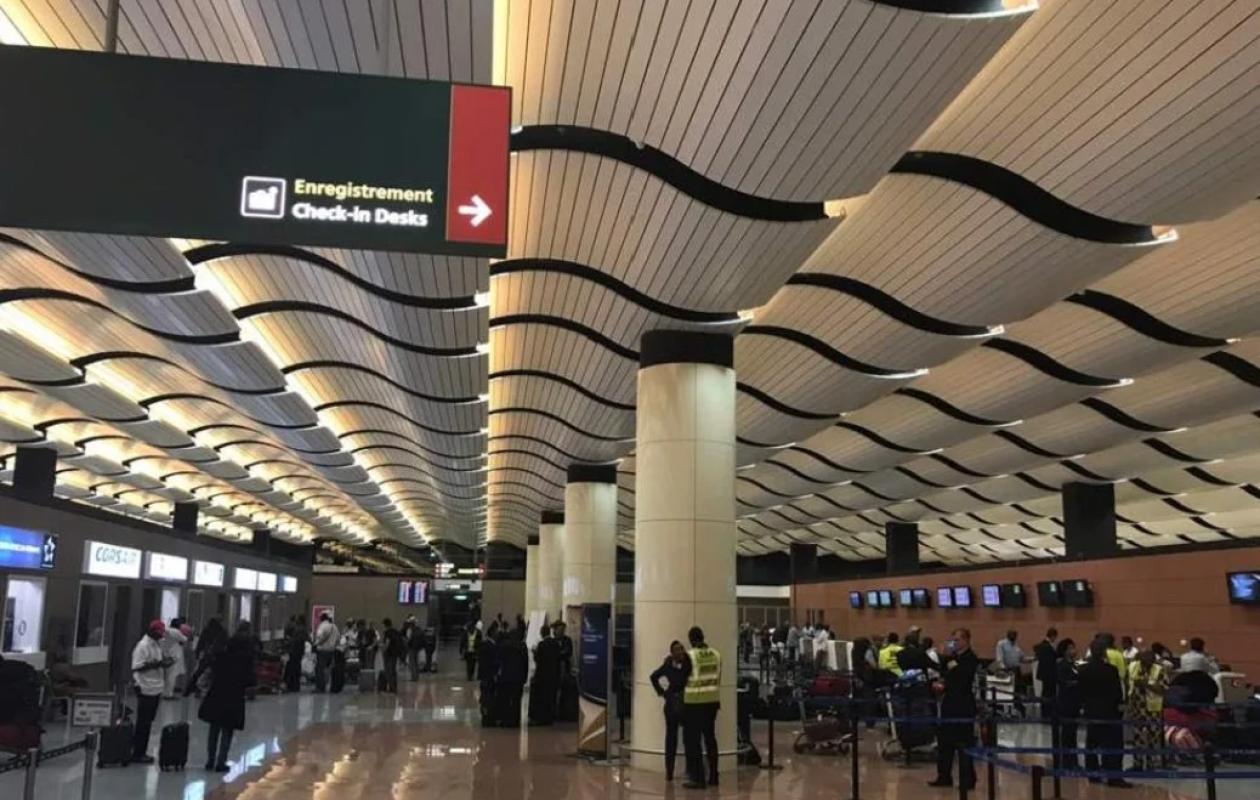
AIBD : Le Sénégal teste sa riposte face à une épidémie simulée
The arrival of the first COVID-19 case in Senegal on March 2, 2020, served as a wake-up call. Faced with this alert, health authorities had to quickly adapt their response plan. Six years later, this preparedness process continues with large-scale simulation exercises.
It is with this in mind that an exercise in managing a viral hemorrhagic fever was organized at Blaise Diagne International Airport, the country's main air entry point.
A realistic scenario to test reflexes
The scenario simulated the arrival of two passengers from a country affected by an epidemic, both exhibiting severe symptoms. This critical situation allowed for testing, under near-real-life conditions, the response capabilities of the teams. For Professor Ousmane Cissé, Director General of Health, the objective is unequivocal: "To assess our response capacity to epidemics and strengthen care to prevent any transmission." The exercise thus made it possible to observe the coordination between the various stakeholders involved, particularly in the identification, isolation, and management of contact cases.
High risks associated with hemorrhagic fevers
The choice of hemorrhagic fever as a training exercise is not arbitrary. According to health authorities, these diseases are among the highest identified risks in the country. These include Ebola, Marburg, and Crimean-Congo hemorrhagic fever. This choice is also motivated by Senegal's recent experiences with diseases such as Mpox and Rift Valley fever. This exercise is part of the World Health Organization's International Health Regulations, which require states to prepare for, prevent, and respond effectively to health emergencies. At Blaise Diagne International Airport (AIBD), an emergency health response plan is already in place. It is integrated into the airport's overall plan and allows for the rapid detection of suspected cases, their immediate isolation, and notification to the relevant authorities.
For Dr. Pape Samba Dièye, director of the Emergency Health Operations Center (COUS), the key to effective management lies in collaboration among all stakeholders. “The system is organized. Health control ensures detection, isolation, and notification. But all services must work together.” Thus, several entities are mobilized: the national emergency medical service (SAMU), the National Hygiene Service, the defense and security forces, the airport police and the gendarmerie, and the fire brigade. “This entire system must interact quickly to respond to a crisis,” he emphasizes.
Test to correct better
Beyond the simulation, the objective is to identify weaknesses in the system. Authorities intend to assess the availability of human resources, equipment needs, and the effectiveness of coordination. According to officials, these exercises allow for adjustments to existing systems and the correction of shortcomings. As Ibrahima Wane, representative of LAS, pointed out, the organization of these simulations adheres to strict standards. A full-scale exercise is required every two years, supplemented by partial or classroom exercises. Since the airport opened in 2017, several simulations have already been organized to test emergency plans. In a global context marked by the resurgence of epidemics, preparedness has become imperative. AIBD, as the country's main point of entry, occupies a strategic position in this system. Through this exercise, Senegal reaffirms its commitment to anticipating health crises and strengthening the resilience of its healthcare system.






















Commentaires (2)
Participer à la Discussion
Règles de la communauté :
💡 Astuce : Utilisez des emojis depuis votre téléphone ou le module emoji ci-dessous. Cliquez sur GIF pour ajouter un GIF animé. Collez un lien X/Twitter, TikTok ou Instagram pour l'afficher automatiquement.