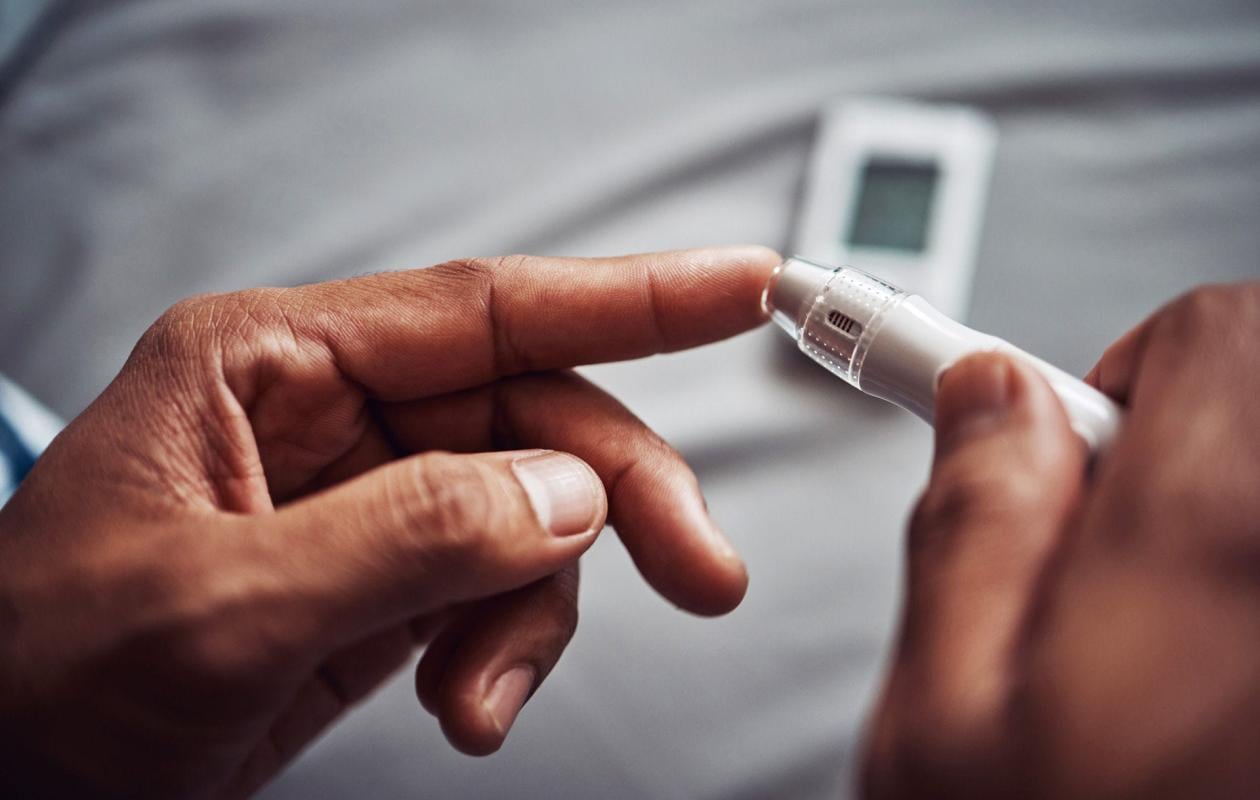
Diabète de type 1 : Vers l’administration de l’insuline sous forme de sirop
At Cheikh Anta Diop University of Dakar (UCAD), several research projects conducted by doctoral students in pharmacy are exploring innovative approaches to improve the management of certain chronic diseases. Among these projects is the development of a formulation that would allow patients with type 1 diabetes to administer their insulin orally, in syrup form, thus avoiding daily injections.
In the laboratories of the Pharmacy Department, Professor Aloyse Augustin Diouf supervises the daily progress of research conducted by his students. Specializing in pharmaceutical formulations, his laboratory works in particular on different types of emulsions designed to improve the effectiveness of medications.
“Our laboratory specializes in formulations and different types of emulsions. We work on simple emulsions, but also on double emulsions. These nanometric formulations allow the active ingredients of drugs to act directly at the cellular level,” explains Professor Diouf.
Among the doctoral students involved in this research is Doctor of Pharmacy Eugénie Diop, who is particularly interested in alternatives to insulin injections for people with type 1 diabetes.
According to her, the goal is to offer patients a less burdensome therapeutic solution. "Type 1 diabetics are often dependent on multiple daily injections. We are therefore looking to develop a formulation that would allow insulin to be administered orally, in order to make treatment simpler and less painful," she emphasizes.
However, administering insulin orally presents a major scientific challenge. This hormone is generally destroyed by digestive enzymes before it can act in the body. To overcome this obstacle, researchers are using a molecular protection technology. "We encapsulated the insulin in what are called double emulsions. This protects the molecule twice against digestive enzymes. This strategy creates what we call 'stealth,' which allows the drug to cross the digestive barrier and reach the bloodstream," explains the researcher.
Alongside this research, other studies focus on the reliability of devices used by diabetics to measure their blood glucose levels. A study conducted on a sample of 100 glucometers evaluated their performance according to three criteria: reliability, sensitivity, and accuracy of measurements.
“Our analyses showed that the tested devices exhibited good sensitivity and accuracy. However, some accuracy issues were observed,” stated Professor Diouf. These discrepancies could be explained by several factors, including wear and tear on the devices, accidental drops, or temperature variations in pharmacies and consultation rooms.
To improve the quality control of this equipment, researchers have proposed a new formulation that more accurately simulates the characteristics of human blood. "The control solutions currently used are essentially composed of water and glucose.
"But blood contains many other elements, including proteins, ions and cells. It also has a different viscosity," explains the researcher.
The team is working on developing a medium that more closely simulates the actual composition of blood. Such a solution could lead to more reliable results during glucometer tests.
In the future, this innovation could be made available to pharmacies and users to facilitate the verification of the quality of their blood glucose measuring devices.
Despite the potential of this work, the researchers nevertheless emphasize the difficulties associated with funding scientific research. “The lack of financial resources is a real obstacle. We are often forced to turn to international funding and technical and financial partners,” laments Professor Aloyse Diouf. He also acknowledges that the search for funding can be particularly time-consuming. “Preparing a funding application can take two to three months. However, between research and teaching, it is difficult to dedicate that much time to these procedures,” he explains.
For researchers, these theses focusing on innovative therapeutic approaches represent a major challenge for the future of medical research in Senegal.
They therefore believe it is essential that the State strengthens its support for national scientific initiatives in order to enable these promising projects to succeed and contribute to improving patient care.




















Commentaires (2)
Participer à la Discussion
Règles de la communauté
💡 Astuce : Utilisez des emojis depuis votre téléphone ou le module emoji ci-dessous. Cliquez sur GIF pour ajouter un GIF animé. Collez un lien X/Twitter, TikTok ou Instagram pour l'afficher automatiquement.
Se connecter
Commentez avec votre profil, votre photo, et soyez averti des réponses.