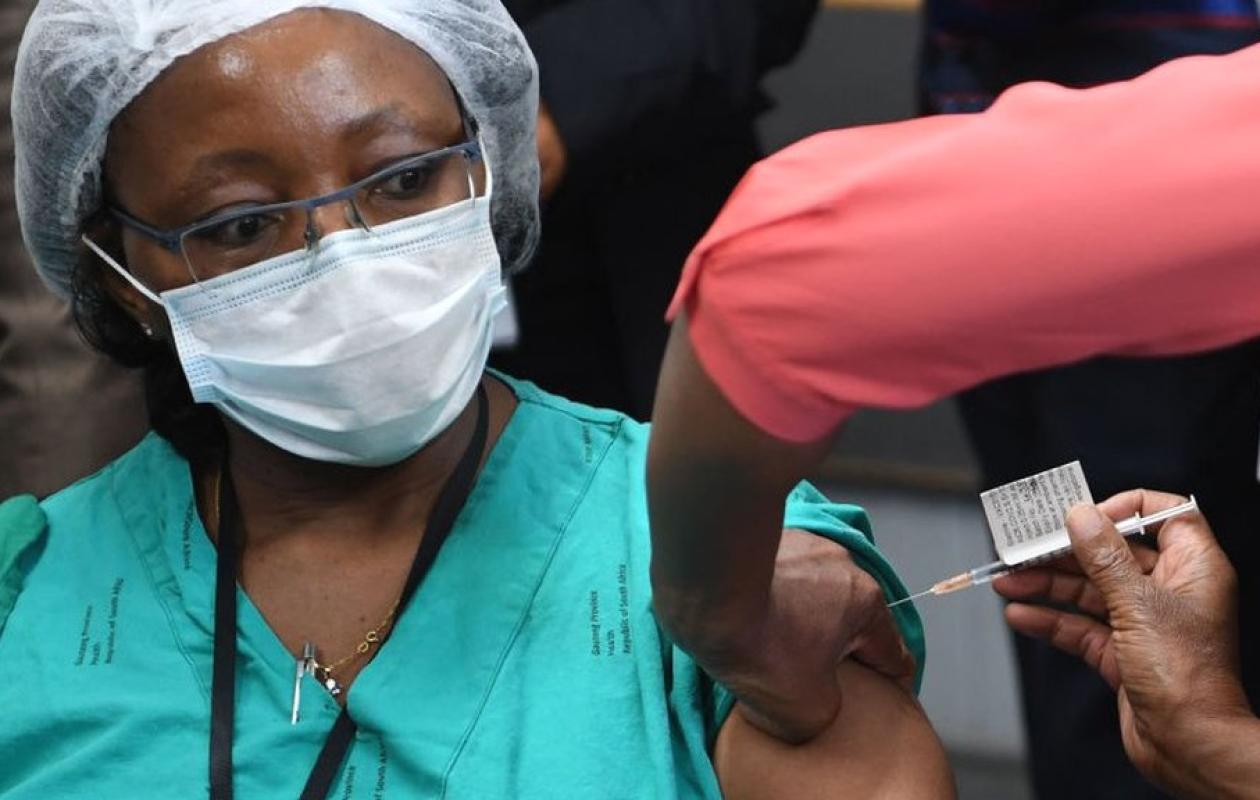
« J’étais censée mourir en cinq Ans... » : Le combat émouvant d'Awa Sané, victorieuse du VIH et grand-mère
The testimony of Awa Sané, a person living with HIV (PLHIV) since 1997, is a testament to resilience and science. Infected by her husband upon his return from a country in the sub-region, she silently endured years of stigmatization. Today, she shares her story to reassure others living with the disease.
The five years that should be the last
“I learned I was HIV-positive at a time when there were no medications yet. We were given bacterin indiscriminately, without any real protocol,” recalls Awa Sané. At that time, life expectancy was limited: “We were given five years to live. Five years to prepare for death, in silence.”
As a newlywed, the idea of having a child was unthinkable for her. Then, advances in science brought hope with the arrival of medications. But the struggle was twofold.
The stigma, harder than the virus
For Awa Sané, the greatest difficulty wasn't just medical. "It was the stigma." At the hospital, she endured hurtful and accusatory questions, and the way others looked at her changed. The burden of secrecy was immense: "I didn't even have the courage to tell my family. The weight of the secret was harder than the virus itself."
Her dream, which she hadn't dared to utter, became a reality when foreign doctors asked her about her needs: "I want a child."
The day she defied fate
She became pregnant under strict medical supervision (PMTCT). However, even in the hospital, the stigma continued. She recounts the day of her delivery: despite her water breaking, a midwife turned her away upon seeing the PMTCT (Prevention of Mother-to-Child Transmission) notation in her medical record, treating her "as if I didn't deserve to give life."
Thanks to the intervention of a doctor, she was finally treated and gave birth to her son, Seydina Mohamed, in 2001.
The secret of the bottle and the support of a father
The next challenge was breastfeeding. Her father, a police commissioner, silently supported her, but her mother wanted her to breastfeed, unaware of the danger. One evening, caught by her mother preparing a bottle, Awa found the kitchen locked the next day.
It was her father who took concrete action: without a word, he went to buy her milk, a gas canister, and all the necessary equipment so she could secretly feed her child in her room. Her greatest victory: her son was healthy. "I hadn't passed the virus on to him. That was my greatest victory."
Today, Awa Sané is living proof of the victory over HIV. "I, who prayed only to live long enough to hold my child in my arms, today I saw my grandson. I saw life continue through him."
She concluded her poignant testimony by stating that HIV is not the end, and that behind every person living with HIV, there is "a story, a pain, but also a strength that no one suspects."






![[EXCLUSIF] Affaire PCD : Le cap des 100 arrestations franchi, le téléphone d'Ass Dione accable le fils d'un grand marabout](https://image.seneweb.com/content/news/2026-20-13//thumb_1260x800_6a04a22c82a84_ACA7PLyDxC.jpg)










Commentaires (5)
Certains centres, comme le Centre de Promotion de la Santé Cardinal Hyacinthe Thiandoum (CPS/CHT), proposent un dépistage volontaire, anonyme et gratuit.
Autotests VIH :
Des ONG comme ENDA Santé et Solthis distribuent des autotests VIH gratuits et anonymes, en particulier aux populations vulnérables.
Vous pouvez vous renseigner auprès de ces associations pour savoir où obtenir un autotest dans le cadre du projet ATLAS, qui intervient notamment à Dakar.
Ou appelle le Conseil National de Lutte contre le Sida
(CNLS) 33 869 09 09
C'est à l'hôpital Fann
Participer à la Discussion
Règles de la communauté :
💡 Astuce : Utilisez des emojis depuis votre téléphone ou le module emoji ci-dessous. Cliquez sur GIF pour ajouter un GIF animé. Collez un lien X/Twitter, TikTok ou Instagram pour l'afficher automatiquement.