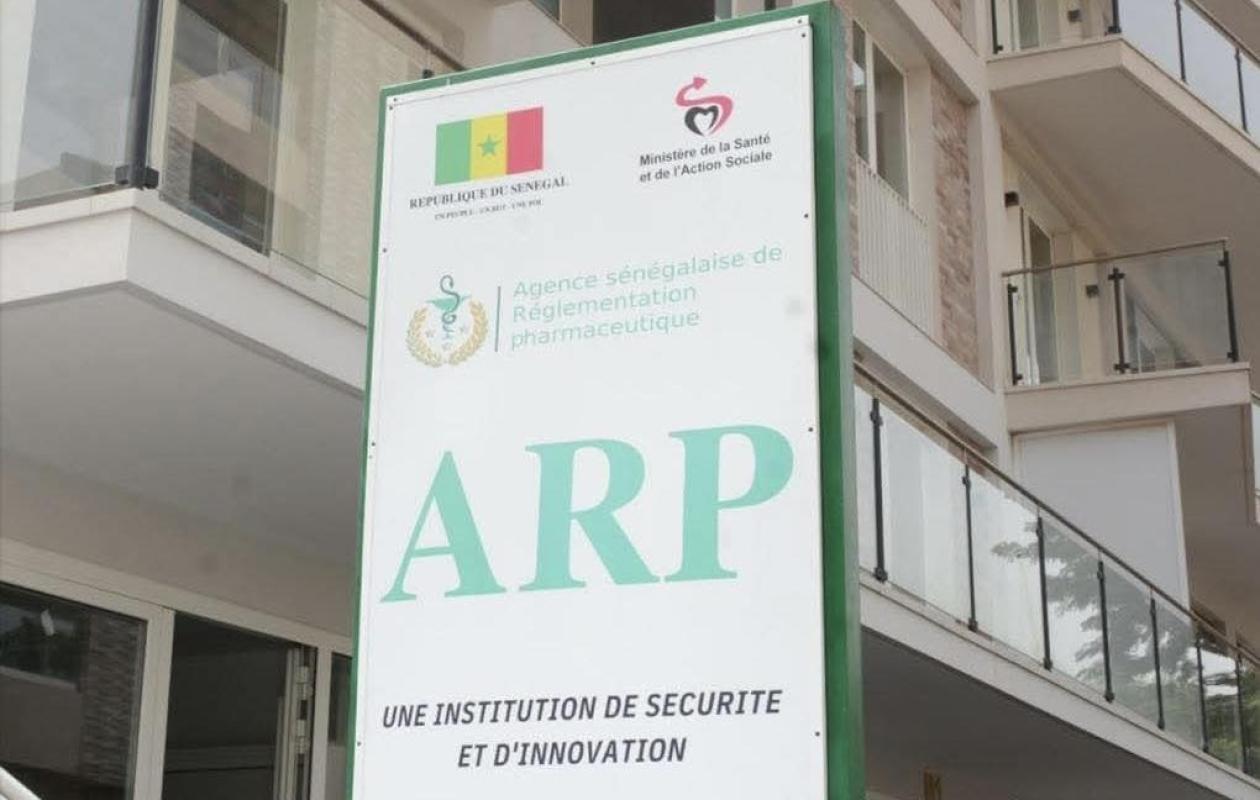
Autorité de régulation pharmaceutique : La direction plaide la réforme, les syndicats crient à la dérive
At the Pharmaceutical Regulatory Authority (ARP), the battle of narratives is now public. A strategic memo from the Director General, touting reforms deemed vital for Senegal's pharmaceutical sovereignty, has provoked a frontal response from the SAMES and SUTSAS unions, which denounce an authoritarian, opaque, and dangerous governance model for public health. An analysis of this high-stakes power struggle.
A leadership that invokes sovereignty and the urgency of reform
In a widely circulated strategic note, the Director General of the ARP attempts to justify the reforms undertaken since his arrival. He describes a national pharmaceutical sector estimated at 300 billion CFA francs per year, 95% dependent on imports and therefore vulnerable to logistical, geopolitical and inflationary shocks.
According to management, the measures taken constitute a "first operational implementation" of the Senegal 2050 Agenda regarding health sovereignty. The document highlights increased inspections, seizures of illicit medicines valued at over 5 billion CFA francs, enhanced protection of the local industry, and a reorganization of international logistics networks, which, according to projections, could generate savings of up to 120 billion CFA francs per year.
But the heart of the message lies elsewhere. The director general warns of "very high political, economic, and institutional risks" linked to the transfer of revenues estimated at over 150 billion CFA francs. The further the reforms progress, he explains, the more they disturb powerful interests, which could activate levers of destabilization, including those within the institution itself.
The document concludes unambiguously: "The real risk to the state lies not in the continuation of reforms, but in their interruption or weakening."
The union's response: "This is not a reform, it's a drift."
This interpretation is vehemently contested by the SAMES section and the SUTSAS sub-section of the ARP. In a reasoned and uncompromising response, the unions argue that the Director General's memo is neither a strategic analysis nor a matter of public governance, but rather a "pleading" intended to legitimize practices they deem illegal.
"You are constructing a heroic narrative where all criticism becomes sabotage and every opponent an enemy of sovereignty," they accuse, denouncing a governance by fear and conflation.
The unions firmly reject the conflation of external resistance linked to economic lobbies with internal resistance from employees. For them, denouncing punitive transfers, alleged nepotism, or a lack of transparency in recruitment falls under union rights and the duty to raise the alarm, not institutional sabotage.
Disputed figures and communication deemed misleading
One of the major points of contention concerns the figures presented by management. The unions consider the amount of over 5 billion CFA francs in seizures "scientifically improbable," believing it is primarily intended to impress the supervisory authorities.
According to them, the majority of the seized products were aphrodisiacs, vitamins, or cosmetics with dubious claims, unrelated to the stated values. "Where is the audited and verifiable evidence of these gains?" they ask, emphasizing that an estimate cannot be equated with an accounting reality.
They are also surprised that these supposed "successes" are accompanied, in their view, by an unprecedented deterioration of the social climate, marked by internal tensions and a loss of credibility of the institution.
Internal restructuring or administrative purge?
Management claims to have put an end to internal corruption practices related to authorizations and marketing authorizations. A claim that the unions describe as "an insult to collective intelligence."
“Who’s watching the watchdog?” they ask, accusing management of removing honest and competent employees who refuse to “turn a blind eye” to certain irregularities. According to them, these transfers are motivated not by the needs of the service, but by the degree of personal adherence to the CEO’s policies.
They are demanding the immediate publication of the HR, financial and logistical audits, believing that their non-publication fuels suspicions of poor governance.
An issue that goes beyond social conflict
Beyond the verbal confrontation, the unions are raising serious concerns: suspicious permits, certificates of good manufacturing practices issued without proven compliance, and attempts at fraudulent import or export. These practices, they argue, directly threaten public health. They are demanding an immediate halt to the contested changes and the opening of an independent investigation, entrusted to the General Inspectorate of State (IGE), the Court of Auditors, or a parliamentary commission.
Pharmaceutical sovereignty, but at what price?
While both sides claim to uphold pharmaceutical sovereignty, they are diametrically opposed on the method. Management cites urgency, the resilience of vested interests, and the need for strong political support. The unions, for their part, warn against a reform carried out in disregard of regulations, employees, and procedures.
In this confrontation, the ARP appears to be at a breaking point. Either the conflict leads to a clear institutional arbitration, restoring trust and legitimacy, or it becomes bogged down, risking the lasting weakening of an institution central to Senegal's health policy and pharmaceutical industrialization.






















Commentaires (1)
D'ailleurs, au rythme où vont les confrontations par presse interposée, les mouvements de grève et autres dénonciations, nous sommes, nous autres usagers et sénégalais tout court, en droit de nous demander si nous sommes vraiment en République. L'état devrait se ressaisir avant qu'il ne soit trop tard. Aujourd'hui, force est de reconnaître que cette agence n'est que l'ombre d'elle-même avec la mise à l'écart de cadres compétents au profit de la cour, de la famille et des affinités, une gestion des plus opaques et une déliquescence profonde du tissu social. Le balai du président de la République devrait y faire un tour dans les plus brefs délais.
Participer à la Discussion
Règles de la communauté :
💡 Astuce : Utilisez des emojis depuis votre téléphone ou le module emoji ci-dessous. Cliquez sur GIF pour ajouter un GIF animé. Collez un lien X/Twitter, TikTok ou Instagram pour l'afficher automatiquement.