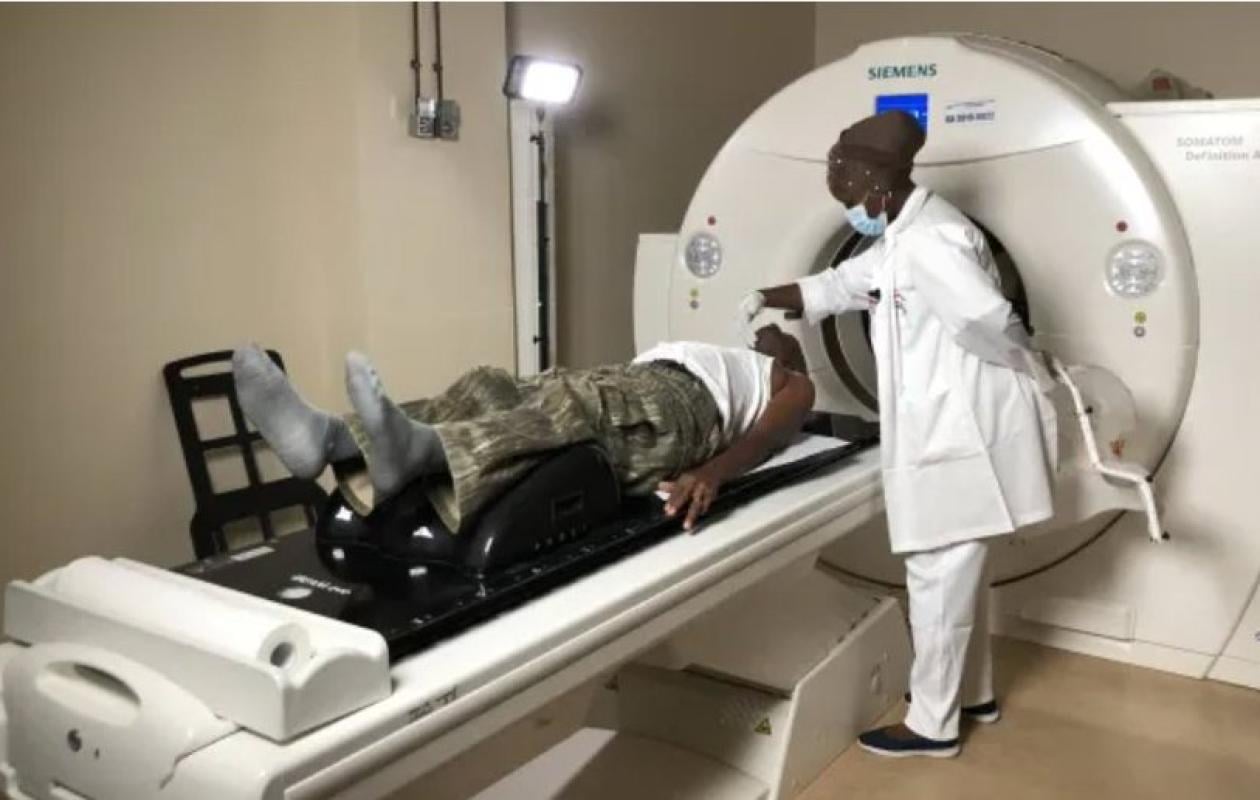
Journée mondiale de la santé — Institut Pasteur de Dakar et OMS
To mark World Health Day, the Pasteur Institute of Dakar (IPD) and the World Health Organization (WHO) placed science at the heart of the continent's priorities. Experts, policymakers, and researchers reaffirmed that investing in research is the only way to guarantee Africa's health sovereignty.
The meeting provided an opportunity to exchange perspectives on the major challenges facing the sector: equitable access to care, technological innovations, resilience of health systems and adaptation to local realities.
Indeed, the Director General of the Pasteur Institute of Dakar, Dr. Ibrahima Socé Fall, emphasized the urgent need to place science at the heart of public policy. According to him, this day is "a key moment to reaffirm our commitment to a more equitable, resilient, and sovereign healthcare system."
He advocated for an inclusive approach: “health for all, by all, and everywhere,” based on rigorous scientific evidence. For him, the challenge goes beyond mere production: it involves controlling the entire value chain, from basic research to manufacturing that meets international standards. In this context, the “One Health” approach is considered essential. It links human, animal, and environmental health, highlighting that more than 80% of emerging diseases are zoonotic in origin.
Dr. Fall, however, pointed out a major weakness: "Africa's low participation in global clinical trials (less than 4%, and only 0.6% for cardiovascular diseases)." This deficit limits the adaptation of treatments to the genetic specificities of local populations, hence the crucial importance of the genomic research currently being conducted in Dakar, he said.
The WHO advocates for local scientific capacity
Dr. Michel N'da Konan Yao, the WHO representative in Senegal, noted that the COVID-19 crisis has exposed structural vulnerabilities and inequalities in access to innovation. "There can be no health sovereignty without local scientific capacity," he emphasized, stressing that science is the best defense against misinformation. He added, "Senegal, through the IPD (Institute for Development Planning), plays a strategic role as a WHO collaborating center for the transfer of cutting-edge technologies, particularly messenger RNA."
Faced with new challenges (climate change, non-communicable diseases), Dr. Yao identified four priorities: "to produce reliable local data, to encourage innovation, to accelerate universal health coverage and to anticipate health risks".
On the same topic, Professor Colonel Bécaye Fall, who chaired the meeting, noted that no effective system can function without a solid scientific foundation. In Senegal, this vision is embodied in the National Health System Transformation Strategy 2025-2034, which focuses on digitalization and strengthening epidemiological surveillance.
However, the picture is not without its drawbacks. The dependence on external funding for research, which still stands at 85%, remains a major obstacle to genuine autonomy.
According to him, "investing in science means investing in the capacity of states to decide and act autonomously. In Dakar, the message is clear: Africa's health sovereignty will depend on strong research, rooted in the realities of the continent and supported by a synergy between the state, the private sector and civil society."
Yandé Diop














Commentaires (0)
Participer à la Discussion
Règles de la communauté :
💡 Astuce : Utilisez des emojis depuis votre téléphone ou le module emoji ci-dessous. Cliquez sur GIF pour ajouter un GIF animé. Collez un lien X/Twitter, TikTok ou Instagram pour l'afficher automatiquement.