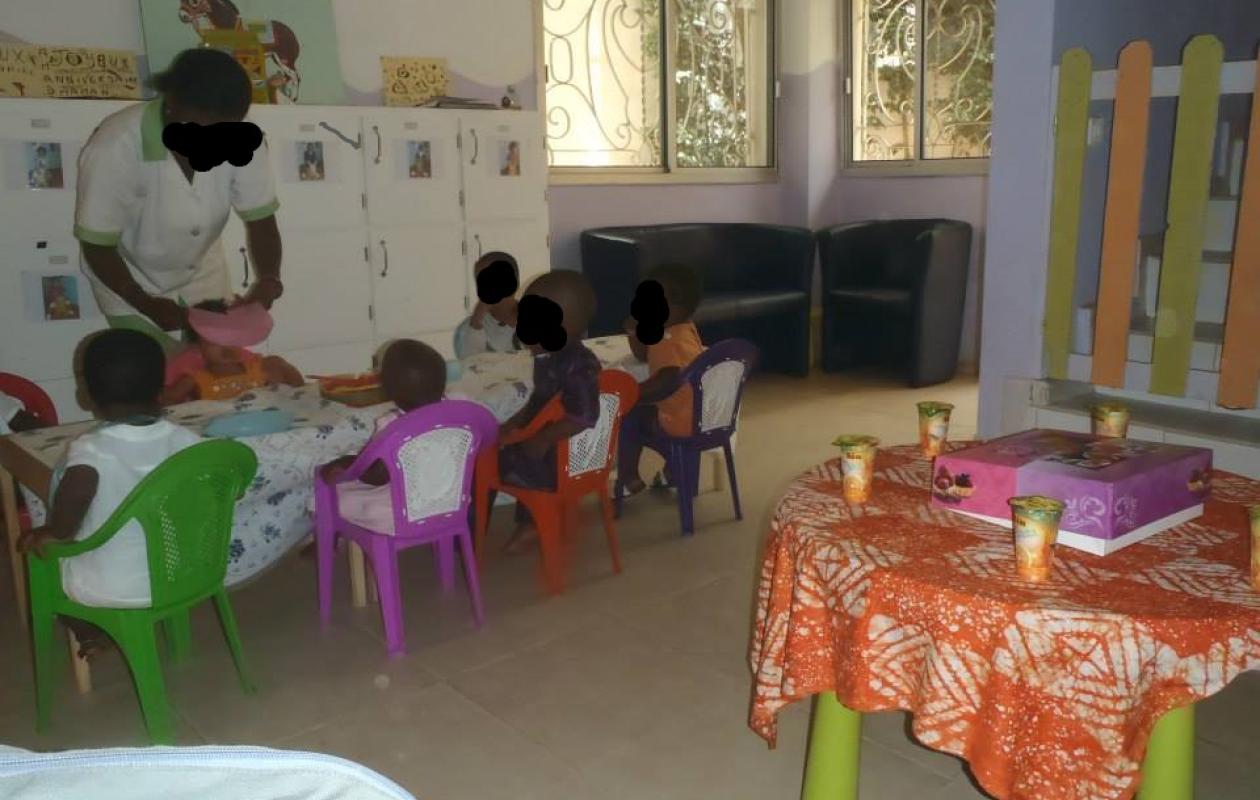
Crèches communautaires : Dakar, carrefour du plaidoyer national pour libérer le potentiel économique des femmes
"Investing in childcare to unlock women's economic potential." This was the central theme of the National Advocacy Forum for the establishment of community nurseries, organized by the National Network of Working Women of Senegal (RENAFETS), with the support of UN Women, which opened this Monday in Dakar.
This high-level meeting, which runs until December 23, brings together representatives of the State, local authorities, parliamentarians, civil society organizations, NGOs, and technical and financial partners. The objective is to lay the foundations for a national model of accessible, equitable, and sustainable childcare, capable of supporting women's economic empowerment.
Childcare, a strategic economic lever
Speaking at the opening of the forum, Aïda Gueye Seyni, representative of the Regional Director of UN Women Senegal, recalled that childcare goes beyond the social framework to become a real economic infrastructure.
"Childcare is much more than a social policy. It is a strategic lever for economic transformation and social justice.
"Investing in childcare is investing in equality, prosperity and the future of Senegal," she said.
According to UN Women studies conducted as part of the 3R Programme (Recognize, Reduce, and Redistribute unpaid care work), Senegalese women spend on average more than 12 hours a day on unpaid care work, a significant portion of which is dedicated to childcare. This excessive burden is a major obstacle to their access to decent employment, vocational training, and economic opportunities.
A glaring shortage of accessible childcare services
Senegal has nearly 1.37 million preschool-aged children, mostly concentrated in urban and peri-urban areas. However, childcare services remain scarce, expensive, and unevenly distributed. Private nurseries are out of reach for many families, while community and public facilities remain inadequate.
Although decree 2024-66, regulating the opening and operation of childcare facilities for children aged 0 to 3, represents a major step forward, its implementation remains limited on the ground.
RENAFETS, an evidence-based advocacy campaign
For Fatoumata Binetou Yaffa, president of RENAFETS, this forum marks a decisive step in the implementation of the network's action plan.
"The establishment of community nurseries is a priority to reduce gender inequalities and enable women, especially those in the informal sector, to reconcile professional and family life," she stressed.
Through the Counting Women's Work (CWW) project, funded by the Hewlett Foundation and implemented with Population Reference Bureau (PRB), RENAFETS has conducted extensive research on unpaid family care work, making childcare a major political and social issue.
The commitment of the Senegalese state reaffirmed
Representing the Minister of Family, Social Action and Solidarity, Djima Abissane, head of the Division of Women's Organizations at the Directorate of Women's Economic Empowerment, welcomed the RENAFETS initiative and recalled the alignment of this advocacy with national guidelines.
"Investing in childcare is investing in women's economic empowerment, productivity and the harmonious development of early childhood," she stated.
She also highlighted the consistency of this approach with the future Framework Law on the economic empowerment of women, desired by the President of the Republic Bassirou Diomaye Faye and implemented by the Prime Minister Ousmane Sonko.
Towards scaling up community crèches
As part of the 3R Programme, UN Women has already contributed to the rehabilitation and equipping of 40 to 60 community childcare facilities in the Saint-Louis and Ziguinchor regions, demonstrating the positive impact of these services on the economic availability of women and the well-being of children.
The forum now aims to capitalize on these experiences, strengthen inter-institutional consultation and formulate operational recommendations for scaling up nationally, including regulatory, institutional and financial aspects.
At the end of these two days of work, the participants hope to reach a strong consensus around childcare as a pillar of the care economy and a driver of gender equality.























Commentaires (0)
Participer à la Discussion
Règles de la communauté :
💡 Astuce : Utilisez des emojis depuis votre téléphone ou le module emoji ci-dessous. Cliquez sur GIF pour ajouter un GIF animé. Collez un lien X/Twitter ou TikTok pour l'afficher automatiquement.