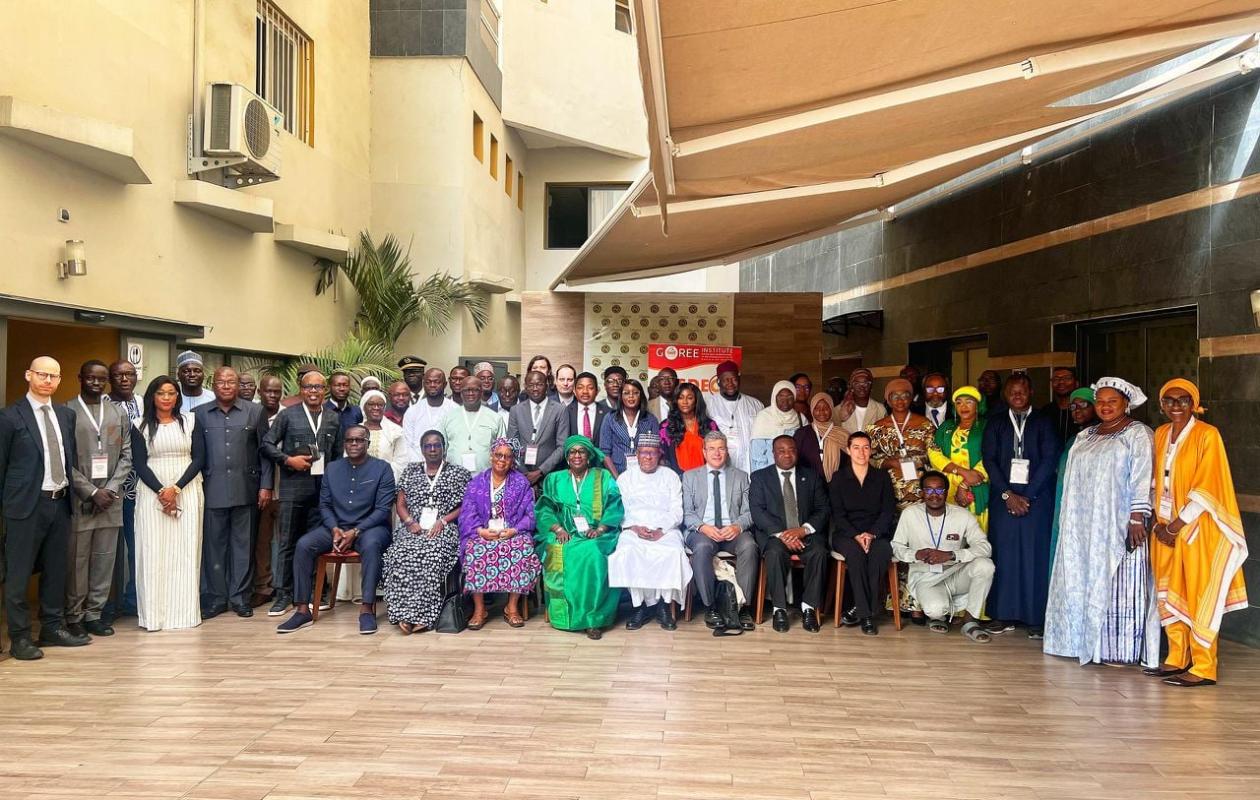
Démocratie en Afrique de l'Ouest et du Sahel: Gorée Institute propose des stratégies pour une gouvernance inclusive
As part of the Research in Service of Democracy and Social Cohesion (RESDECS) project, the Gorée Institute organized a regional conference in Dakar on Monday, February 16, 2026, to discuss the challenges to democracy in West Africa and the Sahel. The conference, which brought together experts, researchers, and civil society actors from Senegal, Mali, Guinea, Niger, Burkina Faso, Côte d'Ivoire, and Benin, focused on the theme "Rethinking Democracy in a Context of Instability: Strategies for Endogenous and Inclusive Governance in West Africa and the Sahel."
The objective is to propose strategies to strengthen the resilience of institutions and communities in the face of threats to stability, and to promote more inclusive and participatory democratic governance.
In his opening speech, the executive director of the Gorée Institute, Doudou Dia, recalled that democracy in West Africa and the Sahel faces significant challenges, including political instability, military transitions, persistent insecurity and a crisis of confidence between citizens and public institutions.
He indicated that the answer to these challenges lies not in abandoning democratic principles, but rather in reinventing them based on local realities and indigenous knowledge. "Democracy cannot be seen as an imported model; it must be experienced as a renewed social contract, negotiated and appropriated by the citizens themselves," he stated.
Doudou Dia also highlighted the importance of citizen participation, social justice and political legitimacy for effective democratic governance.
He also stressed the importance of social justice and meeting citizens' basic needs, such as access to education, health, and justice.
According to him, to get out of this situation, citizens must be involved in decision-making and the co-production of public policies.
For Dr. Papa Fara Diallo, country researcher for the RESDECS project in Senegal, the objective of this conference is to take a cross-disciplinary look at the results of the research and to develop a model of democratic governance that respects human rights and inclusion.
Dr. Diallo explained that the research methodology involves recruiting monitors in each country, who are then deployed to different areas to gather information on the ground. "We want to ensure that our states are not reacting to threats to stability, but rather anticipating and preventing them," he stated.
He also indicated that the research results showed that countries in the region face significant challenges in democratic governance, particularly with regard to stability, security and social cohesion.
The teaching research team noted that the results from this conference will be summarized in a document and sent to governments and development partners, as a contribution from the Gorée Institute to democratic resilience in the region.
This conference, co-financed by the European Union through the Team Europe Democracy initiative and implemented by ENABEL, also plans to extend the project to other West African countries, with the aim of promoting democracy and social cohesion in the region.













Commentaires (4)
Participer à la Discussion
Règles de la communauté :
💡 Astuce : Utilisez des emojis depuis votre téléphone ou le module emoji ci-dessous. Cliquez sur GIF pour ajouter un GIF animé. Collez un lien X/Twitter, TikTok ou Instagram pour l'afficher automatiquement.