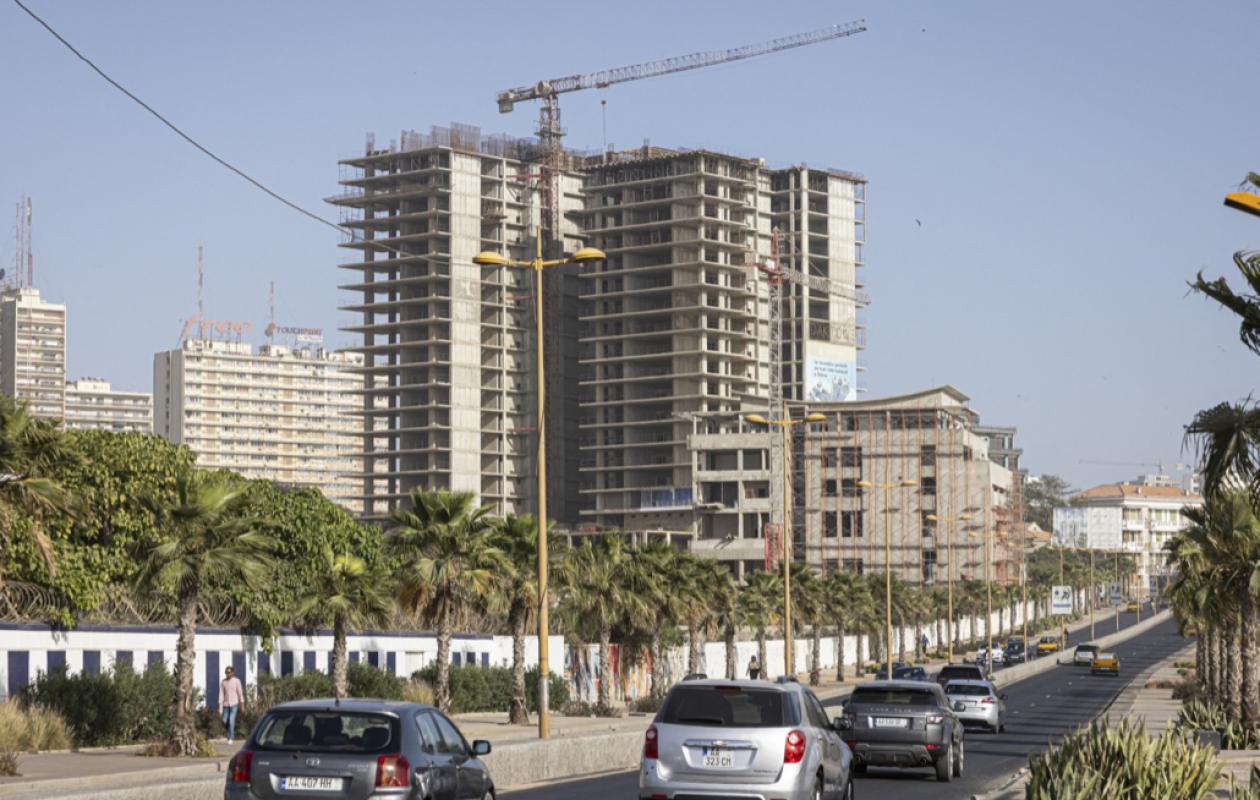
À Dakar, le logement s’éloigne du pouvoir d’achat des ménages
Finding accommodation in Senegal's capital now represents a significant financial challenge for a growing segment of the population. The combination of scarce land, persistent speculative activity, and expensive mortgages has progressively pushed homeownership out of reach for the middle class. Housing, once a basic necessity, is increasingly becoming an asset reserved for households with substantial initial capital or secure incomes.
Dakar concentrates nearly a quarter of the national population on less than 0.3% of the territory, according to recent demographic data. This concentration creates sustained demand in a geographically constrained area, bordered by the ocean and already densely urbanized zones. The pressure on land has resulted in soaring prices in the central districts and the immediate suburbs. In some areas, the price per square meter can exceed several hundred thousand CFA francs, making homeownership unaffordable for salaried workers with median incomes.
The rental market is not immune to this dynamic. Rents sometimes absorb more than 40% of urban households' monthly income, a threshold that reduces their savings capacity and limits access to credit. However, real estate financing remains structured around high interest rates, often exceeding 8% or 9%, with significant down payment requirements. This configuration effectively excludes informal sector workers or those whose income is not easily documented.
This gradual exclusion is reshaping urban geography. Households forced to leave city centers are retreating to the outer suburbs, where transportation, sanitation, and public service infrastructure remains incomplete. Unplanned urban sprawl increases travel times, raises mobility costs, and increases the public spending required to connect these areas to essential networks.
This situation also raises questions about the role of housing in the national economy. When real estate becomes a preferred speculative investment, it ties up financial resources that could be directed towards productive activity. The proliferation of gated communities and developments aimed at wealthy clients illustrates this transformation of housing into an investment product, sometimes disconnected from the needs of the majority of the population.
Public social housing programs exist, but their rate of production remains lower than the growth in urban demand. The issue is not solely quantitative. It also concerns land regulation, controlling the cost of credit, and balancing real estate attractiveness with social cohesion. In Dakar, access to housing is no longer simply a matter of having a roof over one's head. It reveals the collective capacity to reconcile urban development, economic equity, and social stability.




















Commentaires (17)
Participer à la Discussion
Règles de la communauté :
💡 Astuce : Utilisez des emojis depuis votre téléphone ou le module emoji ci-dessous. Cliquez sur GIF pour ajouter un GIF animé. Collez un lien X/Twitter, TikTok ou Instagram pour l'afficher automatiquement.