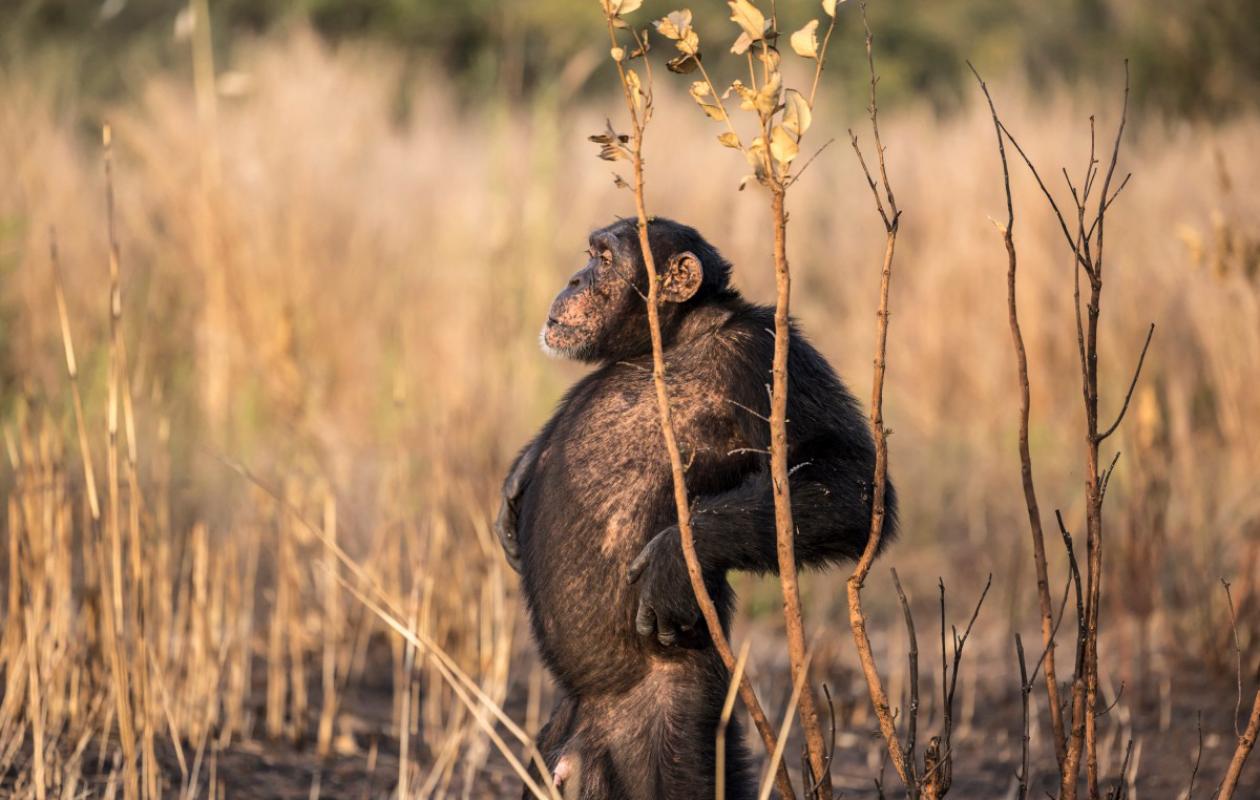
Kédougou : de fascinants chimpanzés des savanes et chasseurs à la lance
A piercing cry tears through the dawn, followed by other piercing voices and the rustling of branches: it is the moment when the wild chimpanzees of the Fongoli savannah, with their unique way of life, wish each other a good day in this Sahelian region on the edge of Senegal, where a primatologist and her team are conducting pioneering observation work.
This group of rare chimpanzees - who, unlike many of their kind, live in the scorching bushland of southeastern Senegal and not in the forest - have managed to survive in the most extreme environment possible for their species.
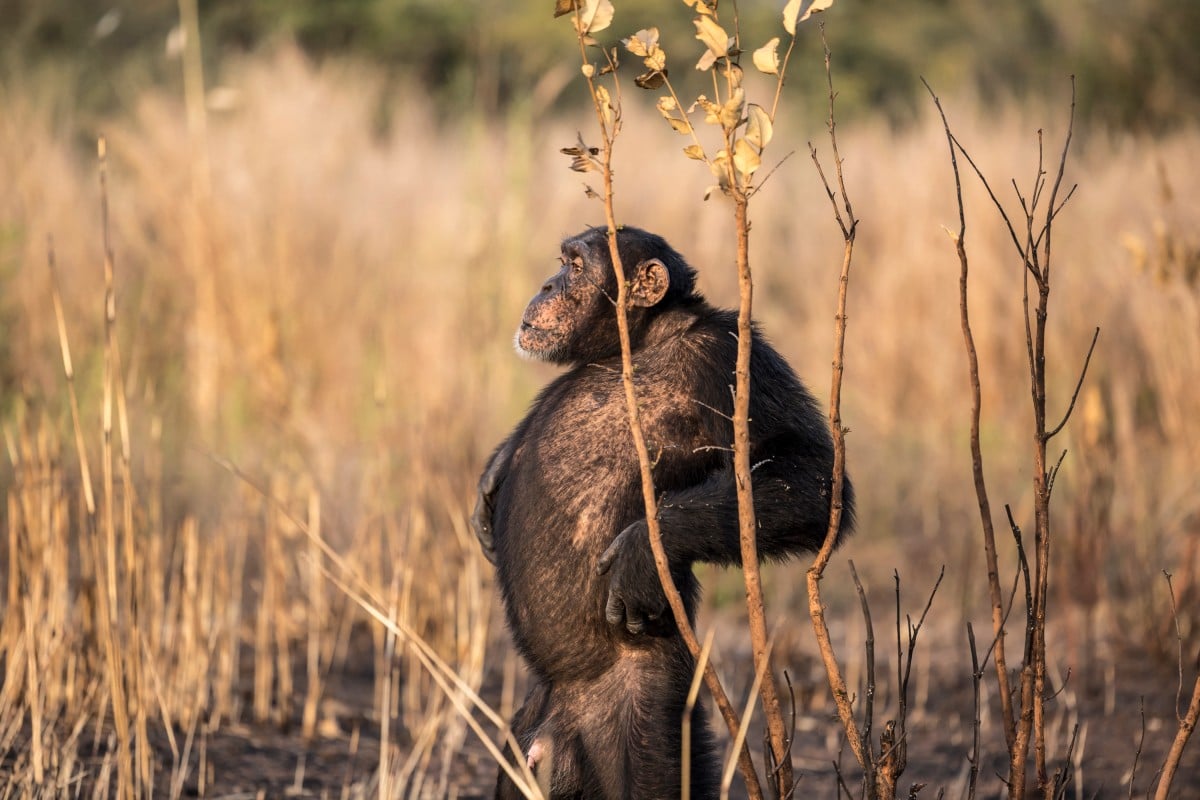
Bathing in natural pools, cooling off in caves, and even more surprisingly, handling spears: the 35 chimpanzees in this Fongoli community have adapted to their savannah environment with behaviors that defy conventional norms for their species.
Other clans of savannah chimpanzees live in the Kédougou region of Senegal, on the border with Mali and Guinea.
Their unique way of life and their ability to adapt to new climatic conditions provide clues to shed light on the past evolution of the human species, but are also relevant as the world is experiencing the full force of global warming.
For 25 years, American primatologist Jill Pruetz has been conducting pioneering research on savannah chimpanzees, who had never before been accustomed to observation.
Before the chimpanzees of Fongoli "were accustomed to being observed so that they could be tracked and data collected, we only knew of forest chimpanzees" in the world, Jill Pruetz told AFP.
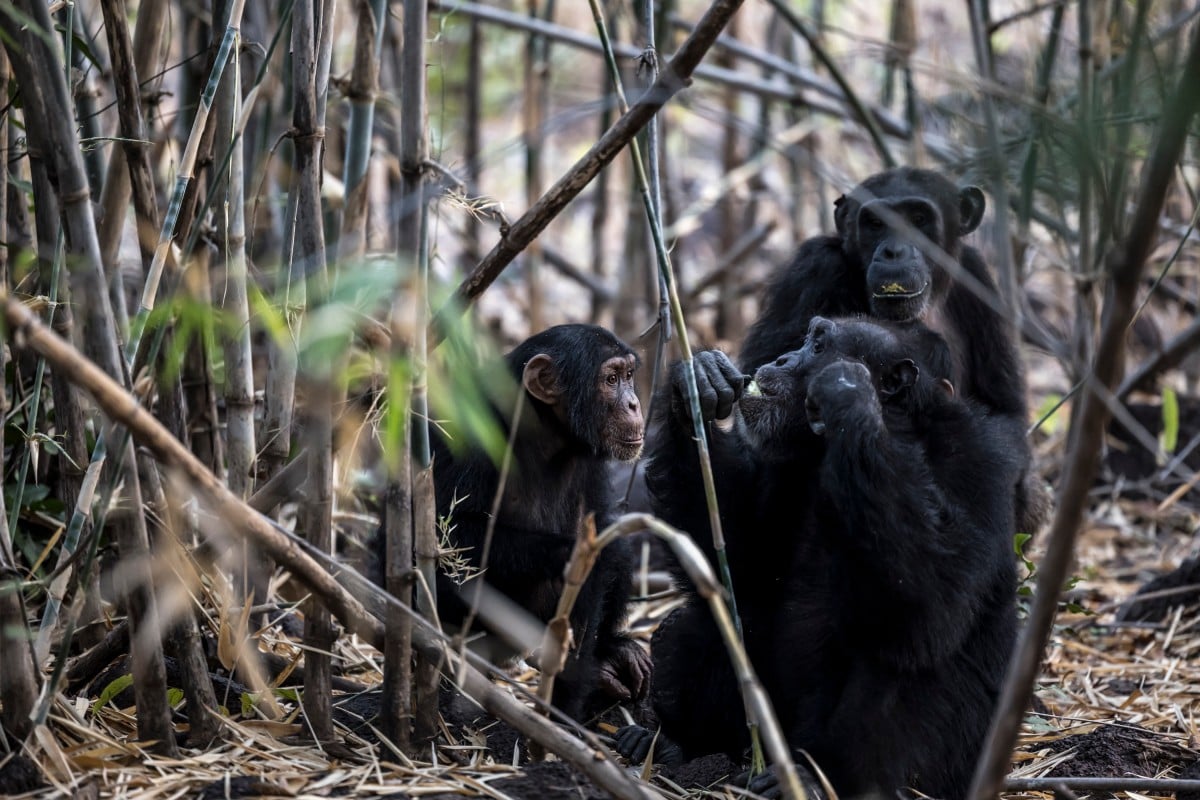
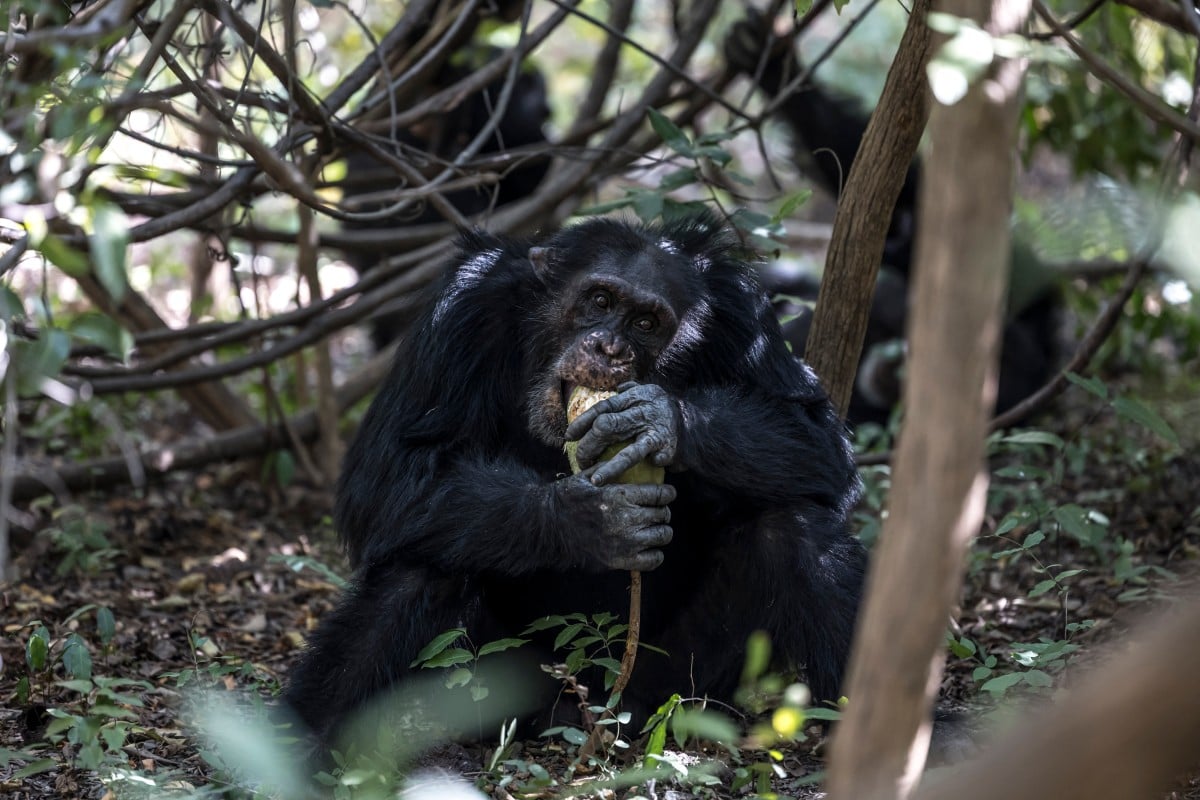
That morning, AJ, Raffy, Diouf and young Pistache, sitting at the top of a baobab tree, were enjoying their breakfast, a fruit opened after being energetically beaten against branches.
Jill Pruetz and her team of Senegalese researchers have spent years observing the group's adult males, currently numbering ten, by choosing one individual to follow from dawn to dusk, in an attempt to decode their complex lives.
The females are not tracked so that they remain more wary of poachers.
Since chimpanzees spend most of their time in groups, the team can still observe the females and their young.
In fact, it was the females who proved to be the most innovative members of the clan: they are the only animals—apart from humans—to systematically use tools for hunting. Jill Pruetz says she observed this behavior almost 600 times.
After transforming sticks into spears, often with their teeth, the females hunt galagos, impaling these small primates when they find refuge in holes.
With temperatures reaching 49°C in the hot season, life on the savanna can be grueling. The chimpanzees at Fongoli "have to live in the hottest place we've ever studied chimpanzees," says Jill Pruetz. They have to "conserve their energy" during the dry season.
They are the only chimpanzees in the world known to bathe, using natural pools, and "they also use caves to rest" and enjoy their coolness, explains the primatologist.
The wooded savannah where these chimpanzees live is similar to the one where human ancestors lived some six or seven million years ago.
By observing chimpanzees, our closest cousins along with bonobos, "perhaps we can help confirm some hypotheses about how these early hominins, or bipedal apes, behaved," Ms. Pruetz points out.
The adaptations made by these chimpanzees and passed down from generation to generation prove that they are capable of coping with "the stress of high temperatures," she notes. "But we are not sure they will be able to" in the event of even greater global warming, she says.
These chimpanzees from Fongoli are part of the West African chimpanzee subspecies, considered "critically endangered".
While they have long coexisted with human populations in their habitat, a new threat has recently emerged: a gold rush in eastern Senegal, which has seen an increase in artisanal and industrial mines, an activity that leads to deforestation, can cause water pollution and the risk of spreading human diseases to chimpanzees.
Papa Ibnou Ndiaye, a researcher and professor at Cheikh Anta Diop University in Dakar, emphasizes that the study of the chimpanzees of Fongoli in their environment "allows the local administration to have accurate information to be able to make decisions for the conservation of Senegalese biodiversity".
Jill Pruetz teaches part of the year at Texas State University in the United States. Meanwhile, her four research assistants and her project director, who come from nearby Senegalese villages, continue the observation work.
For example, they take careful note when Raffy hits a "bouye," the fruit of the baobab tree, eight times. They also meticulously analyze the group's friendships and social obligations.
"When someone returns to camp after spending the day with the chimpanzees, we sit down together for dinner and talk about it: were there any tensions? What did Cy do today? What did Pistache do?", says Jill Pruetz, who has tattoos on her arms depicting the three chimpanzees in the group who died or disappeared.
In the wild, chimpanzees can live up to 50 years, and Ms. Pruetz is interested in how their "bonds and relationships evolve over time." Despite the passing years, the passion and observational work of the primatologist and her team for these Fongoli chimpanzees remain constant.





















Commentaires (15)
Participer à la Discussion
Règles de la communauté :
💡 Astuce : Utilisez des emojis depuis votre téléphone ou le module emoji ci-dessous. Cliquez sur GIF pour ajouter un GIF animé. Collez un lien X/Twitter, TikTok ou Instagram pour l'afficher automatiquement.