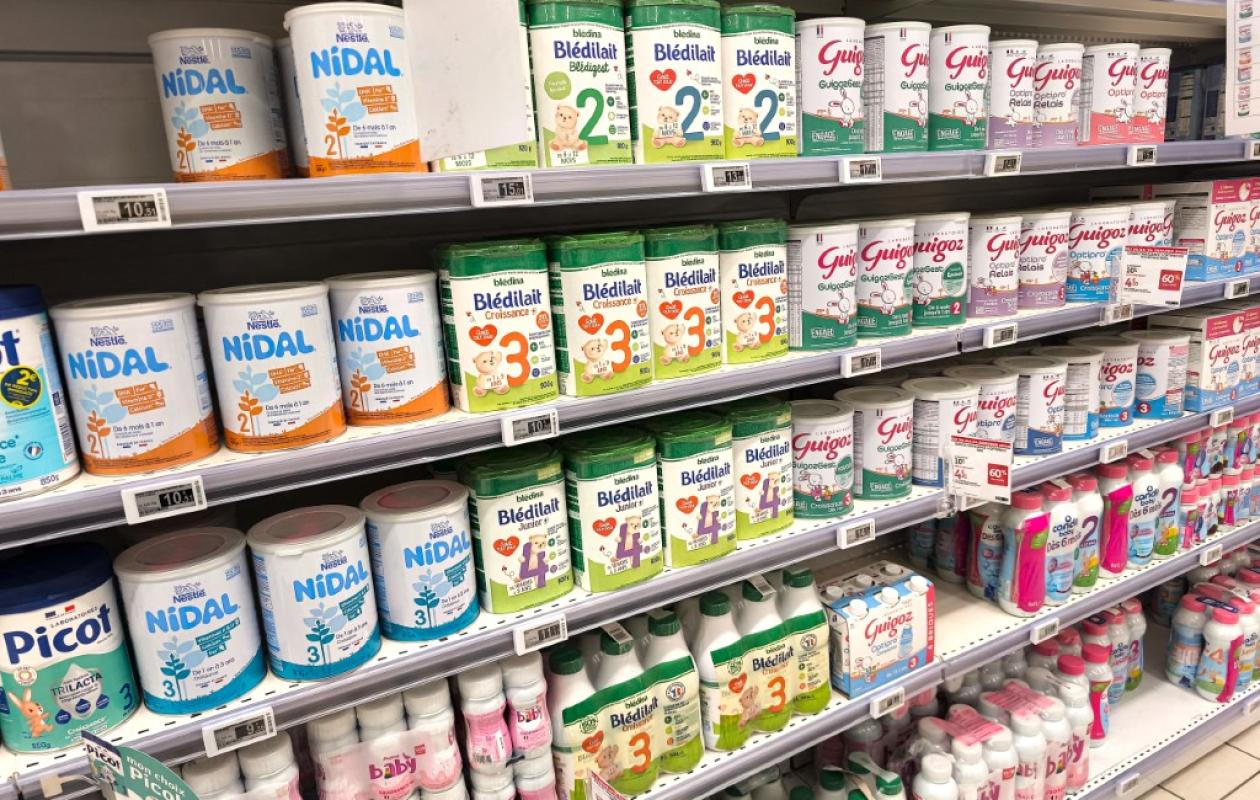
Lait infantile suspect : Le Sénégal est-il concerné ?
After a brief moment of euphoria following the Lions' victory at the Africa Cup of Nations, it's back to reality to examine the daily lives of Senegalese people. Not their spending or the economic situation, but rather the quality of some of the products we consume. In particular, Nestlé products intended for Senegalese infants. For the past few days, there have been rumors of a potential scandal at Nestlé, especially in France, following the "suspicious" death of a baby. Nothing has been confirmed yet, but the French Ministry of Health has opened an investigation.
Before this death, Nestlé had voluntarily recalled some of its baby products as a preventative measure, first in late December and then in early January. The main cause is the presence of cereulide, "a toxin produced by the bacterium Bacillus cereus," according to Le Parisien. The list of countries affected by the product recall has steadily grown, reaching around sixty. Among them are two African countries: South Africa and Namibia.
So what about Senegal? The health and trade authorities, who have been slow to shed light on the softcare case, remain silent on this new issue. There has been no communication to say whether the implicated milk is available in Senegal or not, and if so, what action has been taken. In Senegal, Nestlé markets several baby products. These include NAN Optipro 1 and 3 and Nido Growth milk. For cereals, there is, notably, CERELAC, which is widely available in neighborhood shops.
The NAN brand was withdrawn in South Africa
However, in Germany and South Africa, the NAN brand has been withdrawn from shelves by Nestlé. Why not in Senegal then? One of two things is true: either the product in Senegal poses no risk. Tests have been carried out and analyses performed, but no toxic components have been detected. But even in such a case, the authorities must communicate to reassure the public. Or, the other hypothesis is that the product presents the same risks as elsewhere, but the authorities and the multinational have chosen to remain silent. According to BFM TV, the problem stems from a supplier who delivers to both Nestlé and Lactalis. This warrants increased monitoring.
In any case, the recent stance of both sides is unlikely to reassure Senegalese consumers. In November 2025, the Swiss NGO Public Eye revealed that Nestlé had added sugar to baby products destined for Africa, while the same products destined for Europe contained no added sugar. According to Laurent Gaberell, an investigator with Public Eye, the amount of sugar in this product is equivalent to 90 sugar cubes per month for a baby. "It's very dangerous," he exclaimed on A+.
Minister Serigne Guèye Diop's stance is being questioned
As for the Senegalese authorities, their behavior in the face of the Softcare scandal is truly disheartening. The Ministry of Health, in a press release, promised to take the necessary steps and to get back to the Senegalese people to shed light on the matter. More than a month has passed, and no information has emerged from Ibrahima Sy's ministry. Nor have any precautionary measures been taken, such as halting the sale of the implicated Softcare products while the truth is being revealed.
Meanwhile, the Minister of Trade, Serigne Guèye Diop, seems to be prioritizing economic reasons over health concerns. "We can't want to attract manufacturers and then, at the slightest incident, try to close a factory. Industry is sacred," argues the former factory director.
While the initial statement from the Pharmaceutical Regulatory Agency (ARP) referred to "expired raw materials in the manufacturing process," Serigne Guèye Diop spoke of discarded materials. "No one has the right to use expired materials. But in a factory, discarded materials can be found. This cannot be a sufficient reason to close the factory." Was Serigne Guèye Diop trying to contradict the ARP experts, or was he simply trying to play on the intelligence of the Senegalese people?
One thing is certain: with such a stance from the Minister of Commerce, Nestlé will never feel obligated to provide answers to the questions of Senegalese consumers.






















Commentaires (5)
Nestlé : dans l'armement
Voilà une grande entreprise qui empoisonne dès l'enfance.
Chères Mamas Africa, prenez soin de vos enfants et privilégiez le lait matériel
De qui se fout-on?
Participer à la Discussion
Règles de la communauté :
💡 Astuce : Utilisez des emojis depuis votre téléphone ou le module emoji ci-dessous. Cliquez sur GIF pour ajouter un GIF animé. Collez un lien X/Twitter, TikTok ou Instagram pour l'afficher automatiquement.