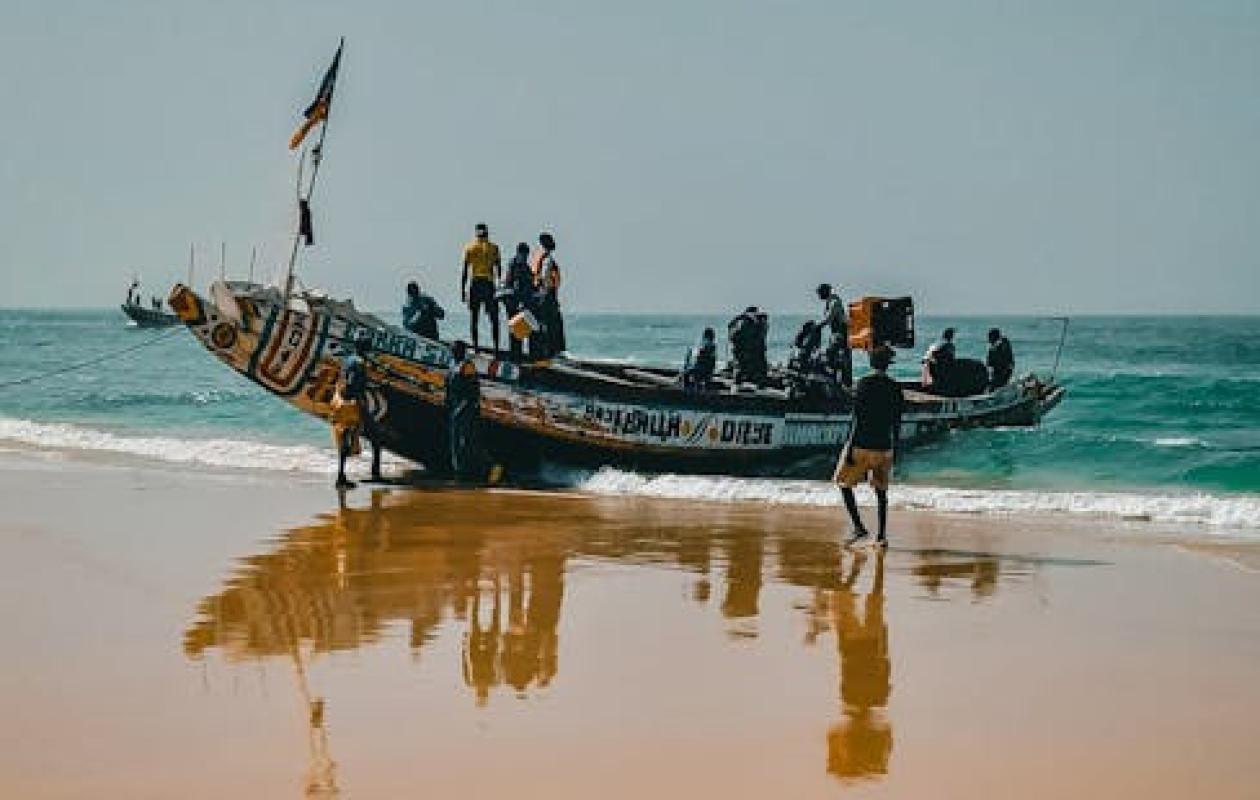
Un pêcheur à Rufisque, Sénégal (Photo AFP)
When fish began to disappear from the Senegalese coast, Ibrahima Mar first lost his livelihood, then his own son, and with them, an entire way of life that had sustained his family for generations.
Industrial and illegal fishing has contributed, among other factors, to the decline of fish stocks in the region, depriving this West African country of essential income and a vital source of nutrition.
"The fish are being increasingly plundered," the 55-year-old fisherman told AFP.
From his fishing village in Rufisque, on the outskirts of Dakar, Ibrahima says that all the fish "are taken in our path. So, there is no more hope..."
Bottom trawlers and industrial vessels, which generally fly the Senegalese flag but whose true nationality of shipowners is difficult to determine, ship their catches abroad.
"If you dig a little deeper, the effective ownership" of the boats in Senegalese waters belongs to Spaniards, Italians, French, Chinese or Turks, among others, Bassirou Diarra, head of the Foundation for Environmental Justice (EJF) in Senegal, told AFP.
"Not only is there a shortage of fish for the Senegalese market, for food security, but the money that should be coming back for the national economy is also not coming back," this activist points out.
He said that illegal practices include fishing in prohibited areas, the use of non-regulation nets, and failure to respect marine protected areas.
A 2025 EJF report highlights that 57% of exploited fish groups in Senegal are in a state of collapse.
Faced with dwindling resources, more and more fishermen are clandestinely attempting the perilous Atlantic migration route to Europe.
Among them were two of Ibrahima Mar's sons.
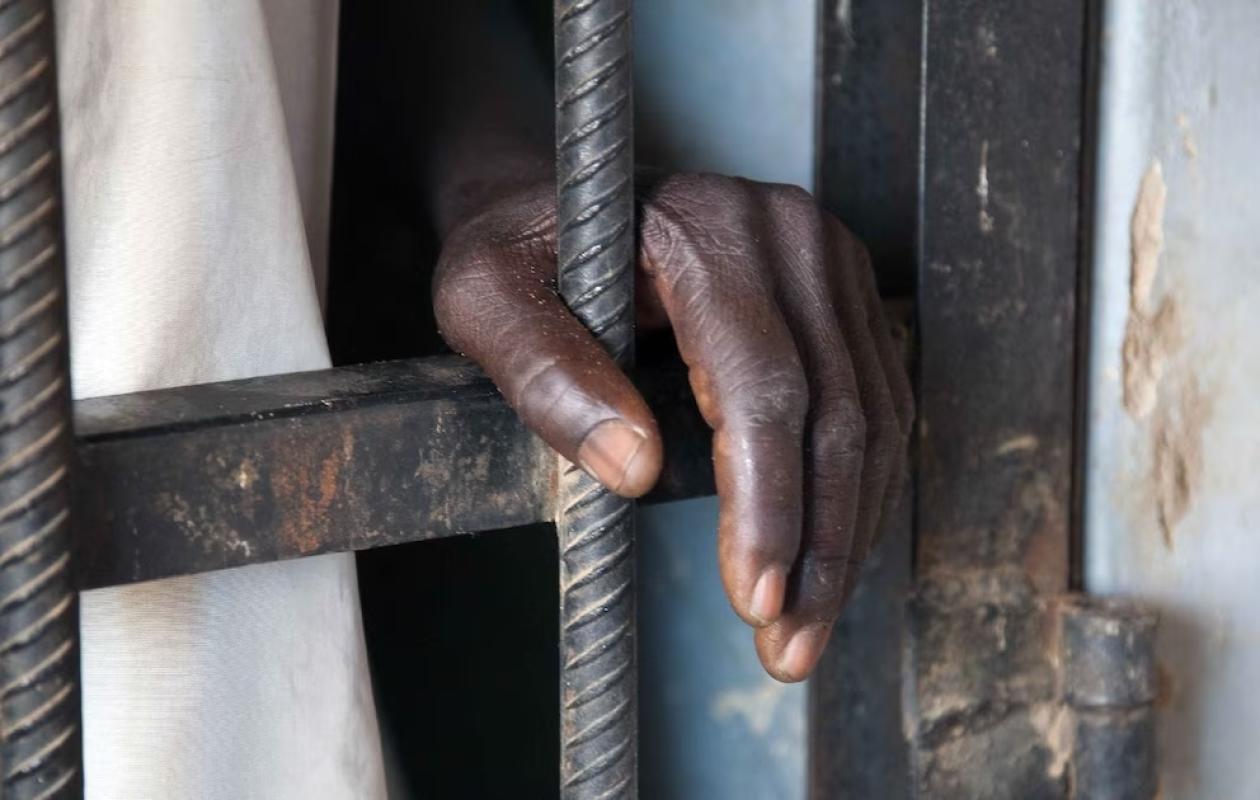
The first one made it across. A few years later, his younger brother, then about 17 years old, called his father: he was in a pirogue with 140 people on their way to Spain.
The family waited for news for days, then weeks. He never reappeared.
Along the 700 kilometers of Senegalese coast, the ubiquitous brightly colored wooden pirogues bear witness to an essential activity: more than 82,000 people work in fishing, representing approximately 2% of the active population, according to the latest census.
"What a pirogue used to catch in two months, now this pirogue can fish for more than 6 to 7 months to get the same tonnage," laments Mamadou Diouf Sène, president of the Rufisque fishing wharf revenue commission.
From the carter to the ice seller, via the fishmonger and the processor, a multitude of professions depend on the sector.
On the quayside, Fatou Seck, a 39-year-old fishmonger, offers sea bream, white carp, and mullet. "Times are really tough," this mother of six told AFP. For "many of us (...) this work is our only source of income to feed our children."
The increase in the number of artisanal fishers, attracted by a profession requiring little training, has also contributed to the decline in fish stocks. Estimates of the number of canoes vary between 12,000 and 19,000.
Added to this is climate change, which is pushing small pelagic fish from West Africa to move north.
Fish stocks have been declining for about forty years, but artisanal fishermen really became aware of the problem when small pelagic fish, such as sardinella and horse mackerel, began to disappear about fifteen years ago.
The idea that Senegal might one day have to import fish, a product of national identity and a major natural resource, "is catastrophic," Ibrahima Mar exclaims.
Cheikh Salla Ndiaye of the Directorate of Fisheries Protection and Surveillance believes that surveillance at sea is "very difficult", adding that the agency is being helped by the navy and the air force.
Ibrahima recently boarded a Greenpeace vessel with four other fishermen to learn how to better spot and report illegal fishing.
"Previously, the high seas were compared to the Wild West, because it was impossible to know what was really going on there," Sophie Cooke, a fishing vessel analyst at Greenpeace, told AFP from the deck of the boat.
But new technologies, including location devices and satellite radars, and even smartphones that fishermen can use to take pictures and precisely locate boats, are changing the game, she adds.
These are tools that Ibrahima Mar plans to introduce into his community.
With his two sons, both fishermen, having now left home, one in Spain and the other lost at sea, the decline of the fish is for him a personal tragedy as much as an economic one.
As for his third son, he decided to enroll him in a training center: "He is learning metal welding."
AFP




















Commentaires (9)
Participer à la Discussion
Règles de la communauté
💡 Astuce : Utilisez des emojis depuis votre téléphone ou le module emoji ci-dessous. Cliquez sur GIF pour ajouter un GIF animé. Collez un lien X/Twitter, TikTok ou Instagram pour l'afficher automatiquement.
Se connecter
Commentez avec votre profil, votre photo, et soyez averti des réponses.