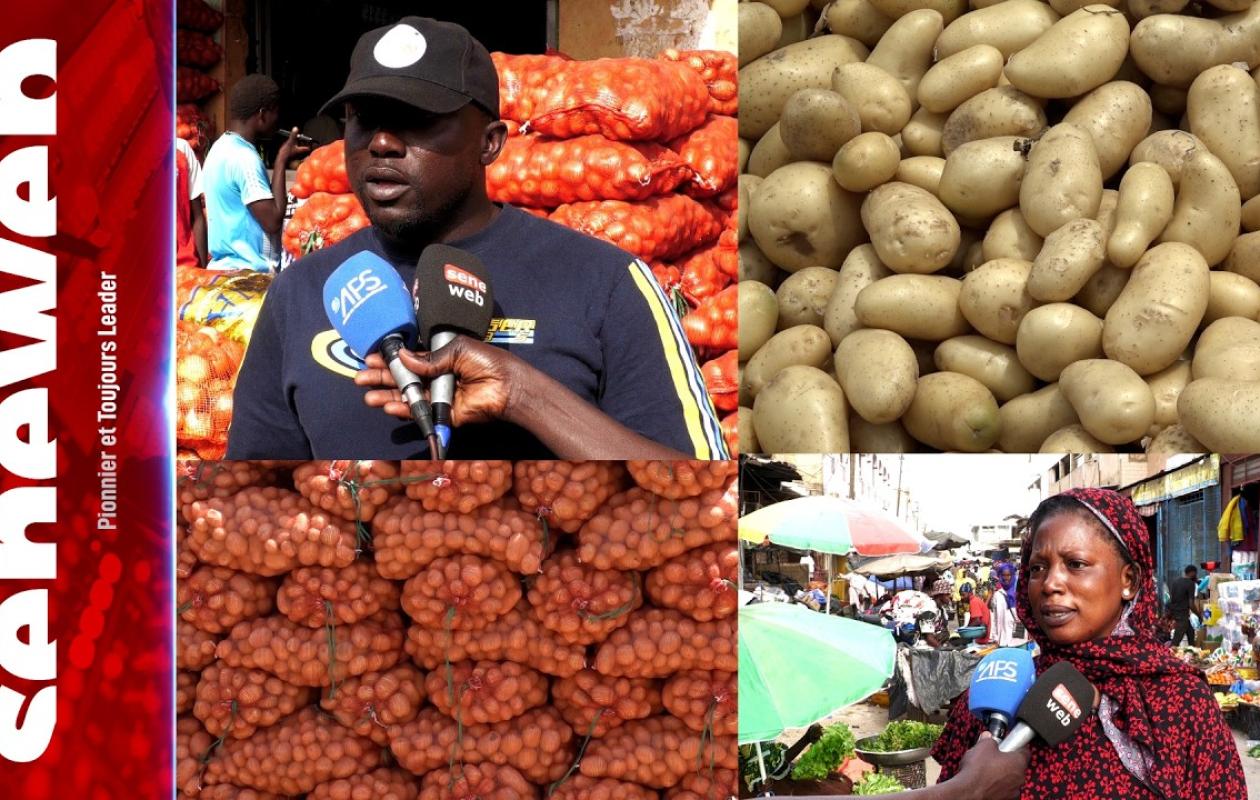
Ramadan et Carême : Entre ferveur religieuse et défis économiques au marché de Thiès
This year, Ramadan and Lent coincide, offering Muslim and Christian believers an intense period of spirituality and religious fervor. But beyond the contemplation, these times are also accompanied by an increase in the consumption of certain food products, putting a strain on household purchasing power.
In Thiès, Seneweb went to meet customers and merchants to get a feel for the market. While some stakeholders praised good supply and stable prices, others spoke of growing insecurity linked to the economic context.
For Mbayang Ba, a mother, Ramadan means hardship. She says she struggles to make ends meet. "The market is well-stocked with food, but we don't have the money to buy it. With 3,000 CFA francs, you can only buy fish. It's impossible to add vegetables. We're trying to hold on, but life has become difficult in Senegal. This financial insecurity is unprecedented for me since I was born," she confides.
Like her, many households are feeling the pressure of spending during this period marked by increased consumption.
Among traders, the message is more reassuring. Khadim Dione, manager at the central market of Thiès, affirms that all measures have been taken to ensure good coverage of Ramadan and Lent.
"The market is well supplied with basic necessities. The State has fulfilled its duty. Sugar, oil, rice and other food products are available in sufficient quantities. Prices are stable. No increase has been observed. Things are moving well and traders are rubbing their hands together," he rejoiced.
Aly Ndiaye, vice-president of UNACOIS JAPPO/Thiès, echoed this sentiment. According to him, the market is well supplied with horticultural products, particularly onions and potatoes.
“Both local and imported onions are readily available and affordable. For local onions, the highest price ranges from 10,500 to 11,000 CFA francs per bag in the most remote areas, due to transportation costs. Ramadan and Lent coincide with the harvest season this year,” says Aly Ndiaye.
He also highlights the role played by agricultural stakeholders and the Market Regulation Agency (ARM), who anticipated the needs.
However, he warns of a potential overproduction. "We are even seeing a surplus. We urge the government to open the borders to the export of horticultural products. Prolonged storage could cause us to lose a significant portion of our production due to a lack of sufficient cold storage facilities," he says.























Commentaires (1)
Participer à la Discussion
Règles de la communauté :
💡 Astuce : Utilisez des emojis depuis votre téléphone ou le module emoji ci-dessous. Cliquez sur GIF pour ajouter un GIF animé. Collez un lien X/Twitter, TikTok ou Instagram pour l'afficher automatiquement.