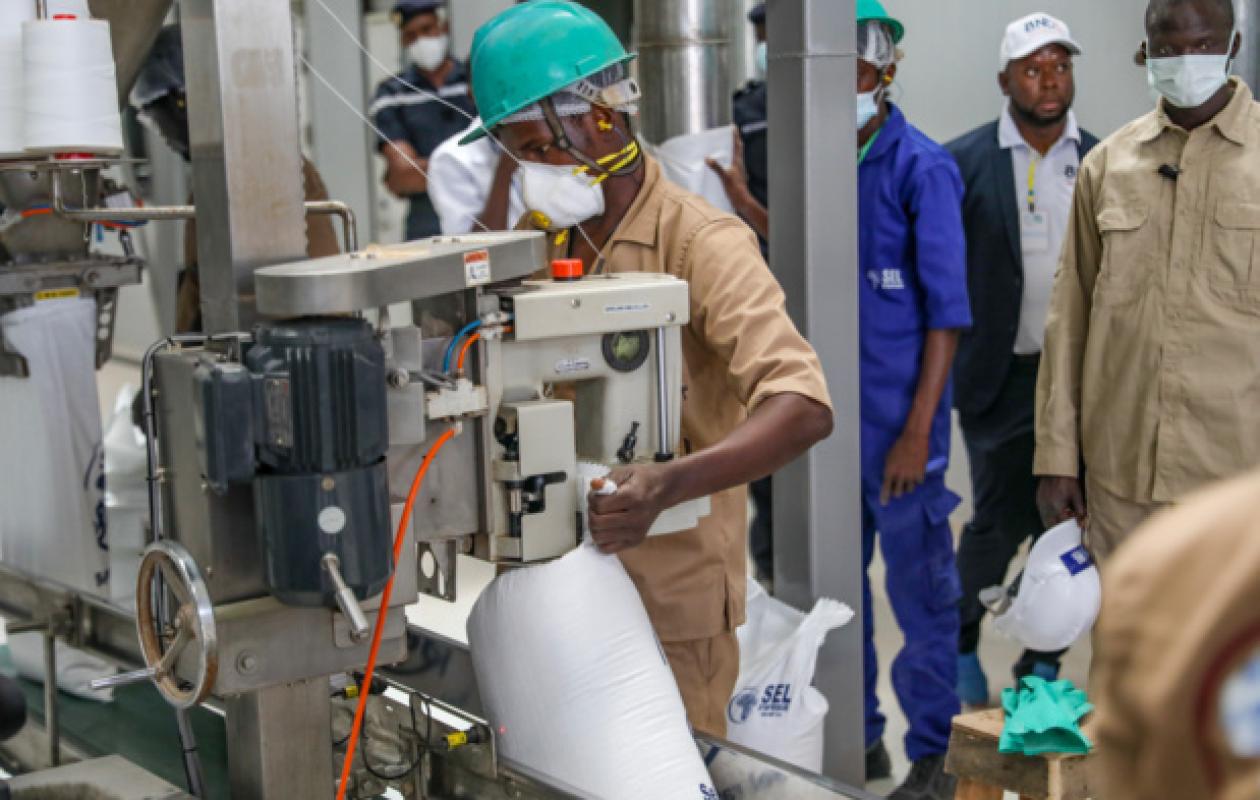
Repenser l’industrialisation sénégalaise à hauteur d’entreprises
Industrialization remains at the heart of Senegal's economic ambitions, but the model based exclusively on vast, heavy complexes, which are capital- and energy-intensive, is showing its limitations.
In a context marked by budgetary constraints, still selective access to financing and an entrepreneurial fabric dominated by small and medium-sized enterprises, the path of light industrialization appears as an option more suited to national realities.
Light industrialization relies on medium-sized processing units that are less capital-intensive and more labor-intensive. Examples include food processing, textiles, fish processing, construction materials, and industrial assembly. These sectors allow for the faster creation of formal jobs while utilizing existing local resources. In an economy where a large portion of the workforce remains confined to low-productivity activities, this type of industrialization can serve as a lever for gradual upgrading of production.
Asian experiences, particularly in Vietnam and Bangladesh, demonstrate that a dense network of export-oriented intermediate industries can precede the emergence of heavier, more technologically complex sectors. These countries initially consolidated value chains in textiles, agribusiness, or electronics assembly before investing in more capital-intensive industries. This gradual approach expanded industrial employment while simultaneously strengthening local skills.
In Senegal, several sectors offer immediate potential. The processing of agricultural and fisheries products remains insufficient given the volumes produced or landed. A strategy based on regional processing units could reduce imports of finished products, improve the trade balance, and support local employment. Similarly, the development of industrial workshops in construction or the manufacture of everyday consumer goods would allow for the gradual substitution of certain imports.
This approach does not preclude major infrastructure projects. Energy, port, and logistics infrastructure remain essential to support any industrial ambition. However, a balanced strategy would combine major infrastructure investments with a network of intermediate industries capable of rapidly absorbing the workforce and distributing added value throughout the region.
It is nevertheless important to highlight the limitations of this approach. Without stable access to electricity, adequate financing, and improved productivity, even small-scale production units struggle to achieve sufficient competitiveness against imports. Therefore, intermediate industrialization is not an automatic solution, but a gradual process that requires coherent public policies, technical training, and support for businesses.
Rather than pitting heavy industry against light industrialization, the central issue lies in sequencing and adapting to national capacities. Investing in human-scale processing units can represent a structuring step towards a more diversified industrial base, creating jobs and better integrated into the real economy.










![[Édition Spéciale] Tout Sur la Composition du Nouveau Gouvernement](https://image.seneweb.com/content/news/2026-23-01//thumb_1260x800_6a1ddca812d4e_URisx1rdt4.jpg)










Commentaires (4)
Participer à la Discussion
Règles de la communauté :
💡 Astuce : Utilisez des emojis depuis votre téléphone ou le module emoji ci-dessous. Cliquez sur GIF pour ajouter un GIF animé. Collez un lien X/Twitter, TikTok ou Instagram pour l'afficher automatiquement.