Saraya : Le Conseil départemental mise sur le maraîchage féminin pour réduire la dépendance alimentaire
In Saraya, market gardening is becoming a strategic lever for local development. Under the impetus of the Departmental Council, dozens of women's groups are benefiting from material and technical support to strengthen their economic autonomy and supply the local market with fresh produce.
In the Saraya department, tomatoes, onions, okra, and lettuce still too often come from elsewhere. From neighboring Mali or Dakar, produce travels hundreds of kilometers before reaching local market stalls. This is paradoxical in an area endowed with vast fertile lands and significant agricultural potential.
It is this observation that prompted the president of the Saraya Departmental Council, Moussa Danfakha, to make market gardening a priority.
“We started with a simple observation: most of the produce consumed here comes from outside. Yet we have land, space and courageous women who know how to work the land. We needed to revitalize this sector which can be very promising for our local economy,” he explains.
Market garden areas to revive local production
Initially, the Departmental Council launched the establishment of market garden plots in several villages, with fences and water points to secure and facilitate production. However, faced with limited budgetary resources, the strategy shifted towards more targeted support for existing groups.
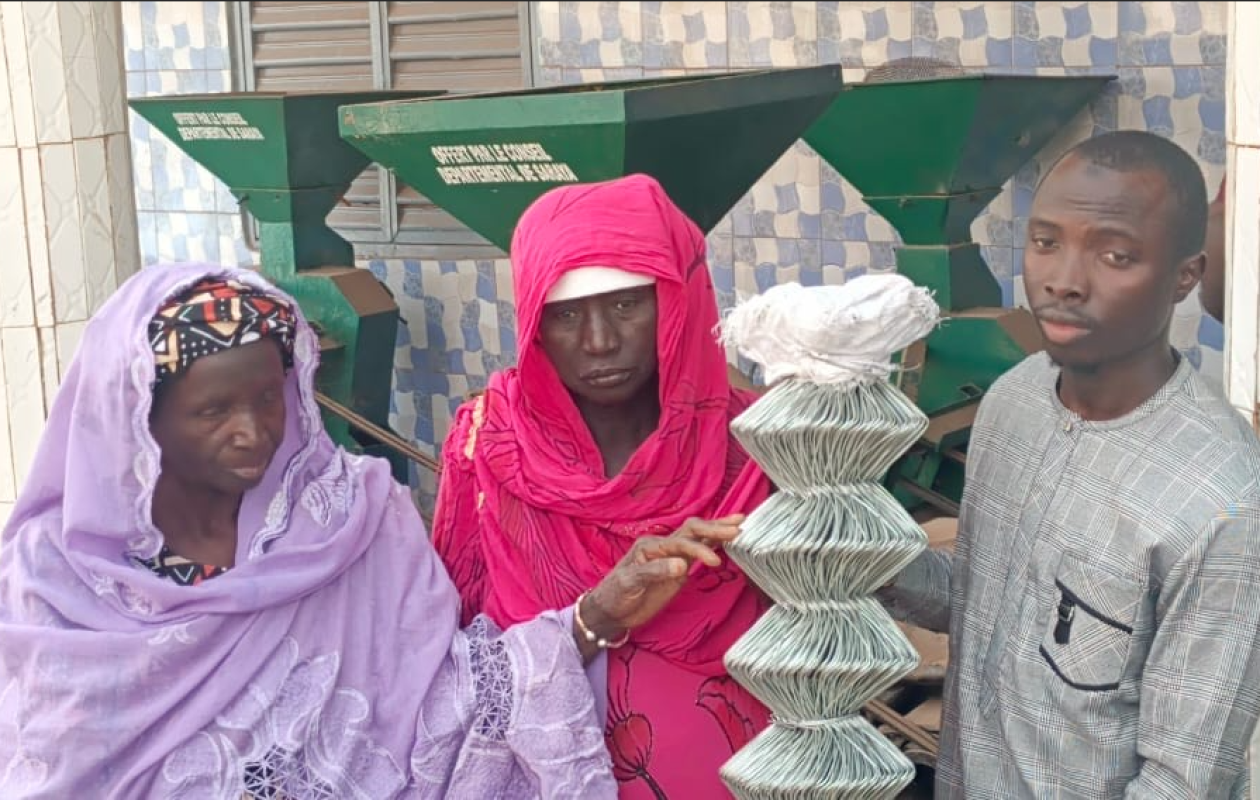
Thus, 19 villages benefited from a donation of fencing to protect fields from stray animals. Each women's group received eight 25-meter rolls of fencing, while individual producers each received four rolls.
The overall cost of the operation amounts to 10 million CFA francs excluding tax.
“Instead of creating market garden areas everywhere, we have chosen to directly support those who are already active in this field. This equipment allows them to secure their crops and increase their production,” explains Moussa Danfakha.
"Before, our crops were destroyed by animals."
For the beneficiaries, this support tangibly changes their daily lives.
Aminata Camara, president of a women's group in a village in Saraya, testifies: "Before, our crops were often destroyed by animals. We lost a lot of effort and money. With the fencing, our fields are protected. Today, we can produce in peace and sell our vegetables at the market."
Fatoumata Diallo, another group president, shared the same satisfaction: "This support from the Departmental Council has given us renewed hope. We now have the opportunity to cultivate all year round. Some women are able to pay for their children's schooling thanks to the income from market gardening."
Beyond the equipment, the Departmental Council carries out broader support work. Since its establishment, the institution claims to have supported 30 women's groups, representing nearly 1,000 women, through training and the financing of income-generating activities.
"Women's empowerment is at the heart of our work. With the limited resources we have, we are directing our budget towards these brave women who drive the local economy," the president emphasizes.
A strong call for the reinstatement of the Local Development Support Fund
But for Moussa Danfakha, these efforts remain insufficient without more substantial support from the State, particularly through the Local Development Support Fund (FADL).
This fund, financed by 0.5% of the annual turnover of mining companies, was intended for communities impacted by mining operations.
Today, according to him, the department and municipality of Saraya are no longer among the beneficiaries. "This isn't a gift we're receiving, it's a right. This fund was meant to relieve the burden on our communities. Unfortunately, it has been centralized, and the local populations no longer see any of it."
The president is even advocating for an increase in this share to 1%, as in some countries of the sub-region.
Between isolation, insecurity and lack of infrastructure
Saraya faces many challenges: isolation, lack of electricity, difficulties accessing healthcare, weak infrastructure and insecurity linked to mining.
“We are in a socio-economically neglected area. Positive discrimination must be made in favor of areas like Saraya. We are part of Senegal and we have a right to development,” insists Moussa Danfakha.
Market gardening, a local response to development challenges
For the women of Saraya, market gardening is much more than an agricultural activity. It is a tool for autonomy, dignity and economic resilience.
Mariama Cissé, president of another group, concludes: "With land, water, and a little support, we can feed Saraya ourselves. We don't need to wait for vegetables from Dakar or Mali."
In Saraya, the revival of women's market gardening thus appears as a local and pragmatic response to development challenges, while waiting for institutional support to follow.









![[Exclusif] Sanctions de la CAF contre le Sénégal : Un expert lève le voile](https://image.seneweb.com/content/news/2026-04-24//thumb_1260x800_6974a5a94e3ff_z1kbe5Sl54.jpg)













Commentaires (0)
Participer à la Discussion
Règles de la communauté :
💡 Astuce : Utilisez des emojis depuis votre téléphone ou le module emoji ci-dessous. Cliquez sur GIF pour ajouter un GIF animé. Collez un lien X/Twitter ou TikTok pour l'afficher automatiquement.