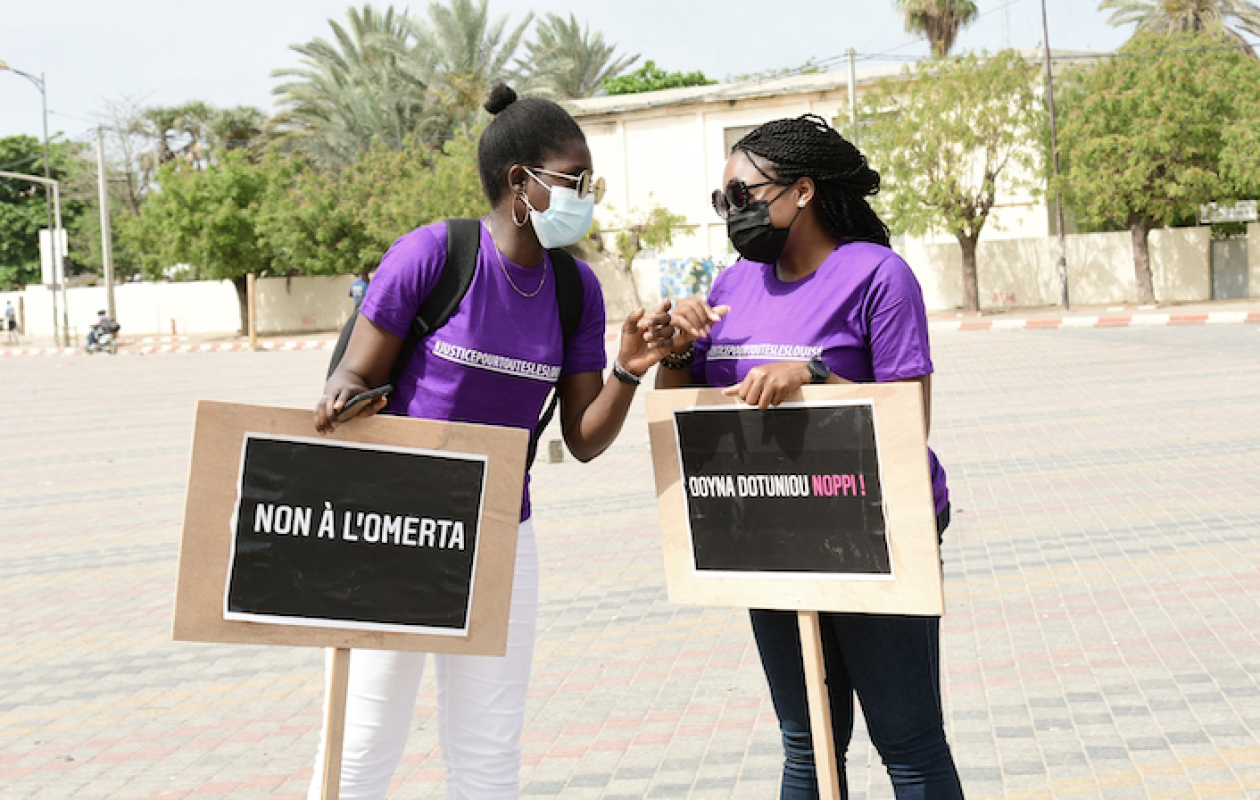
[Spécial 8 mars] Violences conjugales : Pourquoi le silence reste la prison la plus hermétique
It's a topic that comes up every International Women's Day, but it persists and even seems to be growing. Domestic violence remains a reality often shrouded in silence within homes. Behind closed doors, women continue to live in fear, shame, and isolation. Seneweb has attempted to shed light on the mechanisms behind this silence among victims, the psychological trauma, and the impact on children.
In the privacy of homes, violence doesn't always leave visible traces. It sometimes takes root in words, in silences, in the fear that gradually seeps into daily life. In Senegal, despite awareness campaigns and existing laws, many women continue to suffer this violence. The scale of the problem remains alarming. According to feminist organizations, more than 17 women were killed in a marital or family context in Senegal during 2025, while many others suffered physical, psychological, or economic violence, often met with indifference or silence.
Faced with this reality, healthcare professionals are sometimes among the first to witness these situations. For Dr. Cheikh Ahmed Tidiane Samb, co-founder of the Healthy SN platform, victims who walk through the door of a doctor's office often arrive at a point where their suffering is already profound. "There are situations where the person comes to see us because they want to file a complaint. So they ask us to document the injuries. There are situations where the person doesn't want to file a complaint and comes to see us precisely because they are starting to develop mental health problems," he explains.
In this second case, he explains, the violence has already taken its toll on mental health. Between anxiety, constant fear, and loss of self-confidence, the symptoms are numerous. "Some will lose confidence in themselves. Some will stop working. Some will begin to isolate themselves," describes Mr. Samb. Fear then becomes a constant presence. "The stress level is permanent; it's there, it's high. The person is afraid to return to the marital home because there's a constant fear of being hit again," he continues. Gradually, he adds, some victims even modify their behavior to try to avoid the violence. "They will end up agreeing to everything their partner asks for... because they tell themselves that as soon as they refuse, it will lead to beatings."
The weight of social norms and education
Feminist Diabou Bessane offers further insight into the reasons for this silence. For her, it's not simply an individual decision but rather part of a broader social system. "It's not a single cause, but rather a system where several causes intertwine and contribute to complicating the situation," she explains. At the heart of this system, she continues, education and social norms play a crucial role. "Traditional education leads women to believe they must endure everything within the household. This is what pushes them beyond a certain level of resilience, preventing them from even accepting the unacceptable."
Thus, in some cases, the victims themselves are not immediately able to identify what they are experiencing as violence. "Sometimes, when violent situations occur, they aren't able to immediately understand what that situation is," she emphasizes. Adding to this difficulty is the fear of how others will perceive them. "When someone is a victim of violence, there is often this feeling of shame. They are ashamed to talk about it; they don't want to be the one being pointed at," the feminist explains.
This is why filing a complaint remains a difficult step. And even when victims decide to take the step of seeking justice, social pressure can intervene. "When they go to file a complaint, there's pressure from their families who ask them not to go through with it," continues Ms. Bessane. Furthermore, economic dependence remains another determining factor. In his practice, Cheikh Ahmed Tidiane Samb observes that many women feel trapped by their situation. "Many victims will tell you they can't leave their husbands because they'll have nowhere to go," he confides. In other words, without income, without housing, and sometimes without family support, some prefer to remain in a violent environment rather than face the uncertainty.
" Between 25 and 50% of children will either reproduce this violence or be subjected to it."
Beyond the couple themselves, the consequences of this violence also affect the children who witness it. On this point, both speakers agree on the seriousness of the impact. According to Sheikh Ahmed Tidiane Samb, the consequences can even extend across several generations. "Of children who experience domestic violence at home, generally 25 to 50% will either reproduce this violence or be subjected to it."
This pattern is explained in part by a normalization of violence, the doctor explains. "If a girl saw her mother being beaten and staying despite it, if she experiences that same beating tomorrow, she might accept it." Boys can also internalize these patterns. "If a boy saw his mother staying despite the violence, he might think that's what marriage is," he adds. Furthermore, children also carry invisible wounds. "This trauma remains ingrained in the child's mind and can impact their studies and their future," he warns.
The support provided is still insufficient.
Faced with these realities, the question of support becomes paramount. For Dr. Samb, access to psychological care remains far too limited. "The main problem is resources," he emphasizes. Psychological support, though essential for recovery, remains difficult to access for women who are often without means. "Seeking help has a cost," he points out, advocating for the creation of public facilities capable of providing long-term support to victims. "There should at least be a center dedicated to these victims of violence, just for psychological assistance."
However, for Diabou Bessane, the response must go beyond the medical and legal framework. She insists on the need for broader societal mobilization. "The approach can only be holistic... Every segment of society must be made aware and feel involved," she believes.
From this perspective, organizations have been working for several years to create safe spaces for victims and to support them in their efforts. But to truly break the cycle of violence, the fight against silence remains. "We must maximize awareness so that these victims know they can receive support," the activist insists. Because behind every silence often lies a story of fear, shame, or addiction. And behind every story, the still fragile possibility of rebuilding one's life.




















Commentaires (11)
Participer à la Discussion
Règles de la communauté :
💡 Astuce : Utilisez des emojis depuis votre téléphone ou le module emoji ci-dessous. Cliquez sur GIF pour ajouter un GIF animé. Collez un lien X/Twitter, TikTok ou Instagram pour l'afficher automatiquement.