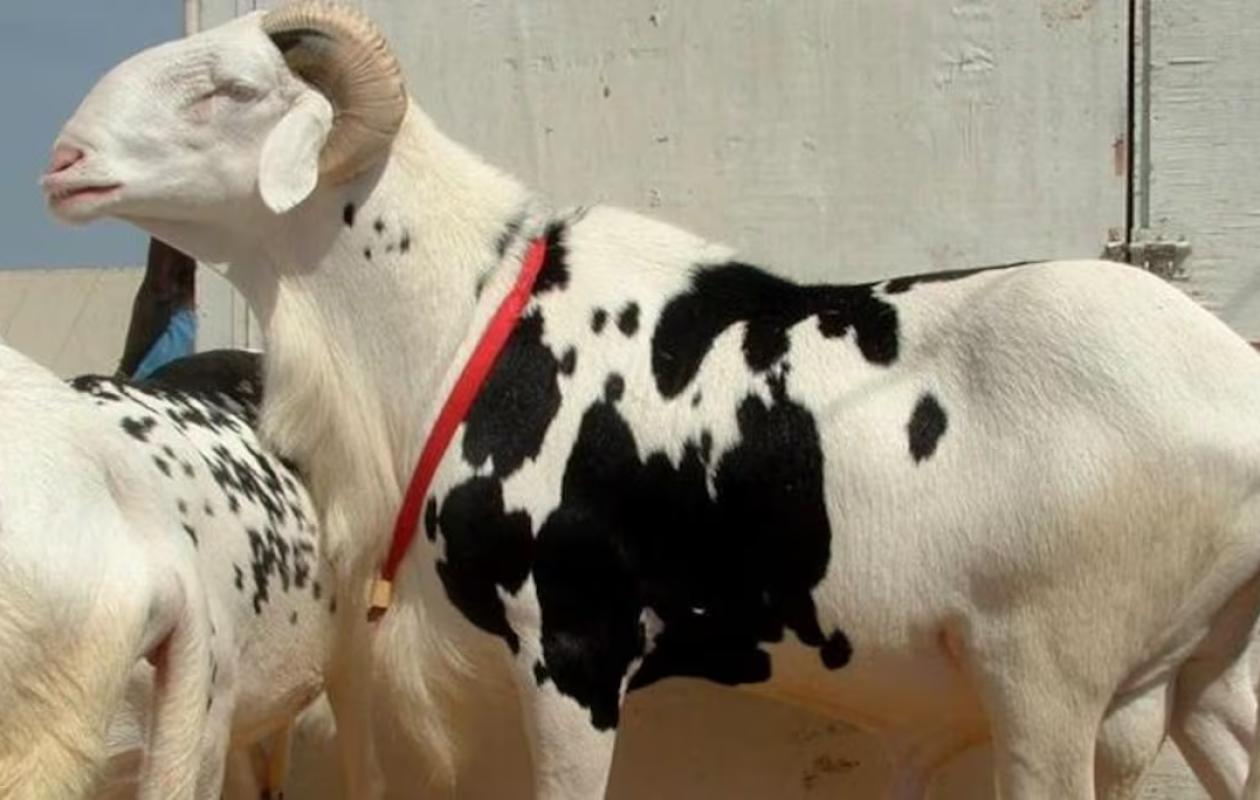
[Tabaski] Ventes gonflés, oreilles recollées... : plongée au cœur des nouvelles fraudes sur les moutons
As Tabaski approaches, livestock markets and sheep sales points are overflowing. In large cities like Thiès, buyers flock to the enclosures in search of the finest ram to celebrate the festival of sacrifice in style.
But behind the festive atmosphere and the endless bargaining sessions lies a much darker reality: fraudulent practices that claim many victims every year.
Between artificially "inflated" sheep, sick animals made up to appear healthy, ears glued back on and tails camouflaged, several families say they have lost hundreds of thousands of CFA francs after being deceived by unscrupulous sellers.
A family man's dream turns into a nightmare
In Thiès, old Lamine will never forget that eve of Tabaski which turned into a real family tragedy. A father of a family, the man in his sixties had saved for several months to buy an imposing ram capable of feeding his children and honoring tradition.
That evening, accompanied by his son, he went to a busy sales point in the railway capital. Under the makeshift lights of the enclosures, dozens of sheep were displayed before the buyers who scrutinized every detail: size, horns, gait, thickness of coat or even the volume of the belly.
After carefully inspecting several animals, Lamine finally falls under the spell of a huge white ram. The animal appears robust, well-fed, clean, and particularly calm.
"This sheep is beautiful and well-fed. I like it very much. How much does it cost?" he asks the seller. The latter, clearly very skilled in the art of commerce, replies confidently: "There were more than ten sheep of this size here. All the others are gone. This is the last one left. If you give me 500,000 FCFA, I'll let you have it."
Old man Lamine was surprised by the price but refused to leave empty-handed. After several minutes of negotiation, the two men finally agreed on 400,000 FCFA. Delighted with his purchase, the old man immediately hired a motorcycle tricycle to transport the ram home. Upon his arrival, his wives and children gathered around the animal. In the family courtyard, the atmosphere was one of pure joy. For the father of the family, the hardest part seemed to be over.
"I was devastated by the death of the sheep."
But a few hours later, everything changed. During the night, the old man tied the sheep up in the garage so it could spend the night there undisturbed. The animal's unusually calm behavior didn't worry him. The ram refused to eat, wouldn't touch the water or the fodder, and didn't even try to bleat.
Early in the morning, he returned to check on his sheep. He froze as soon as he stepped through the garage door. The ram was lying on the ground, its belly abnormally swollen, its tongue hanging out. The animal wasn't breathing. "I tried to move it, but it was already dead. I was in shock," he recounted, his voice thick with emotion.
Alerted by the father's cries, a neighboring farmer came to examine the carcass. After a few minutes of observation, his conclusion was clear: "This sheep was probably inflated with a substance to artificially give it a more appealing appearance."
The news hit Lamine hard. Just three days before the festival, he found himself without a sheep after spending all his savings. "I didn't have any money left to buy another one. It was my brother who finally helped me. Otherwise, my family would have spent Tabaski without a sacrifice," he explains.
When he returned to the seller to demand a refund, the latter categorically refused to accept any responsibility. "He simply told me that only God decides the death of a living being," lamented the man in his sixties.
Substances sourced from the black market
According to several people in the livestock sector, these practices are becoming increasingly common as Tabaski approaches. To attract buyers, some sellers are reportedly injecting unknown substances to rapidly swell the animals' bellies, giving them the appearance of well-fed sheep.
Experts have warned against these products, whose origin often remains unknown. They have pointed out that an artificially fattened sheep often shows visible signs to those accustomed to observing livestock. They indicated that when an animal's belly appears disproportionately large compared to the rest of its body, one should be vigilant. A naturally well-fed sheep maintains a balanced overall appearance.
Victim of a street vendor
Street vendors are also being blamed by several victims. Omar, a tailor by trade, claims to have had a similar experience in 2023.
Overwhelmed by clothing orders two days before the festival, he decided to buy a sheep directly from a shepherd who was passing through his neighborhood with a flock. Charmed by a ram that seemed perfectly healthy, he paid 250,000 FCFA before having it transported home by cart.
But no sooner had he arrived home than the animal began to suffer from severe diarrhea. "His belly was gradually shrinking. I felt like I was in a nightmare," he said.
The sheep's condition quickly became incompatible with religious sacrifice. Ultimately, Omar was forced to abandon the idea of slaughtering it for Tabaski. "My wife even suggested I just go buy some meat at the market," he said bitterly.
Ears glued back on and tails camouflaged
Other scams involve concealing physical defects in sheep. However, according to religious regulations related to Tabaski, certain defects render an animal unfit for sacrifice. A sheep intended for Tabaski must, in particular, be healthy, walk normally, not be blind in one eye, have split or cut ears, or a severely damaged tail. But some sellers use camouflage techniques to deceive buyers.
Demba learned this the hard way. After buying a sheep he thought was perfect, he discovered at the moment of slaughter that one of its ears had been artificially glued back on. "It was when the sheep's head hit the ground that the ear came off. I realized I'd been deceived," he recounts.
Moussa had the same misfortune. While unloading his sheep from the taxi that was transporting them to his home, he gently pulled one of them by the tail. It immediately detached. "The tail had already healed. It had been glued back on to hide the defect," he explained.
At various points of sale, buyers are urged to be extra vigilant against scammers who are determined to make victims, sometimes turning the joy of sacrifice into real family disillusionment.
























Commentaires (0)
Participer à la Discussion
Règles de la communauté :
💡 Astuce : Utilisez des emojis depuis votre téléphone ou le module emoji ci-dessous. Cliquez sur GIF pour ajouter un GIF animé. Collez un lien X/Twitter, TikTok ou Instagram pour l'afficher automatiquement.