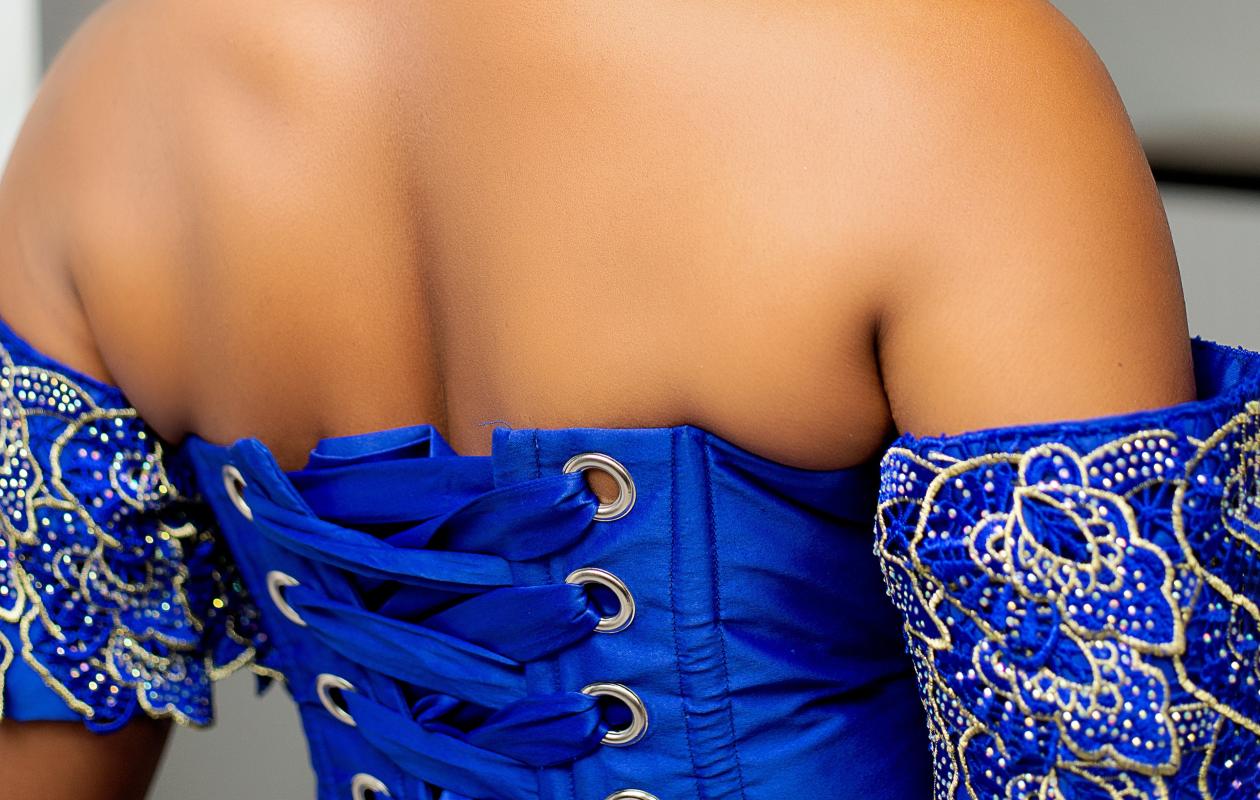
Beauté à tout prix : corsets serrés, le lourd tribut payé par les femmes lors des cérémonies
In Senegal, weddings and baptisms are often synonymous with elegance and pageantry. But behind the ultra-tight corsets and sculpted figures, some women teeter on the brink of illness, even tragedy. This report explores a quest for beauty that sometimes becomes a silent health hazard.
Between elegance and suffering, the corset has become a veritable modern-day prison of femininity. In Senegal, during major social ceremonies, particularly weddings and baptisms, the pursuit of aesthetic perfection leads many women to accept discomfort, pain, and sometimes even life-threatening risks. Elegance has become a social imperative. But behind the ultra-tight corsets, the vertiginous heels, the artificially sculpted silhouettes, and beneath the splendor of richly embroidered boubous and sophisticated outfits, bodies are compressed, constrained, and mistreated. This reality is often kept silent, as social pressure dictates that one must appear beautiful at all costs. Many women endure pain and discomfort in silence, in the name of appearances and the gaze of others.
Recently, a viral TikTok video brought this reality to light. It shows a young bride, smiling for the cameras but visibly struggling to breathe, squeezed into an excessively tight corset dress. A shocking image that has become the symbol of a disturbing trend: suffering to be beautiful.
A few weeks later, an even more serious incident was reported on social media. A woman, recently operated on by cesarean section, chose to wear a tight corset to celebrate her child's baptism. This sartorial choice had serious consequences and could have cost her her life. This episode reveals the real dangers hidden behind this now commonplace practice. The accounts of women who have endured this ordeal are chilling.
"I was suffocating while the others were partying."
As a newlywed, Mamy Sylla has a traumatic memory of her wedding.
The day that was supposed to be the best day of his life almost turned into a tragedy.
"As soon as I put on the dress, I felt that something was wrong. The corset was too tight, but I was told that it was normal, that it would pass. In the car, on the way to the ceremony, I could barely breathe. I was suffocating. I felt like my chest was trapped in a vise," she confides.
Arriving home, surrounded by an admiring crowd, Mamy hides her distress behind a forced smile.
Everyone was saying, "The dress looks so good on you. I was ashamed to say that I was suffocating. I felt pain everywhere, especially in my stomach and chest," she recalls.
During the photo shoot, Mamy recounts how she persevered despite the pain until her face betrayed her discomfort. It was then that she decided to tell her mother. "I discreetly called my mother to tell her that things weren't going well at all."
She was rushed to the clinic while the party continued without her.
"When they asked me to take off the dress, I let out a huge sigh of relief. I realized I had narrowly escaped something serious. I spent almost three hours at the clinic. My party was almost ruined by this incident. That corset almost cost me my life."
Her message is clear: "No dress is worth that. No beauty is worth suffocating."
Cesarean section and corset: An explosive combination
For women who have given birth by cesarean section, the risks are tenfold. Yet, many defy medical and family prohibitions.
Alimatou Dieng, a 30-year-old mother who gave birth by cesarean section, recounts her ordeal on the day of her daughter's baptism: "At night, I thought I was going to die."
For Alimatou, her daughter's baptism was a dream she had waited for for six long years. But that dream turned into a nightmare.
“I had just given birth by cesarean section. My mother, my mother-in-law, everyone told me to rest, but I wanted to look beautiful to celebrate my first child. I wore a low-waisted corset. At the time, I was holding up. I was smiling. But after a few hours, the pain started,” the woman says.
The party's over, and hell begins.
“I didn’t sleep a wink at night. I had terrible pain in my lower abdomen. I was scared. I thought something had burst inside. I almost lost my health. The next day, I went back to the clinic. But it was a total nightmare,” Alima testifies.
Her voice still trembles when she remembers.
"I disobeyed my family who had asked me not to wear tight clothes and to avoid going back and forth, but I regretted it. The party is over, but the pain remains."
A woman, a cesarean section, a corset: Men speak
Apparently, Alimatou is not the only woman who insists on wearing this type of clothing at the risk of her health.
On social media, a man recently posted an anonymous message denouncing his wife's stubbornness in insisting on wearing a corset just days after a cesarean section. The result: health complications.
Marked by this experience, he makes a plea: "Women must stop. They are risking their lives for nothing. Doctors must speak out more. We cannot continue to play with the lives of mothers and then it is the husbands and babies who pay the price," he warns in a heartfelt cry.
Bachir Ndiaye, a professor at Gaston Berger University in Saint-Louis, strongly condemns these practices. For him, they are simply unacceptable.
"Frankly, when I see this, I'm scared. Women are slowly committing suicide. A week after a C-section, the wound isn't even healed internally, and they're already thinking about corsets, heels, and partying. Wanting to party and be beautiful to the point of risking your life is excessive, it's madness."
He recounts being firm with his wife: "My wife wanted to do that for the baptism after a cesarean section. I said no. Sometimes, it's also up to men to take responsibility and know when to say no because health comes first."
He did not fail to lecture the women.
"Out of pity for their children, for their families, for their husbands who will have to pay the medical bills, women must stop. Beauty that lasts a few hours is not worth a lifetime."
These testimonies reveal an alarming reality: behind the smiles of the ceremonies, some women suffer, collapse and sometimes end up in the hospital.
"The postpartum period is fragile. The body needs rest, not additional stress."
To avoid the worst, Madjiguène Ndao, a midwife, calls for collective awareness.
For healthcare professionals, raising awareness is essential.
"The body needs rest after childbirth. Celebrations can wait. Postpartum deaths have been numerous lately, and that's worrying. We need to raise awareness among women who like to linger over festivities, putting their lives at risk. I feel so much sadness when I see a woman who has just given birth wearing heels and very tight clothes on the day of her baptism, parading around all day. It's not safe, especially considering that tension, migraines, back pain, and other ailments can be extremely tiring for women during this time. Health is paramount. Dear women, think of yourselves, think of your health first," she urges.
Medical alert: "Corsets are strictly forbidden for women who have had a cesarean section"
The medical verdict is final.
Health professionals denounce a risky practice, described as a veritable health time bomb with potentially serious consequences, especially for women weakened by recent childbirth or health problems.
"Wearing tight corsets and high heels is very dangerous for a woman who has just given birth, especially after a cesarean section. It is not recommended," warns Dr. Zeynabou Sow Diallo.
Continuing, the gynecologist-obstetrician details the risks.
"These corsets compress internal organs, prevent proper breathing, worsen post-operative pain, and can cause serious complications: infections, hemorrhages, fainting, or even life-threatening emergencies. That is why these types of garments are strongly discouraged for women who have undergone a cesarean section."
Faced with the stubbornness of some women, the Maternal and Reproductive Health Specialist insists on the urgent need to raise awareness.
"We need to talk about this more. Too many women take this risk, jeopardizing their health and their lives. They can celebrate and look beautiful, but not in clothes that suffocate them. Corsets have become a very popular trend at ceremonies in Senegal, but this should be avoided, and I solemnly call for a collective awareness."
Breaking the myth: suffering to be beautiful
The dangers of corsets and high heels are well-documented. Yet, society continues to glorify unrealistic beauty standards. As long as appearance takes precedence over well-being, women will continue to suffer, sometimes even ending up in the hospital.
The question remains: how long will we have to suffer to be liked?
Beauty should never be synonymous with pain. It begins with respect for the body, health, and life. It's time to break free from the constraints of the corset and place women's health at the heart of social priorities.






















Commentaires (8)
1/bapteme la nouvelle mamam a besoin du repos .il est plus important d entretenir bien le bebe. Et le confort de ta femme. On depense des. Millions. Elle n a meme pas une chambre a couche
2/mariage. Il est tres important de maintenir sa nouvelle femmes ,louer un studio. Que de liberez des millions. Et laisser sa nouvelle femme sans une chambre chez tes goros.
Pour L habillement et la coiffure 500 milles
LE ceremonies on ne mange presque pas.
Participer à la Discussion
Règles de la communauté :
💡 Astuce : Utilisez des emojis depuis votre téléphone ou le module emoji ci-dessous. Cliquez sur GIF pour ajouter un GIF animé. Collez un lien X/Twitter, TikTok ou Instagram pour l'afficher automatiquement.