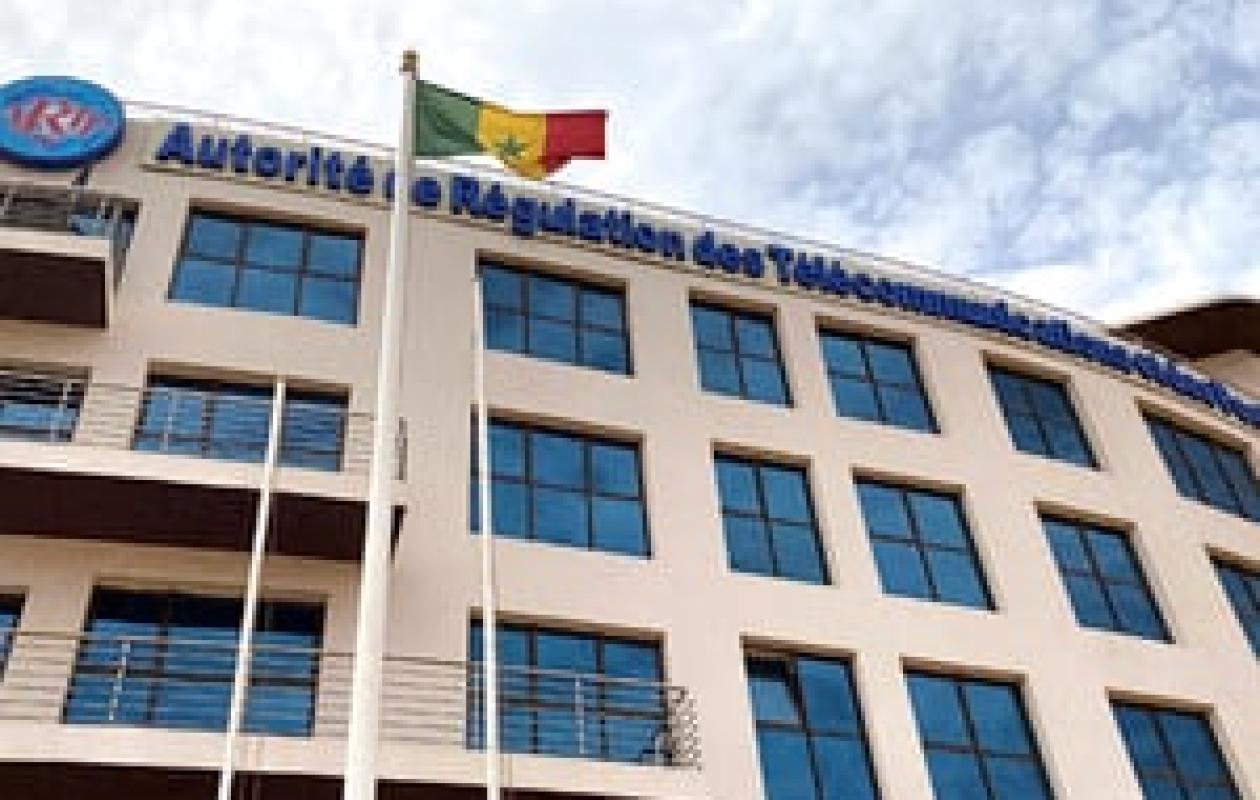
Téléphonie : Ce que révèlent les premiers résultats de l’Indice des prix des services mobiles
The Senegalese telecommunications market now has a new benchmark. On Tuesday, December 23, 2025, the Telecommunications and Postal Regulatory Authority (ARTP) officially presented the findings of the Mobile Services Price Index (MSPI), a statistical tool designed to measure the evolution of mobile phone tariffs over time. In Senegal, the sector is comprised of three operators holding a global license: Orange, Yas, and Expresso, as well as one mobile virtual network operator (MVNO), Promobile. As of September 30, 2025, the national subscriber base numbered 24.2 million. The market is characterized by a wide range of offerings, with nearly 200 commercial products identified, divided into voice-only services, data-focused plans, and bundled packages combining multiple uses. Each offer has its own specific pricing structure, which complicates the overall understanding of prices for both users and public authorities.
Faced with this situation, ARTP, in collaboration with the National Agency for Statistics and Demography (ANSD), initiated a process to develop an index capable of reflecting the actual evolution of mobile service prices. This approach serves several purposes. The IPSM (Index of Mobile Service Prices) is a tool for measuring price variations between two given periods. It also serves as a tool for monitoring price stability and estimating the average evolution of consumer spending. Finally, it offers greater price transparency in the retail market and sheds light on the actual use of mobile phone services.
At the presentation ceremony, the Director General of the ANSD, Dr. Abdou Diouf, recalled the origins of this groundbreaking work. “We are very pleased to be here this morning, along with the Director General of the ARTP, Mr. Dahirou Thiam, to share the initial results of the mobile services price index, which was developed for the first time in Senegal and within the WAEMU region. This was achieved through close collaboration and perfect synergy between the teams at the ARTP and the ANSD, in order to provide an index on the evolution of mobile service prices, a rather complex sector,” he stated. He highlighted the specific challenges of a market subject to frequent promotions and the regular introduction of new products, factors that make any intuitive assessment of pricing trends difficult. The methodology adopted is based on the consumption profile or basket method, consistent with practices observed in several countries, particularly among European regulators. This approach consists of three successive steps. The first involves constructing consumption profiles. The second concerns determining the minimum expenditure for each profile and for each operator. The third aims at calculating and monitoring the price index over time.
Within this framework, each operator's customer base was segmented based on two main variables. The first concerns the average monthly call duration, expressed in minutes. The second relates to the average volume of data consumed, expressed in gigabytes. Each variable was divided into three classes of equal size, corresponding to low, medium, and high users. The variable related to the average number of SMS messages, initially considered, was not retained due to its small contribution to the sector's revenue. Two types of indices were calculated. The minimum expenditure index is based on the variation in quantities consumed over the quarters. The price index, on the other hand, freezes consumption volumes, so that only changes in the pricing of the offers influence the observed minimum expenditure. This distinction aims to isolate the effect of price changes from variations in usage.
Dr. Abdou Diouf emphasized the collaborative and proven nature of the process. "Thanks to the synergy and seamless collaboration between our various technical teams, they have been working for the past 15 months to develop this product, which we are pleased to share, and which will be useful to the entire telecommunications ecosystem," he stated. According to him, the tool enriches the national statistical arsenal and meets the needs of stakeholders who utilize mobile phone data. The results presented show a contrasting trend in prices over the recent period. In 2024, the overall index shows a gradual decline, with a drop of 0.6% in the first quarter and 1.3% in the second quarter, followed by stability in the third quarter, and then a more pronounced decrease in the fourth quarter. Over the whole year, the average decrease reaches 3.5% compared to 2023. In 2025, the index records an increase of 11.3% in the first quarter, before a decline of 1.2% in the second quarter and a stabilization in the third quarter.
The Director General of ARTP, Dahirou Thiam, placed these figures in an institutional context. "From now on, Senegal has a scientific tool that allows us to measure tariff evolution over time," he stated. He noted that, until now, price assessments were largely based on individual perceptions. "The issue of tariffs is too important to leave to the judgment of individuals without solid scientific foundations, so it seemed useful and important to us to provide Senegal with a decision-making tool," he added. According to him, the IPSM (Prices and Tariffs Index) meets several needs. It serves the regulator, who now has an indicator to assess the sector's competitiveness and guide public policy. It is also of interest to operators, who can use this benchmark to analyze price dynamics and adjust their business strategies. Finally, it concerns consumers, who will benefit from transparent information on tariff changes.
When questioned about promotions, Dahirou Thiam emphasized the unique nature of the Senegalese market. "We have a rather particular market, with a multitude of offers—more than 200 available to consumers—and a multitude of promotions," he explained. He clarified that these "one-off" promotions are insufficient to reflect a structural decrease in prices. "This tool now allows us to have a comprehensive overview of the prices applied in Senegal and to make a solid comparison," he said. Making the index permanent is one of the next steps for the two institutions. ARTP plans to publish it quarterly, allowing consumers to track cost changes over time. "Consumers will be able to have transparent visibility into the evolution of prices for services offered by all operators," stated the Director General of ARTP.
Regarding the partnership with the ANSD (National Agency for Statistics and Demography), Dahirou Thiam reiterated that this collaboration is a long-term commitment. "The ANSD is currently the institution with the necessary statistical expertise to develop these kinds of indicators," he stated, while also mentioning previous joint projects. He announced a commitment to strengthening this cooperation starting in 2026, in order to produce data deemed essential for the entire ecosystem. For his part, Dr. Abdou Diouf commended the initiative led by the ARTP (Telecommunications Regulatory Authority). "We must commend the initiative of the ARTP, which partnered with the ANSD, and which has resulted in a truly innovative product in the sub-regional area," he affirmed. He spoke of future collaborations designed to meet the needs of users, public institutions, and stakeholders in the sector.
With the Mobile Services Price Index, ARTP has become the first regulator in the ECOWAS region to finalize such an index, and is among the first in Africa to adopt this tool. The authorities intend to use this statistical basis to strengthen data-driven and transparent regulation.























Commentaires (5)
Participer à la Discussion
Règles de la communauté :
💡 Astuce : Utilisez des emojis depuis votre téléphone ou le module emoji ci-dessous. Cliquez sur GIF pour ajouter un GIF animé. Collez un lien X/Twitter, TikTok ou Instagram pour l'afficher automatiquement.