Affaire Starlink : Les Syndicats de Sonatel Orange, Yas, Expresso et Cie listent leurs griefs
The debate surrounding the rollout of Starlink in Senegal continues unabated. Last Saturday, Alioune Sall, the Minister of Communication, Telecommunications, and Digital Affairs, addressed several questions in an exclusive interview with Seneweb. This Thursday, leaders of the telecommunications operators' union coordination held a press conference to present their arguments.
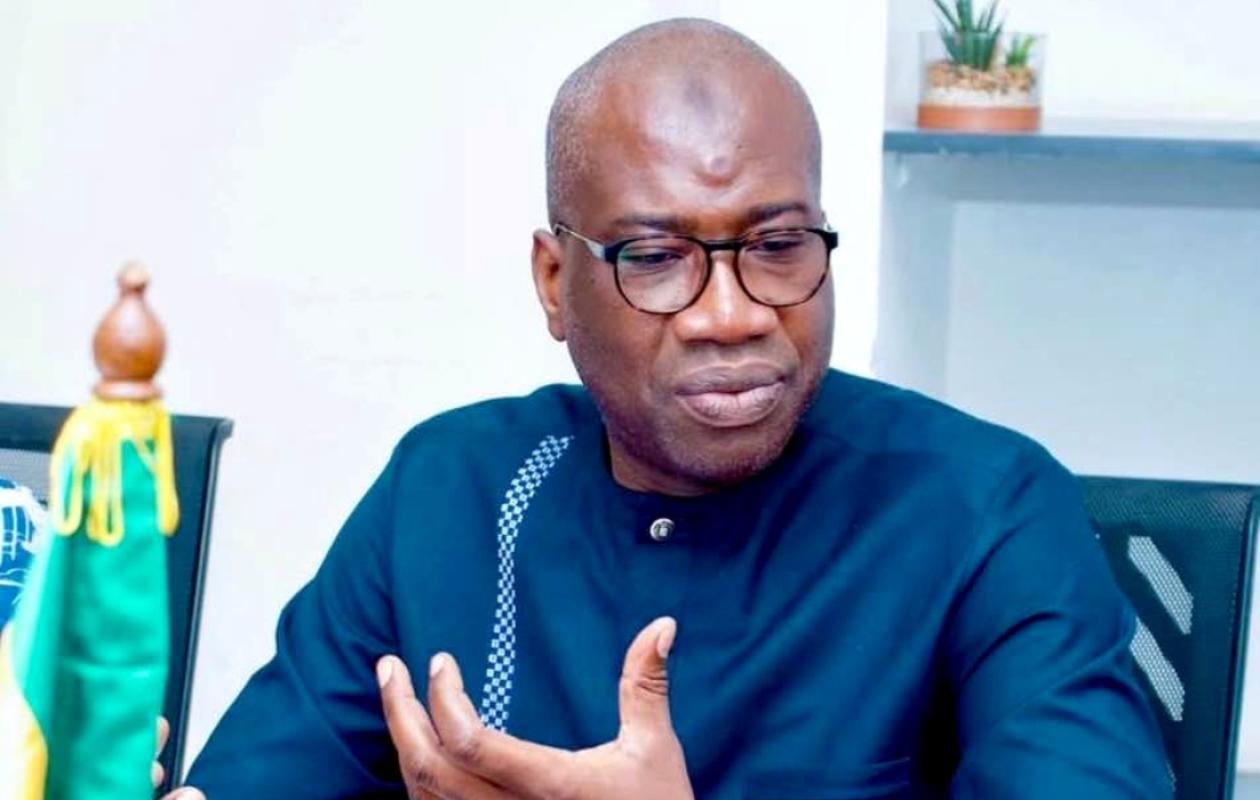
“The minister made a statement during his February 15th broadcast on Seneweb, and finally, he hinted that Starlink was an Internet service provider (ISP). Therefore, it has an authorization and not a license. And this is in accordance with Law 2018-28 concerning the Electronic Communications Code,” stressed Mouhamadou Lamine Badji, Secretary General of the Sonatel Workers' Union (Syts).
Elon Musk's Starlink, more than just an ISP
He explains that industry players operate under either a license, an authorization, or a declaration. The union representative notes that prior to 2017, ISPs were subject to a licensing system. However, starting in 2017, the legislature eased the regulations, reducing the cost of their licenses to 100 million CFA francs and placing them under an authorization system.
“The ISPs in Senegal are Arc, Waaw and Ayo. They all depend on the operators. They do not have their own infrastructure, whereas Starlink has its own infrastructure and can address the same scale as the operators. The fact of wanting to extend this regime to Starlink is nothing other than a lack of strategic vision for the State of Senegal and a lack of patriotism,” says Mr. Badji.
The entry ticket of 30 billion
He and his colleagues disagree with the minister, who maintains that everything done in this matter complied with the relevant legislation. According to him, “the State of Senegal has just committed an economic crime by not demanding an entry fee that should have been 30 billion CFA francs.”
“That is why we are calling on the Senegalese state to reform the electronic communications code to adapt it to the reality of satellite operators, which is not yet the case. And secondly, to demand 30 billion CFA francs from Starlink as its entry fee,” he said.
What Sonatel, Expresso and Co. paid
For Mr. Badji, there is also a question of fairness in this matter. He points out that Sonatel paid 100 billion FCFA for its 4G network and the renewal of its concession, then 34.5 billion FCFA for 5G. Yas paid 27 billion FCFA for its 4G network and 13.5 billion FCFA for 5G. Expresso paid 5 billion FCFA for its 5G network. Therefore, the union representatives believe that Starlink should be subject to the same regulations imposed on all operators.
As for the argument that Starlink was introduced to help ensure universal connectivity, the coordination of telecom operators' unions states that it "is unfounded." They assert that if there are currently underserved areas in Senegal, it is because the government, after collecting over 200 billion CFA francs from operators for, among other things, universal connectivity, diverted these funds to other objectives unrelated to providing coverage for these underserved areas.
“Furthermore, the State will have to tell us how Starlink kits and subscriptions, which cost more than operator offers, will ensure coverage of white areas where most populations have meager resources? Was there any mention in the Starlink specifications of restricting it to coverage of white areas only?”, the coordination asks.






![[EXCLUSIF]De Ziguinchor au Méridien : Le déballage explosif de Ndiaga Seck qui livre les noms et numéros de 10 de ses amants](https://image.seneweb.com/content/news/2026-21-18//thumb_1260x800_6a0b129f253e7_EAmQ8XmZt5.jpg)
![[EXCLUSIF] Ndiaga Seck : Ce qu'il a dit sur Ousmane Sonko](https://image.seneweb.com/content/news/2026-21-18//thumb_1260x800_6a0b59b4699aa_zsVjCNITAk.jpg)










Commentaires (14)
Participer à la Discussion
Règles de la communauté :
💡 Astuce : Utilisez des emojis depuis votre téléphone ou le module emoji ci-dessous. Cliquez sur GIF pour ajouter un GIF animé. Collez un lien X/Twitter, TikTok ou Instagram pour l'afficher automatiquement.