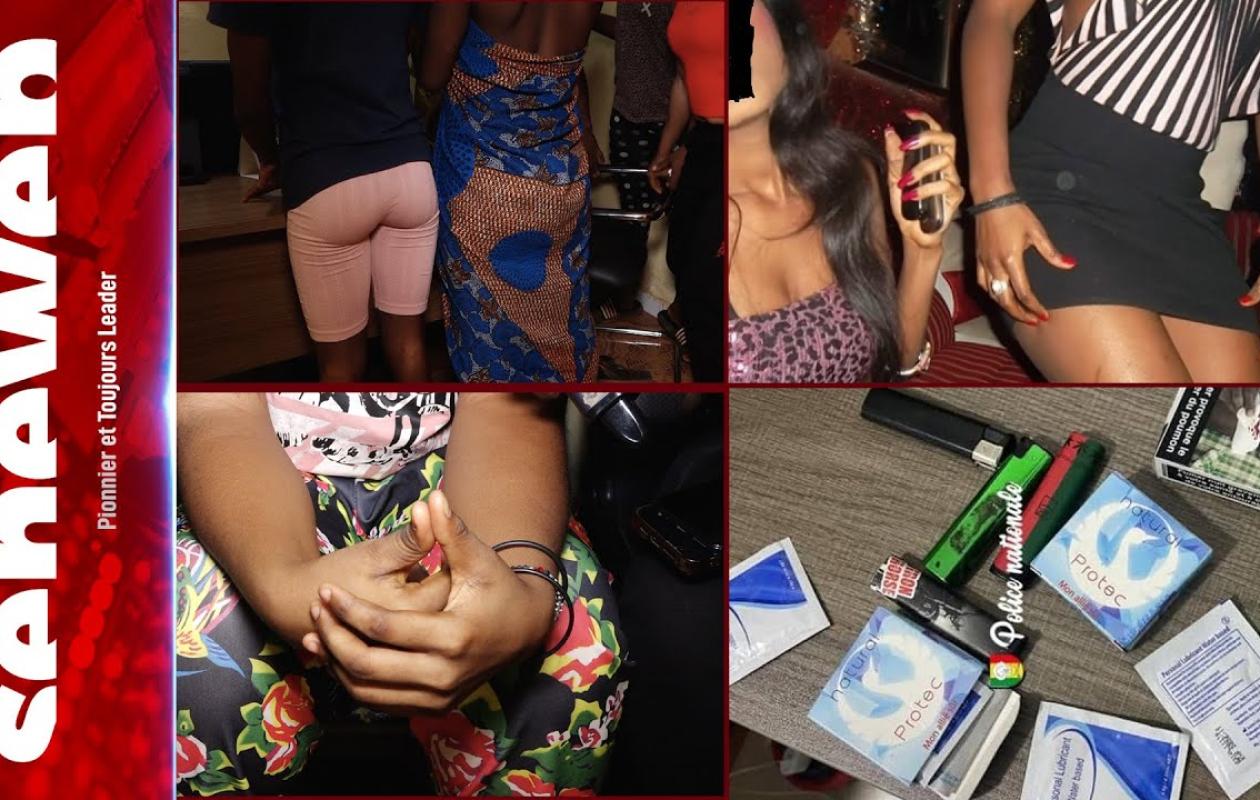
[Zoom Sur…] Prostitution, trafic sexuel, VIH : L’or de Kédougou, une malédiction pour les femmes 2/3
In the far southeast of Senegal, the Kédougou region lives to the rhythm of pickaxes, sieves, and other ore-crushing machines. But behind the gold rush and its promises of quick riches in the "Diouras" (traditional gold panning sites), lies a chilling social reality: the explosion of prostitution and sex trafficking networks. Numerous young women—sometimes minors—are recruited from Nigeria, Burkina Faso, or Sierra Leone and reduced to sex slaves to satisfy the carnal appetites of the Diouras and, at the same time, line the pockets of their pimps. In Kédougou, the sex trade is spreading its tentacles at an exponential rate, driving up the HIV prevalence rate in its wake.
For just over a decade, Kédougou has become the crossroads of a massive migration (no fewer than 20 nationalities have been recorded), fueled primarily by the lure of gold mining. Coming from Mali, Guinea, Burkina Faso, Benin, Sierra Leone, and Nigeria, thousands of men and women, in search of riches, converge on traditional or clandestine gold panning sites in Bantaco, Mako, Tinkoto, Kharakhena, and elsewhere. In these lawless zones where money circulates according to the extraction of the precious metal, the exhaustion of the "diouramen" (the gold panners) – "immersed" daily more than 20 meters underground – seeks an outlet. A pleasure economy has thus emerged, in parallel, to meet this strong demand.
In the "Diouras," characterized by a predominantly male population where over 30,000 people (ANSD report, 2018) work daily to make their fortune, prostitution is no longer taboo. It's a thriving market, with ever-increasing demand, a diverse supply, and low prices (3,000 CFA francs per encounter). This pleasure economy is embedded in the complex and illegal structures of a pyramid scheme, headed by a highly efficient transnational network of sex traffickers with branches throughout the West African sub-region. In this region, which, paradoxically, contains 98% of Senegal's traditional gold mining sites, the poverty rate reaches a staggering 65% (ANSD, 2021-2022). This stark contrast fuels the sex trade.
Added to this are deeply ingrained beliefs that associate gold prospecting with defilement. Moreover, according to a study by the African Programme and Research Initiative to End Slavery (APRIES) at the Center for Human Trafficking Research and Awareness (CenHTRO) of the University of Georgia (USA), many Diouramen still believe that engaging in paid sexual relations with sex workers greatly increases their chances of finding gold. These deeply entrenched beliefs have led to an explosion of prostitution fueled by human trafficking and the sexual smuggling of migrants in the Kédougou region in general, and in gold-mining areas in particular.
Sex trafficking, a scourge in Kédougou
Indeed, while some women voluntarily engage in prostitution for economic reasons, a large proportion of them—mostly Nigerian foreigners (68%)—fall victim to human trafficking networks. Using a vicious modus operandi, these networks manage to draw young women into the amoral cycle of sex trafficking through a debt-based system.
In fact, many young women (between 18 and 30 years old, according to their official documents) are recruited in their countries of origin under the pretext of jobs as waitresses or shopkeepers in African destinations (Senegal, Mali, Ivory Coast) or outside the continent (France, Dubai, etc.). However, it is only upon their arrival in Senegal that they are informed that they will actually be engaged in commercial sex work. Once in Kédougou, they are asked to reimburse their travel expenses, sometimes amounting to nearly 2 million CFA francs, thus trapping them in a cycle of forced and long-term prostitution.
In this major investigation into the hidden side of gold mining in Kédougou, marked by disastrous socio-environmental impacts, Seneweb met with several victims of this pernicious form of sexual exploitation, which has become commonplace. Finding refuge at the Kédougou vocational guidance and reintegration center run by the NGO "La Lumière," more than thirty underage Nigerian girls, rescued from the clutches of pimps, bitterly recount the terrible ordeals of their time in Kédougou.
A problem with deep roots
The testimonies gathered on-site at the headquarters of the NGO La Lumière describe a horrific situation. “The phenomenon of sexual exploitation began to escalate between 2010 and 2013. At that time, we conducted a census at a traditional gold mining site and found 3,000 Nigerian girls in situations of sexual exploitation. Currently, we can no longer count them because there are so many,” explains the NGO's local branch manager, Aliou Bakhoum. According to him, this is the first wave of sex workers who, upon returning to Nigeria, organize recruitment drives based on false promises, in conjunction with these networks.
“Recruited at a minor age (generally 15, 16 years old), they pass through several branches of the network before arriving. After Nigeria, they stop over in Cotonou where they are given fake ECOWAS identity documents on which they are given the age of majority (18 years and over). As a result, even with doubts about their real age, the police cannot prevent them from entering our territory because they can only rely on the administrative document,” Bakhoum points out.
In the "Niafas," makeshift shelters built with rudimentary materials in the Diouras, the beating heart of sexual exploitation, human dignity, especially that of women, weighs less than a one-gram gold nugget, typically traded for at least 70,000 CFA francs. Here, the pimps (mostly women) confiscate the documents of their new recruits. Having lost all contact with their families, they are forced into prostitution to repay travel expenses they never incurred. "The pimps give them eight condoms, the equivalent of eight encounters per night, at 3,000 CFA francs per encounter. So they have to pay 24,000 CFA francs every night. If they don't, they are often beaten or deprived of food," explains Mr. Bakhoum.
These statements are corroborated by the APRIES study, which reveals that several victims of sex trafficking in Kédougou reported experiencing emotional and psychological manipulation, and sometimes physical assaults, to keep them trapped. Nine percent (9%) reported being victims of actual physical abuse, and 15% had their identity documents confiscated. Several also claim to have been threatened with mystical attacks if they refuse to obey the pimps' demands. Even worse, when they manage to repay the so-called "debt," some girls are resold to other pimps who perpetuate this dehumanizing trafficking.
Furthermore, access to healthcare is virtually nonexistent. Despite the efforts of local NGOs, the prevalence of sexually transmitted infections (STIs) and HIV remains significantly higher than the national average. Indeed, in the Diouras, isolated areas almost cut off from the rest of the world, the prevalence rate hovers around 4%, according to Aliou Bakhoum, while the regional average in Kédougou is 0.6%, nearly double the national average (0.3%).
Chilling accounts of young Nigerian girls who were victims of sex trafficking
Cynthia, a 16-year-old orphan, can't hold back her tears as she recounts the hell she and her little sister endured in the Dioura of Saïnsoutou in the commune of Missirah (Saraya department). "I come from Imo State (a state in southeastern Nigeria, editor's note). A friend, Mesoma, told me about a woman named Sugar who offered us work in Senegal without specifying the nature of the job. Since both my parents are dead and my uncle, who had taken us in, was abusing my sister and me, we decided to come to Senegal. But to our great shock, when we arrived in Saïnsoutou, my sister and I were forced into prostitution. Sugar had taken our blood and threatened us with mystical attacks if we refused to obey," she says, sobbing.
After a month of sexual exploitation, they were freed and placed in the care of the NGO La Lumière, following an intervention by the Gendarmerie, which arrested and brought the pimp before the appropriate courts. Joyce (16 years old), however, was luckier than Cynthia and her sister, as she only endured the ordeal for a week. Currently, around thirty young girls are receiving psychosocial support to address the trauma that still haunts their sleep.
Stopping the traffic: the immense challenge for the authorities
Overcoming this scourge is a major security and humanitarian challenge for the Senegalese authorities who, although aware of the problem, struggle to gain full control over the volatile Dioura region. Since 2013, hundreds of victims of sexual exploitation have regained their freedom, but this has not slowed the phenomenon, which has never diminished.
The gendarmerie is stepping up operations to dismantle trafficking networks, but the porous borders and the vast terrain facilitate the almost immediate re-establishment of pimps. Hardly a week goes by without the Kédougou gendarmerie's research section or the local branch of the DNLT (National Division for Combating Migrant Smuggling), attached to the National Police, dismantling prostitution and sex trafficking rings.
But their actions are unfortunately like putting a band-aid on a broken leg. Sex trafficking and prostitution continue unabated in the remote villages of Diouras and in the heart of the city, where prostitution rings operate openly. In these places, no longer hidden, "Business" is a code in the libidinal dialect that sex workers and their clients use to recognize each other.
Ultimately, the gold of Kédougou shines brightly for the national economy, but leaves behind a deep social scar. Without strict regulation of traditional gold panning and increased protection of women's rights, Kédougou, a land dominated by men, risks remaining a place of exploitation, both of gold and of women's dignity.

















Commentaires (5)
C’est pas compliqué
Participer à la Discussion
Règles de la communauté :
💡 Astuce : Utilisez des emojis depuis votre téléphone ou le module emoji ci-dessous. Cliquez sur GIF pour ajouter un GIF animé. Collez un lien X/Twitter ou TikTok pour l'afficher automatiquement.