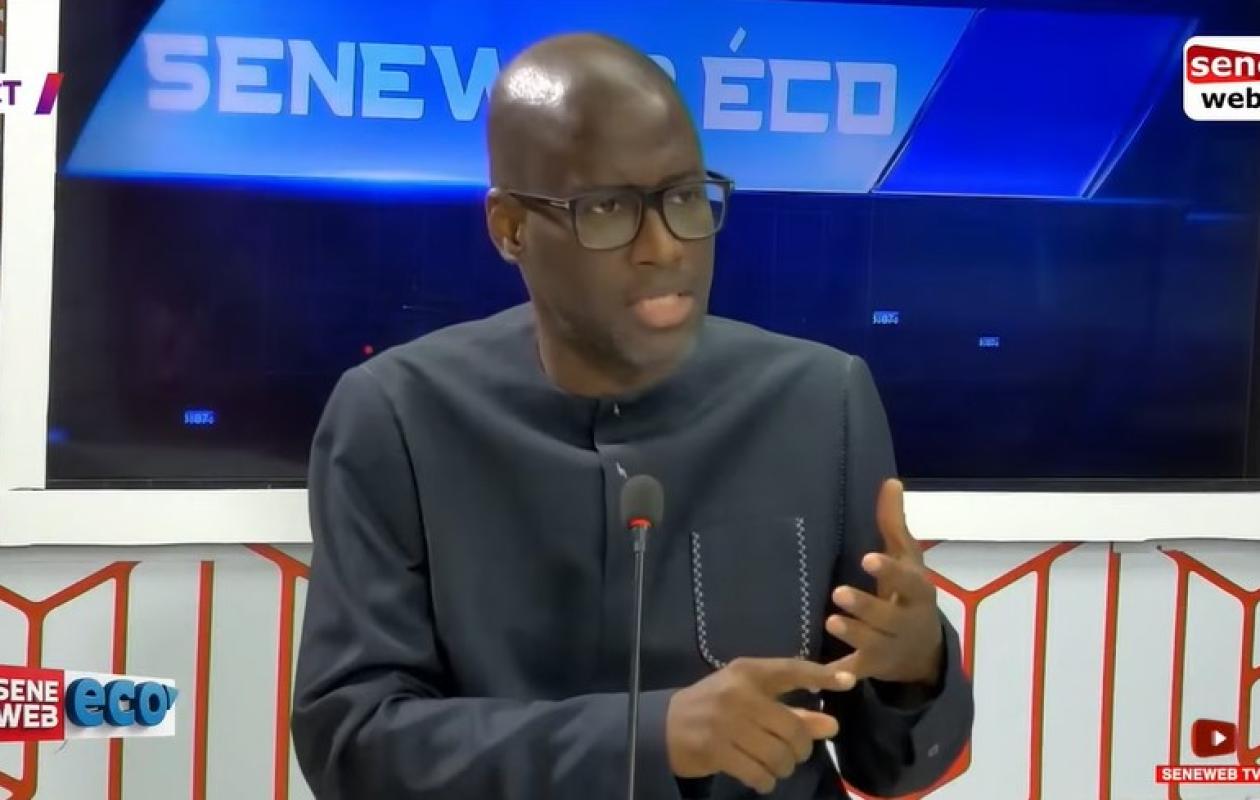
Souveraineté monétaire : Ndongo Samba Sylla démonte le modèle du franc CFA et rejette l'Éco
Economist Ndongo Samba Sylla argued for the necessity of African countries having their own national currencies, asserting that no sustainable economic development is possible within the framework of the CFA franc. "What is certain is that there can never be economic development under the CFA franc," declared the guest on Seneweb Eco this Sunday, May 10, 2026.
Citing the cases of Côte d'Ivoire and Gabon, which, according to him, have never recovered their highest historical per capita income levels since 1968 and 1976 respectively, Ndongo Samba Sylla believes that the importance of a national currency goes beyond the simple symbolic question of sovereignty and constitutes an essential instrument for economic transformation. "When you have your own currency, the central bank can act as the guardian of the state's solvency. You can have credit policies that allow you to transform your economies," he explains.
According to him, a national currency would also allow African states to better manage their external deficits and reduce their financial dependence. "We can implement a reform that will allow us to absorb any external deficit we might have in our national currency. And so, that means you solve the problem of your financial independence," he argues. The economist clarifies, however, that he is not advocating a nationalist retreat or the abandonment of all continental cooperation. On the contrary, he proposes a mechanism for African monetary cooperation based on national currencies. "I am not proposing single currencies. For me, each country can have its own national currency," he insists.
In his plan, trade between African countries would be conducted through a pan-African unit of account. "It's not a single currency. It's simply a unit of account. When countries trade, they use this unit of account," he explains. A continental monetary authority would then be responsible for clearing transactions between African states.
"The Eco was very poorly designed."
Such a system would allow for the pooling of African reserves in foreign exchange, gold, and special drawing rights. "When we centralize all of this, Africa would be in eighth place, more or less tied with Saudi Arabia," he suggests.
The other advantage of such a mechanism, he continues, would be to significantly reduce reliance on foreign currency debt. "African countries would no longer need to issue debt in foreign currency," he asserts, believing that imports could be settled through this continental compensation system.
When questioned about the ECOWAS single currency project, the Eco, planned for 2027, the economist was highly critical. "This project was very poorly conceived because a monetary union cannot function without a federalist framework," he argued, questioning the convergence criteria established decades ago. "They said it would start in 1983. Then they said 2015, then 2020, then 2027. In a few months, they'll be saying 2035," he quipped.
Thus, for him, the urgent need is to quickly establish an African payment and settlement system allowing states to trade without using the dollar or the euro. "Why is it that when Senegal needs to trade with Kenya or Ghana, we have to use the dollar, we have to use the euro? It's not normal," he insists.
Furthermore, Ndongo Samba Sylla denounces what he considers a contradiction in the current system: African foreign exchange reserves earn low returns abroad while states borrow at high rates on international markets. "Your assets earn low returns while your liabilities, your debts, are subject to very high interest rates," he emphasizes, seeing African monetary cooperation as a concrete solution to this situation.











Commentaires (10)
Participer à la Discussion
Règles de la communauté :
💡 Astuce : Utilisez des emojis depuis votre téléphone ou le module emoji ci-dessous. Cliquez sur GIF pour ajouter un GIF animé. Collez un lien X/Twitter, TikTok ou Instagram pour l'afficher automatiquement.