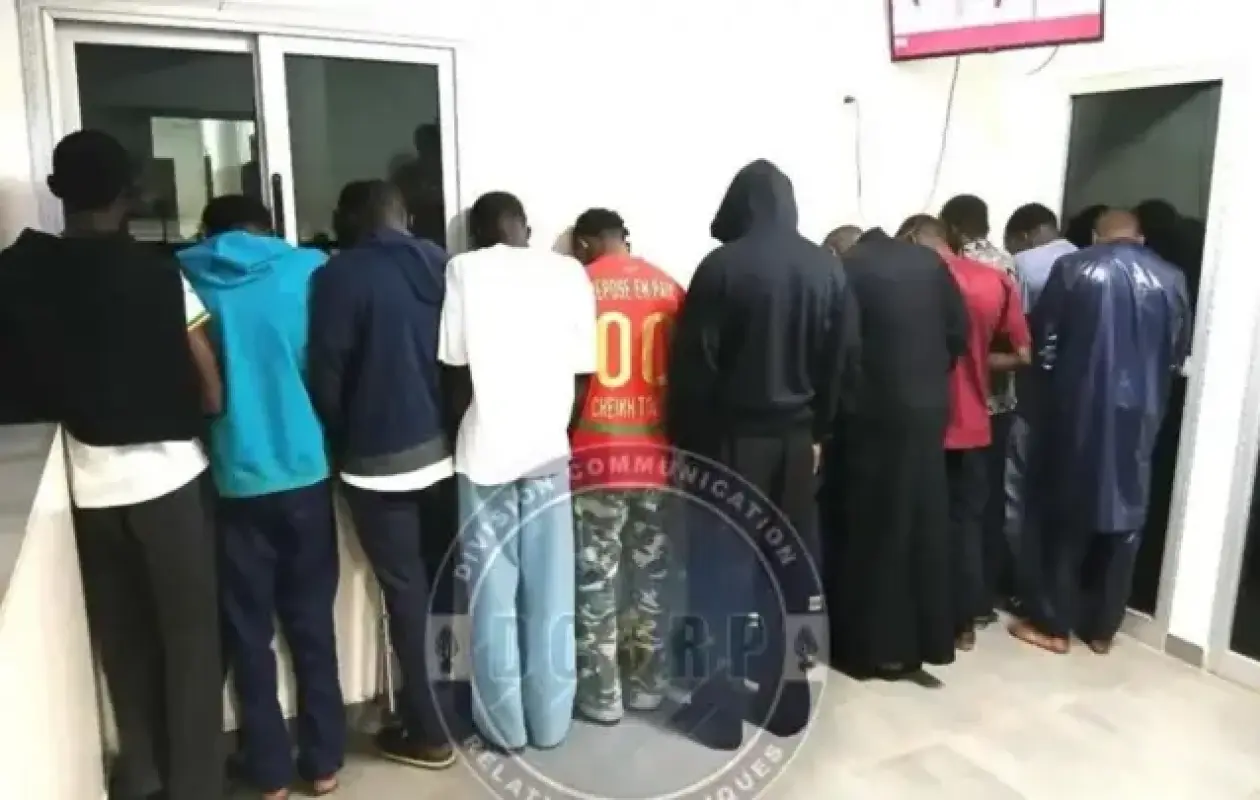
Sur la question des présumés homosexuels: au-delà de l'émotion ne devrions- nous pas interroger nous-mêmes? Et si les responsabilités ne sont pas partagées ?
Since the weekend of February 7-8, 2006, national news in Senegal has been dominated by the issue of alleged homosexuals arrested on various charges. Since then, the national press, social media, public squares, markets, and all meeting places have made it the subject of much discussion and publication. Indeed, according to the initial findings of the investigation and everything reported in the press, whether true or false, the situation is quite serious. The allegations include acts against nature, criminal conspiracy, the abduction of minors, and the deliberate transmission of HIV. This entire scandal is alleged to have occurred under the auspices of a vast child pornography network originating in France and involving African countries, including Senegal. This network reportedly initiates minors into sexual acts in exchange for payments.
And to make matters worse, it is said that among the accused people, and presumed members of this network, some are carriers of the AIDS virus.
If this is confirmed, as reported in the press and on social media, then there is a real problem. But beyond the lamentations and the shock everyone is feeling, we must analyze what happened and engage in individual and collective introspection. The responsibility of those allegedly implicated is undoubtedly absolute, and the investigations could shed light on the matter.
Furthermore, isn't it wise to examine our society and look at ourselves in the societal mirror? In my humble opinion, in a society where children's education is completely neglected; in a society where neither family, nor school (the State), nor political parties, nor social organizations provide education, anything can happen; because only education frees us from our base nature. And President Mandela brilliantly reminded us of this: "The most powerful weapon which you can use to change the world is education." However, having schools does not mean having a sociological framework for education. It is even broader than that.
Looking closely at Senegalese society from a psycho-sociological perspective, it clearly appears that we are in a society where Citizenship, Civic Duty, and respect for dignity are increasingly at odds with our social and cultural values.
What Senegal has lacked most in recent years is Citizenship, Civic-mindedness and respect for the common desire to live together, according to our Motto: "One People, One Goal, One Faith".
A youth lacking civic education can be open to all vices, as Thomas Sankara told us. When you observe how we move through our streets, with people spitting everywhere, sidewalks blocked, passersby bumping into you and disregarding all traffic rules, then you might realize our societal flaws and limitations. In our schools, students defy teachers and administration, and also create all sorts of networks with groups that engage in illicit or immoral activities.
A society that can no longer watch over its children throughout the day; a society that lets its children beg all day under the pretext that they are in religious training; a society whose children are poorly dressed and barefoot in search of a coin, these children can be easy bait for predators like those discussed in this international network dossier.
A society where children are used as a pretext for adults to beg; and get this, beggars who end up choosing this street corner as their "office," which even becomes their workplace, where they set up shop early in the morning until the end of the day and the closing of public services—a society like that is also responsible for the potential exploitation of minors and can rightfully be accused of failing to assist a person in danger, or of failing to assist minors. And when the beggars who use these children display or hold iPhones, while others apply makeup on the spot with babies borrowed or used as a pretext for begging, then such a society is not telling itself the truth and seems to be operating in a irrational way. It's like a society that has practically abdicated its duty to protect children and young people.
It should be noted that among these beggars are nationals of neighboring countries who live in makeshift shelters and remain exposed to all kinds of risks. If we are to allow these people to remain in our cities, we must also ensure the protection of their rights, especially if they are vulnerable. While they have the right to settle in any country in Africa, we have an obligation and a duty to remove them from their vulnerable situations or to assist them in the precarious circumstances they face.
Every morning, when you look at our streets, how many children, practically abandoned by society, are searching for a coin meant for some invisible, well-protected person, or even just a scrap of food? Often they walk for miles barefoot, without decent clothes. What is society doing to eliminate such situations? The responses offered are simply evasive tactics.
So, aren't all these vulnerable people living on the streets (young children and beggars) easy prey for networks willing to pay large sums to reach their targets? Why can't the State take responsibility for these despicable, dehumanizing, and immoral practices? Is it possible for the Ministries of Family and/or the Interior to combine their resources and powers to put an end to this situation and protect these populations?
Since independence, the State seems incapable of resolving the problem of street children; and this phenomenon has become commonplace in everyone's eyes. From the socialist regime to the present day, including the reigns of the liberals Wade and Sall, this Ministry seems to be a propaganda machine, and this is undoubtedly why each new regime appoints an activist whose solidarity efforts are generally geared more towards a political clientele than towards families who genuinely need support. A sociological examination of Senegalese society reveals certain observations that point to a society losing its values. The family fabric is disintegrating more and more each day. Single-parent families are increasing daily. Senegalese people are eating in the street more and more; and this is becoming the norm, whereas it was an exception during the 1960s and 70s. Eating together as a family was both an act of socialization, solidarity, and self-education, as well as a moment of food and health security.
The streets and avenues are now lined with stalls selling millet or corn porridge, Tiakri, couscous, fondue, and so on. From noon onwards, the small eateries take over for lunch. And in the evening, from 6 pm, the same scene unfolds for dinner. People queue up for Tiakry, Ngalax, fondue, sandwiches, or couscous with milk. It's as if no one eats with their family anymore.
A sociological analyst told us that when a society ends up eating in the street every day, that society is losing its values and this is also a sign of vulnerability, poverty, individualism,.....
Furthermore, this raises public health concerns, as meals served in the street are not without risk. Remember the rumors or actual cases of cat, dog, or even carrion meat being sold in public recently? Look at how the bread that Dakar residents eat every morning is transported and served in recycled rice sacks and on two-wheeled motorcycles, before being displayed on shop counters where vendors handle other products like detergents, bleach, oils, and so on, without gloves.
In these situations, young people, minors, and teenagers, left to their own devices, who happen upon people willing to offer them enough to buy a decent meal, something other than porridge and shawarma eaten on the ground, well, imagine what happens next. Imagine these young people sleeping on cardboard boxes in the streets, vulnerable to falling into the hands of these pedophile groups who offer them nothing more than a meal and a blanket or sweater to ward off the cold.
The level of poverty does not explain everything that is happening. There is undoubtedly a question of lack of education, of citizenship; and here everyone is called upon: families, schools, political parties, social and civic organizations, NGOs, but of course the State, which should have been the catalyst for our civic education and the model of our civic-mindedness.
What kind of society is this? A society where consumers are served bread in recycled containers, where the bread can easily fall during transport before being delivered to roadside eateries, shops, and makeshift stalls, where people can then help themselves without fear. What has become of the government decree that established bread kiosks in neighborhoods? What can the Hygiene Department do, through economic controls, to enforce hygiene regulations in bakeries, which need more suitable bread distribution methods and should also offer employment opportunities for young people? We could discuss this in detail.
Let's return now to the current events surrounding the issue of presumed homosexuals. The decision to knowingly infect people with a virus that has decimated communities in the recent past raises questions of both a lack of civic responsibility and moral and religious accountability. However, agreeing to meet people for money cannot be explained solely by poverty. There is also a problem of social and civic education at play, a matter for both society and the state.
What is most lacking in our Senegalese society is conscious and active citizenship; and no one seems to care; no one, despite the fact that we are constantly reminding ourselves that we are a country of believers; 95% Muslim and 5% Christian. "Fii, citoyenneté moo fi raflé!!" = Here, what is most lacking is citizenship.
Furthermore, we are increasingly seeing young people (both women and men) meeting in rented apartments for moments of freedom, pleasure, or even promiscuity. And yet, no one says anything to those around them.
This is to say that if a network like the one described in this high-profile case encounters young people who lack the basic necessities and are attracted to the good life and luxury, these young people are easy prey for predators who may be carrying a "weapon" of mass destruction.
Such events challenge us individually and collectively.
Shouldn't Senegalese society take a hard look at itself to better understand what's happening to it? Our society seems to be losing its values and sense of direction in every respect. Recalling all this is simply an educational exercise, analyzing the cause-and-effect relationships between vulnerability, incivility, poverty, and the risks of indoctrination, recruitment, and manipulation of young people by mafia networks. This case is currently under investigation by our country's justice system. But alongside the legal process, it's important to find a social, cultural, and civic approach; because some of the causes are linked to these socio-cultural and civic aspects. This is a debate we cannot exhaust here.
But before concluding, allow us to make a few strategic recommendations, including...
These are just a few ideas, and there are others that we cannot all present here.
As a citizen, and with all due respect, for the right to a decent life.
Mamadou Diouf- Mignane- (Coordinator of the Senegalese Social Forum)



















Commentaires (7)
Participer à la Discussion
Règles de la communauté :
💡 Astuce : Utilisez des emojis depuis votre téléphone ou le module emoji ci-dessous. Cliquez sur GIF pour ajouter un GIF animé. Collez un lien X/Twitter, TikTok ou Instagram pour l'afficher automatiquement.