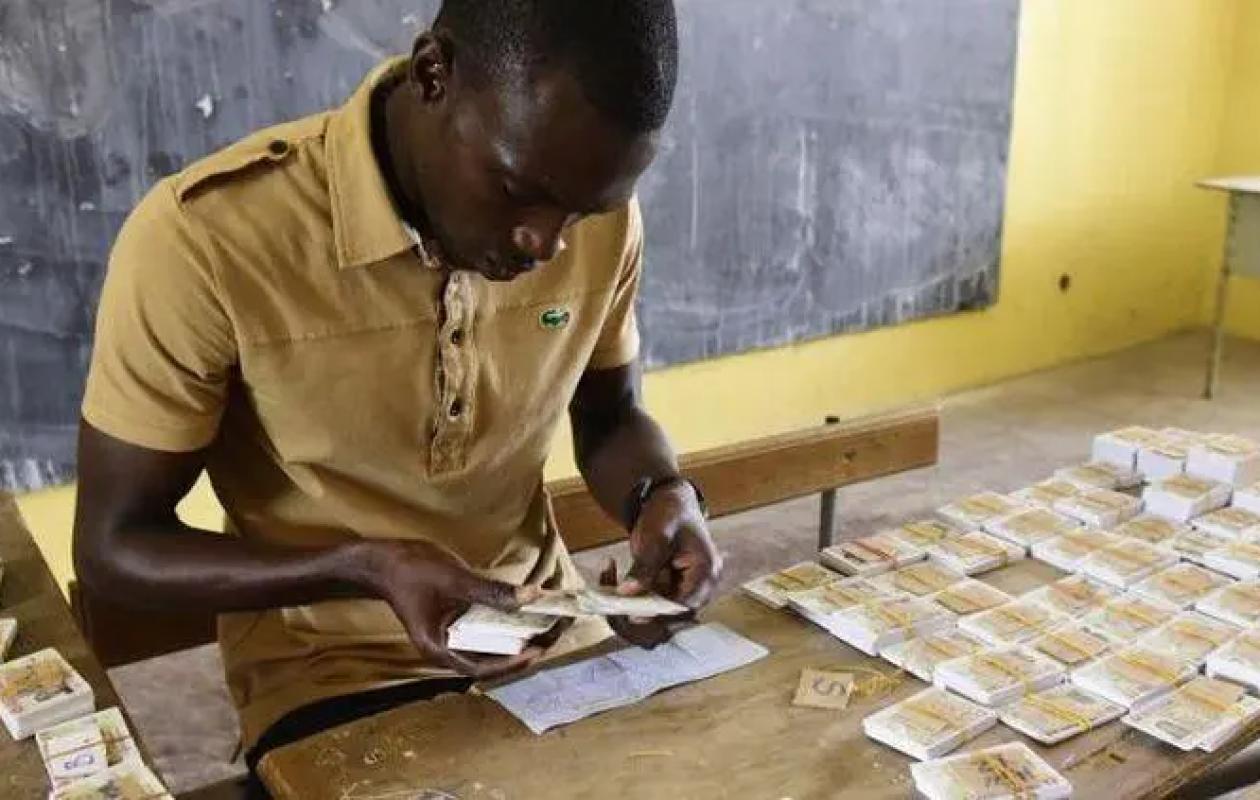
« Tout savoir sur la révision des listes et la fixation des élections »
Some recent interpretations of the Electoral Code, although made in good faith, have misled some political actors and created confusion. To remove any ambiguity and ensure legal rigor, we offer the following clarifications:
1. On exceptions to the ordinary revision of electoral lists
Contrary to what has been suggested by some political actors, there is no "third exception" to the ordinary review.
o Article R.28 of the Electoral Code stipulates that electoral lists are permanent and updated regularly according to two procedures:
▪ An "ordinary" review takes place every year from February 1st to July 31st, except in cases of force majeure or exceptional review in prospect .
No provision makes this exceptional revision conditional on the signing of a decree setting the date of the elections.
2. Regarding Article L.63 of the Electoral Code . This article simply states that:
o "A decree sets the date of the election."
o "The election lasts only one day and takes place on a Sunday."
It is clear that this creates no exception to the ordinary revision of the electoral lists. Setting the date by decree is a general and consistent rule, serving as the basis for other regulatory acts.
Regarding the deadline for setting the election date , the absence of a decree during this period does not constitute a violation of the Electoral Code. It is unfortunate to read in the first paragraph of the FDR text on the Seneweb website that the failure to issue a decree setting the date of the departmental elections during this period constitutes a violation of the Electoral Code.
We would like to know what article of the Electoral Code this is and what timeframe it requires?
A combined reading of the texts would have prevented these errors . For example, Decree No. 2022-162 of February 3, 2022, set the date for the legislative elections as July 31, 2022, which corresponds to 177 clear days and fully complies with legal deadlines. In most cases, it is organizational imperatives that lead the authorities to set the election date very early, in order to allow all political actors, and in particular the electoral administration, to prepare adequately for the chosen deadline.
3. Regarding the lower and upper limits for organizing departmental and municipal elections, Articles L.236 and L.269 of the Electoral Code stipulate that:
o Departmental and municipal councillors are elected for five (5) years.
Except in cases of dissolution, elections must take place within 30 clear days preceding the expiry of the fifth year following the last renewal.
A simple explanation to understand the deadlines
This means that we take the date of the last general renewal of departmental or municipal councillors ( January 23, 2022 ), add 5 years and that gives us January 23, 2027. Territorial elections must be organised within 30 days preceding this deadline, that is to say 30 days before January 23, 2027.
The steps of the calculation
1. Starting point : January 23, 2027 (expiration date).
2. We are going back 30 full days :
o January 23, 2027 is not included.
o The first clear day is January 22, 2027 (upper limit)
The 30th clear day is December 24, 2026. (lower limit)
Pursuant to Article R.26 (clear deadlines), the elections must be held between December 24, 2026 and January 22, 2027.
In conclusion
• Article L.63 does not provide for any derogation from the ordinary revision, except in two cases: force majeure or the exceptional revision envisaged.
• No article of the Electoral Code requires that the date of territorial elections be set in January, February, March or April.
• The territorial elections must be held between December 24, 2026 and January 22, 2027 , in accordance with Articles L.236, L.269 and R.26.
In order to avoid any confusion and ensure compliance with electoral rules, let us read the texts carefully and together.
Plintchou, the law-abiding citizen




















Commentaires (3)
Participer à la Discussion
Règles de la communauté
💡 Astuce : Utilisez des emojis depuis votre téléphone ou le module emoji ci-dessous. Cliquez sur GIF pour ajouter un GIF animé. Collez un lien X/Twitter, TikTok ou Instagram pour l'afficher automatiquement.
Se connecter
Commentez avec votre profil, votre photo, et soyez averti des réponses.