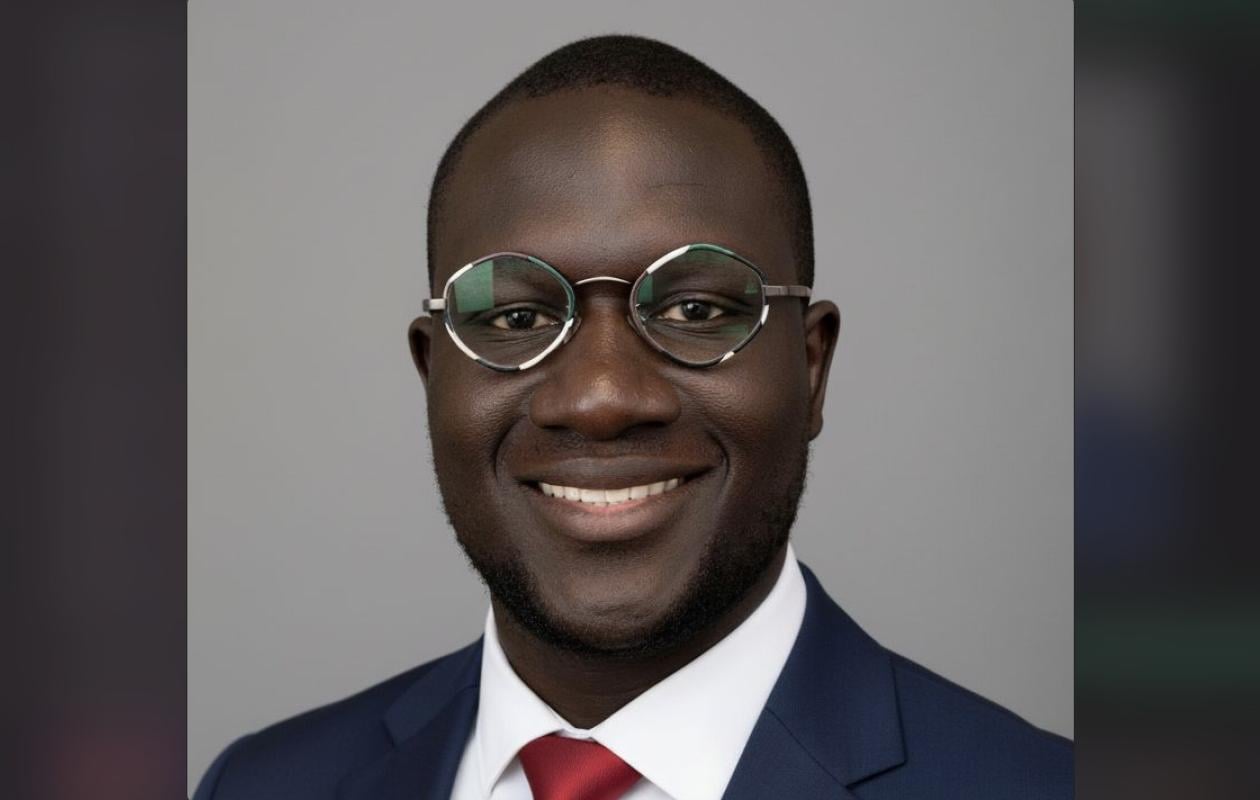
Une boussole dans la crise de la dette sénégalaise (Par Abdoulaye Ndiaye, Professeur de macroéconomie à l'Université de New York)
A question has been shaking Dakar for several months, as well as London, Paris, Beijing, and Washington: should Senegal repay its public debt, estimated at 132% of its GDP? This question opens another, no less complex: is this debt sustainable? What "sustainable" means is not easy to define, for two reasons: first, because it depends not only on current conditions, but also on future choices; second, because it depends on the decisions of many other actors.
The new Ndiaye-Kessler report, written by Abdoulaye Ndiaye and Martin Kessler and recently published by the Finance for Development Lab, attempts to describe the main consequences of two options: trying to repay at all costs on the one hand, or defaulting.
To refund at all costs is to place two bets in one.
The first is that of a massive fiscal consolidation in record time. In other words, a marathon at sprint pace. Going from a primary deficit of around 9% of GDP to a surplus of 2% is something that only a few countries have been able to do, generally by taking advantage of an exceptional windfall of natural resources.
The second gamble is that, during this time, certain key players will be willing to believe that Senegal's debt is sustainable, in other words, to lend during this difficult period. To finance its current account deficit, as well as the debt to be repaid between 2026 and 2028, the government needs to raise 15 trillion CFA francs. The institution best positioned to do so would be the IMF, whose programs are specifically designed to support countries in crisis, which allows it to mobilize other concessional lenders, and whose loans to poor countries are at zero interest rates. However, due to its own rules, the IMF can only sign a program if its public debt analysis framework indicates that the debt is sustainable. Yet, however imperfect this tool may be, our analysis indicates that this is unlikely to be the case.
If the IMF cannot lend, could other actors step in? It's possible: we've seen it in the past. In the cases of Egypt and Kenya, emerging lenders like the United Arab Emirates agreed to provide liquidity despite doubts about the country's solvency. But it would be naive to believe that this support is free: the riskier it is, the more it will demand in return: painful privatizations, collateral, and so on.
A third option would be to rely on regional financial markets. In 2025, regional banks financed Senegal's debt, providing over 4 trillion CFA francs. They could continue to do so, but probably not in the same volumes: this would reduce lending to the private sector and, above all, could expose the banking sector to increased risk.
It is not impossible that this double bet will succeed, but such a strategy exposes one to considerable risks: either that the massive consolidation fails, or that no lender comes forward.
The other possible strategy is to seek to negotiate with creditors, within the "Common Framework", the procedure put in place by the G20 to reduce debts owed to bilateral creditors of developing countries.
This choice is not easy either. Recent debt restructuring cases have been lengthy and complex, although the most recent ones, Ghana and Ethiopia, have seen some acceleration. The international community should use this as a test of potential collaboration: China and France, which together hold approximately 70% of the bilateral debt, should clearly demonstrate their support by committing to addressing the debt as quickly as possible.
Negotiating with private creditors is always complicated: they would seek to minimize their losses, and the bonds would be classified as "in default" by rating agencies. These consequences are significant, but recovery after default is possible, particularly when the debt is reduced sufficiently. International institutions will need to support the country with new loans so that Senegal can continue to invest despite difficulties accessing international markets. Finally, to minimize economic costs, debts denominated in CFA francs should be excluded from the restructuring scope to avoid destabilizing the zone.
In any case, the lessons of this crisis must extend beyond Senegal and lead to strengthened debt transparency and banking supervision in the region. Like European countries during the Greek crisis, the WAEMU will need to reform and adopt additional safety nets.
Experience shows that delaying a default is costly: it is better to negotiate early to reduce the impact on exports and growth. Both options are difficult, and both will impose serious costs on the economy. Our analysis is that, in the absence of substantial and cheap liquidity, repayment would be riskier and more expensive.
(By Abdoulaye Ndiaye, Professor of Macroeconomics at New York University)










Commentaires (6)
D un autre côté le président est aphone sur le sujet, voir indifférent. On ne sait si c est lui le président ou pas.
may gnou diam gosse
Votre contribution est claire, simple et digestible....
Le Problème au Sénégal est que le peuple dans sa majorité ne se sent pas concerné par ces enjeux de stabilité marcro-économique... Cet article, dans un pays d'Afrique du Nord aurait eu 100 K vues facile alors que nous en sommes à 1,2 K vues seulement....Si un musicien, un footballeur ou un influenceur faisait un buzz, tout de suite il aurait 50 K vues... Nos politiciens tirent leur légitimité de cette majorité de notre population....
Je prie au Seigneur d'aider notre peuple à s'intéresser aux enjeux économiques...
Participer à la Discussion
Règles de la communauté :
💡 Astuce : Utilisez des emojis depuis votre téléphone ou le module emoji ci-dessous. Cliquez sur GIF pour ajouter un GIF animé. Collez un lien X/Twitter ou TikTok pour l'afficher automatiquement.