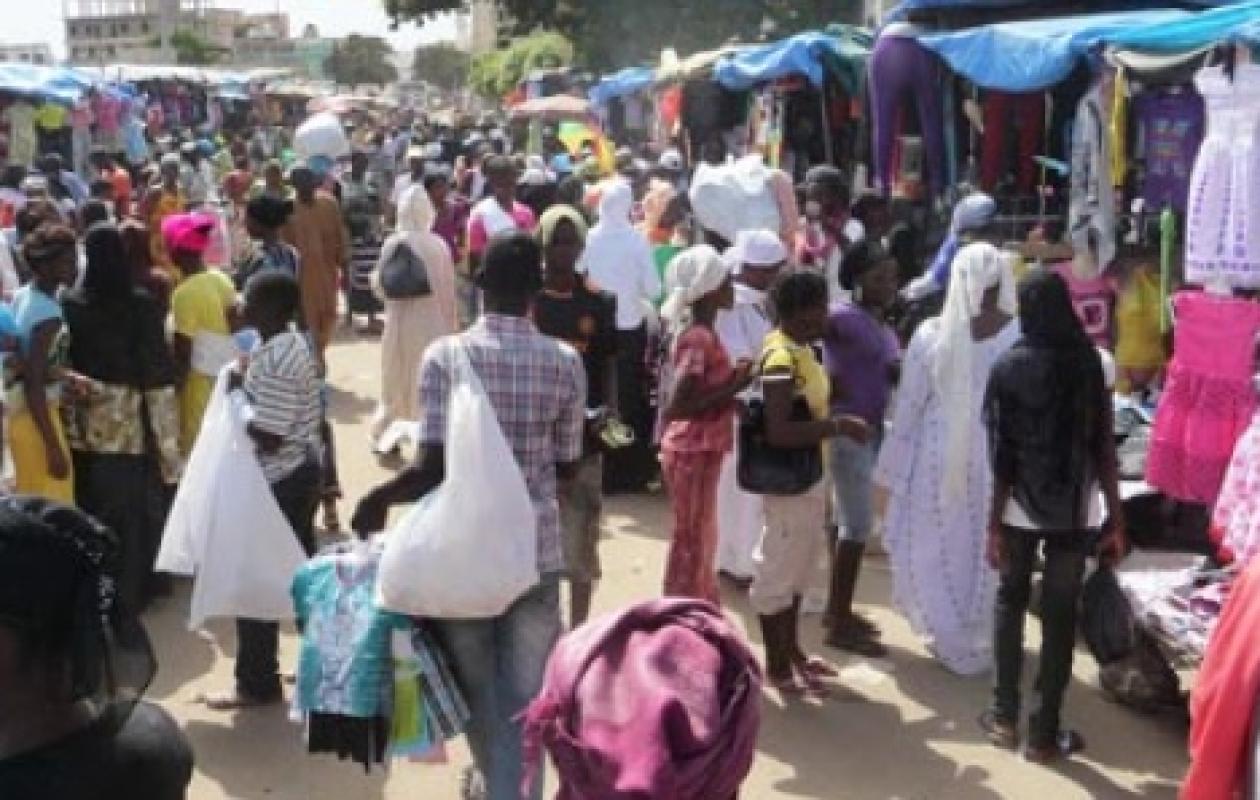
Secteur informel : L'indispensable amortisseur social face au défi de la modernisation
In most African economies, the informal sector is not a marginal periphery, but a central pillar of daily life. According to the International Labour Organization, nearly 85% of jobs in sub-Saharan Africa are informal. The World Bank estimates that this sector represents between 30% and 40% of gross domestic product in many countries in the region. These proportions illustrate a phenomenon that cannot be reduced to a mere statistical anomaly.
In Senegal, data published by the Directorate of Forecasting and Economic Studies (DPEE) and the International Labour Organization indicate that over 90% of economic units are unregistered and that informal employment far exceeds 80% of total employment. During periods of economic downturn, this capacity plays a stabilizing role. When formal businesses reduce their workforce, street vending, crafts, urban transport, and local services offer immediate alternatives. This buffer function limits abrupt social disruptions and supports household consumption.
This resilience, however, has a downside. Informality generally means low productivity, limited access to bank credit, virtually no social protection, and fragmented taxation. The actors involved contribute through local taxes, municipal fees, or parafiscal levies, but they largely escape income tax and corporate tax. This reduces the national tax base, which weighs on the state's ability to finance infrastructure, education, and healthcare.
The dilemma then becomes clear. Rapid and coercive formalization could broaden the tax base and improve economic traceability, but it risks further destabilizing millions of workers whose margins are already slim. Conversely, maintaining the status quo preserves immediate social equilibrium, but perpetuates a low-yield economy and limits structural transformation.
International experience suggests that effective formalization requires neither coercion nor tax incentives alone. It presupposes an environment where registration provides tangible benefits: access to finance, legal protection, public procurement, and social security. When the costs of formalizing outweigh the expected benefits, rational actors remain on the sidelines.
The issue therefore goes beyond simple taxation. It concerns the quality of institutions, administrative simplification, the reliability of business registries, and access to credible public services. In a context where growth still largely relies on low value-added activities, the transition to a more structured productive fabric requires a gradual approach, capable of recognizing the real contribution of the informal sector while supporting its upgrading.
The informal economy is neither an absolute obstacle nor a sustainable solution in itself. It constitutes both a pragmatic response to the shortcomings of the formal system and a symptom of the economy's structural limitations. Its future trajectory will depend on the ability to transform this diffuse entrepreneurial energy into a more productive foundation, without disrupting the social equilibrium it currently helps to maintain.
















Commentaires (2)
Participer à la Discussion
Règles de la communauté :
💡 Astuce : Utilisez des emojis depuis votre téléphone ou le module emoji ci-dessous. Cliquez sur GIF pour ajouter un GIF animé. Collez un lien X/Twitter, TikTok ou Instagram pour l'afficher automatiquement.