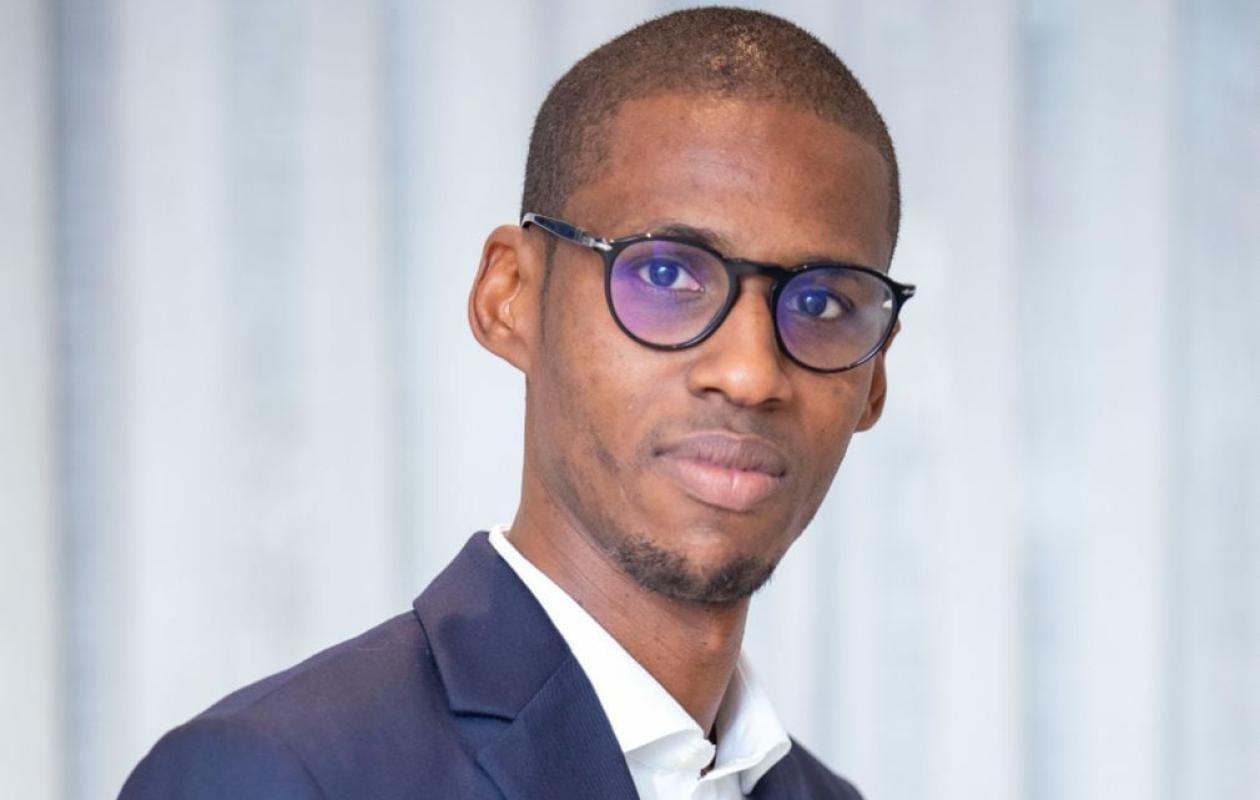
Hamidou Anne : “Tout s’effondre”
A year after joining the Alliance for the Republic (APR) during its transition to the opposition, intellectual and now politician Hamidou Anne offers a frank assessment of his first twelve months of activism. Faced with the complete breakdown at the highest levels of government between President Bassirou Diomaye Faye and Ousmane Sonko, he provides an incisive analysis of the national situation. From accusations of economic mismanagement to debates on cultural sovereignty and slush funds, this Republican figure reveals his party's ambitions for regaining power by 2027.
Hamidou Anne, it's been a year since you traded your columnist's pen for an APR activist's card, back when it was in the midst of its period in opposition. What personal assessment do you make of these first twelve months at the heart of the political fray?
A year later, I draw a rather positive conclusion from this year of partisan engagement, as I consider that I have always been involved in politics through my thoughts, work, and actions, guided solely by the well-being of Senegal. Political activism demands many sacrifices, efforts, and a genuine capacity for self-denial, especially at a time when brutality governs the public sphere. The APR was an obvious choice, because of President Macky Sall, a friend and mentor first and foremost, but also because the party's core values include defending the Republic, empowering the vulnerable, the excluded, and the oppressed, and preserving Senegal's credibility on the African and global stage. In one year, I fully engaged in the game of political debate, particularly on subjects that are dear to me: the economy, public power and international issues, always with a desire to contribute to the elevation of public conversation, to give it great dignity and a certain height.
“My current project is the formulation of an alternative, modern and radical program.”
Our generation must never forget that it is the heir to a legacy that must be preserved in the face of the decay of institutions, the normalization of extremism, and the fantasy of civil war embodied by populists. I am happy and proud to work alongside President Sall, for whom I have great esteem and respect. I am learning a great deal from him, both in terms of mastering technical matters and in terms of activist fervor, in order to build my own political identity and the stature of a statesman. My current task is to formulate an alternative, modern, and radical program. Our ambition is to offer the Senegalese people a republican platform that combines rigor on matters of state, economic responsibility, and social commitment.
“My mantra, when deciding to enter politics, was this: to be at the heart of the fray and above it all. I think I still adhere to it.”
One year after crossing the Rubicon, far from the comfort of the committed observer, have you, faced with the realities and compromises on the ground, ever regretted entering politics?
Politics is a space for the clash of ideas, but also for the constant expression of power dynamics in order to achieve a majority. It is the arena of a perpetual cultural battle that demands moral rectitude, exemplary conduct, reverence for the state, and attachment to the sanctity of the republican homeland. It therefore requires decorum and high standards. But it is also a practice in which violence exists alongside the sublime. I have less time to devote to reading and writing, which, as you know, are my first passions, but I cherish encounters with Senegalese people, field visits, and public meetings where militant fervor serves as a substitute for human warmth. For the past year, I have been traveling the country to listen to our people and immerse myself in each of their aspirations in order to do good. I have agreed to end my intellectual retreat to engage in the observation and analysis of social dynamics as closely as possible to the people, in order to propel an imaginary vision for the transformation of society. There is a certain panache in engaging on the ground, in order to confront our views within the framework of political conflict. Even though I confess that we must now contend with the hideous spectacle of social media, with its insults and anathemas, I prefer to stay the course on a path of hope and consider myself a monk-soldier dedicated to contributing to building a powerful and organized party that embodies hope in the face of the current regime's failure. My mantra, when deciding to enter politics, was this: to be at the heart of the fray and yet above it. I intend to remain true to it.
One criticism is increasingly being voiced in public opinion today: that the Senegalese political class, across all political leanings, has never been so mediocre. As an intellectual and now a member of the political establishment, do you share this assessment of a general decline in the level of debate?
This judgment is as implacable as it is undeniable. One only needs to look at the peculiar figures who govern us, their vulgarity and crudeness reflected in their speech and actions. Public officials entrusted with weighty responsibilities take up residence on social media to hurl insults indiscriminately; these same individuals desecrate the presidential office, demonize and threaten members of the opposition, and subject our country to the whims of the financial markets and foreign ridicule: everything is collapsing. Furthermore, the spectacle of betrayal, petty scheming, and backstabbing, as seen within the APR with the desertion of numerous officials who enjoyed President Sall's trust for twelve years, is draining the life out of politics, breeding resentment, and driving citizens into the arms of populists, who thrive on the collapse of governing parties.
That said, I am by no means a prisoner of fate. True to Faulkner's beautiful maxim, I refuse to accept the end of humanity. And it is because I am convinced that our country carries within it the seeds of a collective resurgence, of a republican regeneration, that I fight, that I am engaged in politics.
“We have entrusted our country to people without experience in government, without vision, from an insurrectionary culture whose record is catastrophic for Senegal.”
When you joined, you spoke of leading a "republican counter-insurgency". Today, on the ground, do you feel that the APR has succeeded in remobilizing the electorate it lost in the last elections?
This expression prompted many questions, particularly from people who found the path steep and the road long and perilous. A year later, many joined us in this call for a republican counter-insurrection to mend the threads of the nation and rebuild a robust political project and a credible economic doctrine on the ruins the regime will leave behind in a few years. The APR suffered departures; elected officials and leaders preferred the cowardice of hiding rather than defending our record. The twists and turns of the 2024 presidential campaign divided the party and disoriented many activists. Two years after losing power, our party, the flagship of the opposition, has once again become attractive. We welcome new members, young people, women, and especially people who have never been involved in politics, who bring their energy and fresh perspectives. They all tell me the same thing: we were impressed by President Macky Sall's achievements and we are worried about the sabotage of his legacy by Pastef, whose sole objectives remain satisfying the ambition of a man with an inflated ego and promoting disorder at the highest levels of government. Faced with the chaos within our institutions, the APR aims to be a melting pot of ideas and a common home for democrats and republicans concerned about Senegal and eager to cultivate new paths of hope.
Recent news has been marked by the dismissal of Ousmane Sonko from his position as Prime Minister by President Bassirou Diomaye Faye. What is your interpretation of this dismissal?
The separation, after two years of confusion and disorder at the highest levels of government, was inevitable. Without resorting to armchair psychology, I find Ousmane Sonko a curious character: in addition to being incompetent, he is verbose and a nuisance. The President of the Republic doesn't seem to me to be any more technically gifted than his former mentor. We have therefore entrusted our country to people without experience in government, without vision, and from an insurrectionary culture whose record is catastrophic for Senegal. After two years marked by failure in every area, and faced with the inability to unite the country around a unifying project, they are parting ways amid disagreements over the candidacy for the next presidential election. Faced with the debt, the deficit of 5.2 trillion CFA francs in two years, the thousands of jobs lost, the crises in the universities, the difficulties in rural areas, and the manipulation of the justice system, their only priority seems to be petty political squabbles. I can imagine the disappointment of their voters, especially the youth among whom they had awakened immense hope, which has now melted like snow in the sun.
You, who were particularly critical of PASTEF's project, did you expect the apparent break between Diomaye Faye and Ousmane Sonko to occur so soon, barely two years after they came to power?
What I observed before, and what has now been confirmed, is their incompetence in managing the state, their lack of preparation, and their political immaturity. Pastef lacks a culture of governance; it is a party with fascist undertones whose DNA is violence, which consumes, divides, and undermines any ambition for development. Political immaturity and the refusal to comply with our institutions—with a president, the keystone of these institutions—are leading the country to inertia and a division that sows the seeds of violence and settling of scores. They accuse each other of treason, while they themselves have betrayed the Senegalese people. In the coming weeks, each side will roll out its talking points, but the only valid one is this: marginal civil servants within the administration received power and hardly knew where to begin, because they have never embraced the culture of hard work and the value of quiet dedication.
“ The Pastef party has killed the country’s production capacity, destabilized the private sector, and ruined Senegal’s reputation on the international stage in two years.”
With Sonko's return to the opposition and a now fractured executive branch, there is a palpable tension that raises fears of a repeat of the 2021-2023 period. Do you fear a new social or political explosion in Senegal?
I fear an explosion of violence, because what characterizes Ousmane Sonko is his lack of limits and his nature as a man without a superego. Only a resolute force will stop his morbid obsession with power. His former collaborator, on the other hand, lacks the political experience, the life experience, and even the intellectual consistency of a great statesman, in addition to having virtually no political legitimacy. The other source of social tension stems from the economy. Senegalese people are suffering terribly due to a painful situation exacerbated by a complex international context and the incompetence of the leaders. Pastef has destroyed the country's productive capacity, destabilized the private sector, and ruined Senegal's standing on the international stage in just two years. The lie about the "hidden debt," the stifling of growth, and massive indebtedness without investment are killing the national economy. Worse, because they have no imagination or serious doctrinal framework, they consider taxation as the only tool of the economy, hence the deadly pressure on households and businesses.
"The new alliance stems from a personal and political break with the former mentor, and not from a genuine change of course."
The President has appointed Ahmadou Al Aminou Lo as Prime Minister. What is your interpretation of the composition of this new government?
This is a government of continuity on the path leading our country to financial bankruptcy and moral ruin. The megaphones of the so-called "hidden debt," those responsible for 16 trillion euros in debt and a 5.2 trillion euro deficit in just two years, have been promoted and strengthened. Half the ministers were already in the previous government, and the Executive, now headed by a single leader, continues to implement a roadmap whose guiding principles I struggle to discern, so utterly lacking are they. The new team stems from a personal and political break with the former mentor, not from a genuine change of course. You surely know the famous line from Lampedusa's beautiful novel, The Leopard: everything changes so that everything stays the same.
This new team includes the return of Mouhamadou Makhtar Cissé to the Ministry of the Interior, a figure who was very close to President Macky Sall. Does this appointment reassure you?
I have respect and consideration for Mouhamadou Makhtar Cissé. I must simply say, after reading some of the comments, that I don't believe in the myth of the technocrat above the bureaucracy. Government is, by its very nature, political. Therefore, Makhtar Cissé will implement the political vision of Pastef. I wish him good luck in his mission.
A year ago, you strongly denounced the accusations of "manipulating public accounts" leveled by the PASTEF regime against the former management of the APR. With hindsight and the evolution of the audits, do you maintain that this was a "grotesque accusation"?
I borrow an image from former Prime Minister Idrissa Seck: until the sun dies, they will never prove this grotesque accusation of hidden debt. For them, it was a crude fabrication to ruin the previous regime's credibility on the eve of the legislative elections. We responded with facts, produced a counter-report submitted to the Managing Director of the IMF, and invited them to a public debate to compare our figures. They never responded to our invitation. And, as karma can be sweet: it was the Pastef regime that was caught red-handed concealing debt, thanks to the Financial Times ' revelations about a €650 million total return swap contracted without the knowledge of the Senegalese people, in whose name the debt is incurred.
By joining the APR, you loudly proclaimed your pride in standing alongside Macky Sall, whom you considered the right man to get Senegal back on track. Now, doesn't his candidacy for the position of UN Secretary-General somewhat alter your plans and the trajectory of your commitment?
President Macky Sall leads the APR, sets the major political directions, and grants us considerable autonomy on the ground. He is an experienced statesman with a keen intellect. After twelve years in power, he has chosen to step back and, from Marrakech, pursue an international agenda. It is within this framework that he is a candidate for the position of UN Secretary-General, and we wish him every success, as he possesses the depth, talent, and vision for a reformed global governance to meet the challenges of a complex and volatile world. The party, for its part, is expanding its reach thanks to the strength of its activist network. We are establishing our secretariats in the departments before moving to the municipalities, and are continuing the work of expanding our membership and updating our doctrinal framework. Everything in its own time. The party will make its decision after the race for the Secretary-General. But I can guarantee you that we are determined and committed to regaining power, in order to change the lives of the Senegalese people.
If Macky Sall's election as UN Secretary-General materializes, the APR will find itself without its moral compass. Who today possesses the necessary legitimacy to become the providential man—or woman—capable of maintaining party unity?
We are currently working on three key areas for implementing the Reconquest strategy: expanding our membership, with significant successes in attracting new political and technical personnel; strengthening party unity to form a solid and cohesive bloc against the regime's aggression; and developing an alternative platform to present to the Senegalese people in two phases. Before mentioning any names, we want to offer the Senegalese people an ambitious, modern, credible, and inclusive political platform. An election is a competition to find solutions to the concerns of our fellow citizens. Politics is dying in petty personal squabbles; we want to wage a major battle and convince people that the APR has matured in opposition and remains a credible party, open to elites, yet popular and rooted in local communities. The preliminary draft will be available before the end of the year for the midterm elections, and the final program by 2027. We want to work with rigor, organization, and method, to shift the focus from "Who" to "What."
“Senegal has the right to defend a cultural model based on national consensus.”
Senegal has recently faced strong international criticism, particularly from Western partners but also from African intellectuals, regarding its legislation and its firm stance on homosexuality. How do you reconcile the defense of human rights and the country's cultural sovereignty on this issue?
I have followed the debate on what sociologists call a "total social fact." I have already spoken on this subject and have been the target of slander and defamation from the deceitful mouthpieces of Pastef. But I repeat that, in my understanding of life in society, violence has no place: people cannot assault, kill, or exhume the body of another citizen based on suspicions about their private life, disregarding the justice system, which alone has the power to pronounce sentences governed by the Penal Code. On the other hand, our national sovereignty is non-negotiable, because it is the result of hard-fought struggles to build a nation that, contrary to certain dubious interpretations, is not based on ethnicity but on civic and political principles. From this perspective, Senegal has the right to defend a cultural model based on national consensus. Western countries must stop trying to impose a model or way of life on nations of the Global South. The pretext of a universalism that is in reality a form of Western particularism hardly holds water. No culture is superior to another. The world is enriched by the dialogue of cultures and civilizations, in order to build what our greatest philosopher, Souleymane Bachir Diagne, calls a "lateral universalism."
Last year you lamented Senegal's "gradual disappearance" from the international stage. Do you think the recent political realignments at the highest levels of government can restore the image of Senegalese diplomacy, or is the problem more deeply rooted?
I have little hope for the near future, as the symbolic space for defining foreign policy seems compromised. Despite the goodwill and talent of Minister Cheikh Niang, Senegalese diplomacy is suffering the repercussions of an opaque, incoherent, and unambitious leadership at the top. Our international standing has been erased by amateurs who insulted all our strategic partners during their time in opposition, in the name of a pan-Africanism subservient to the ESA countries. In power, the management of alliances with the countries in our inner circle—namely Morocco, France, and the United States—reveals choices that are dangerous for our national interests. Consider this: the so-called "AFCON final" crisis was handled with such amateurishness that our supporters remained imprisoned for months, whereas with a serious government in Dakar, they would not have gone beyond police custody. Populism is noise, fury and uproar, but no concrete progress for citizens.
Interview conducted by Adama Ndiaye











Commentaires (31)
Participer à la Discussion
Règles de la communauté :
💡 Astuce : Utilisez des emojis depuis votre téléphone ou le module emoji ci-dessous. Cliquez sur GIF pour ajouter un GIF animé. Collez un lien X/Twitter, TikTok ou Instagram pour l'afficher automatiquement.