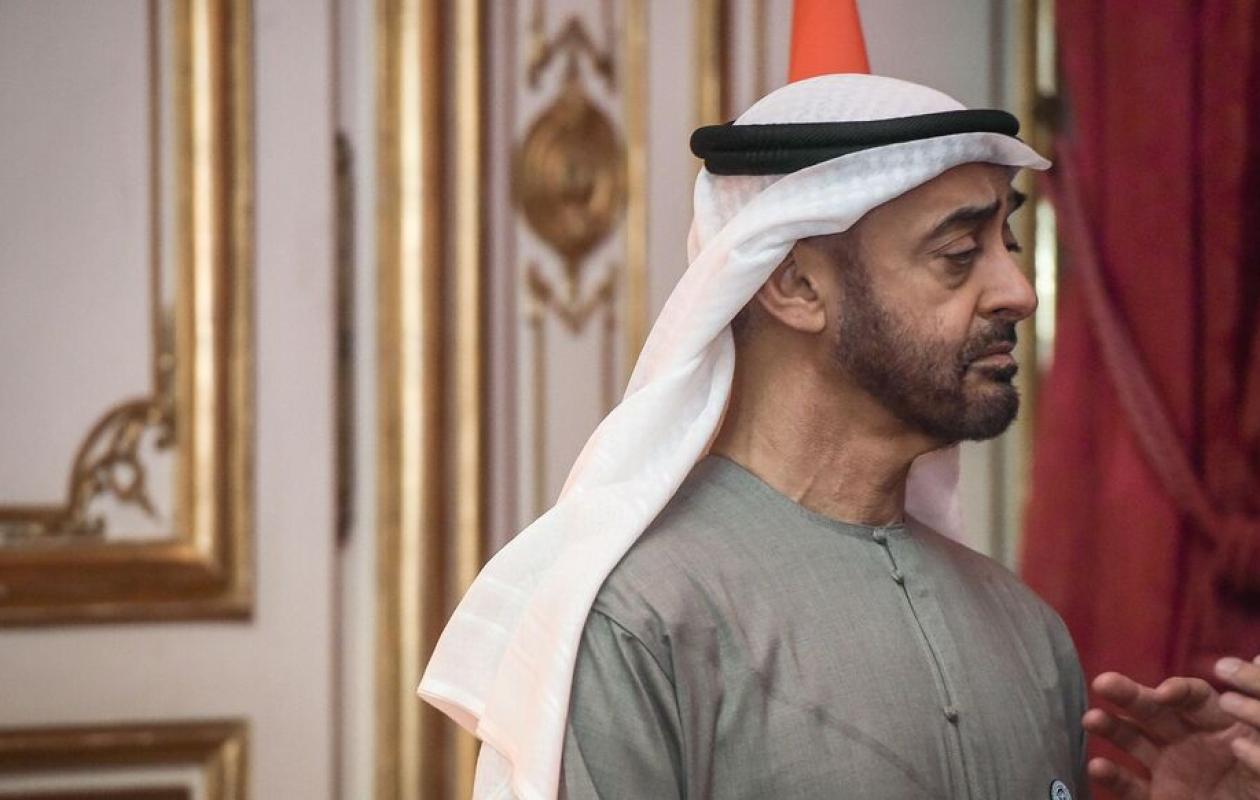
Frères musulmans : les Émirats restreignent l’accès de leurs étudiants aux universités britanniques par peur d’un endoctrinement
Abu Dhabi has drastically reduced scholarships for its students wishing to study in the United Kingdom. The reason: fears of Islamist radicalization on campuses, linked to the influence of the Muslim Brotherhood, which London refuses to ban.
The United Arab Emirates has taken a radical and surprising decision: to restrict its students' access to British universities. Abu Dhabi fears its citizens could be exposed to Islamist radicalization on UK campuses.
According to revelations published by the Financial Times and The Times on Thursday, January 8, the Emirati government has reduced federal funding for its citizens' enrollment in British universities. Emirati officials familiar with the matter confirmed to the British newspaper that these restrictions are motivated by "concerns about the influence of the Muslim Brotherhood," among other reasons.
The Emirati government does not impose a total ban: wealthier families can still send their children to study in the United Kingdom by paying the fees themselves. However, the generous scholarships granted to Emirati citizens—which cover tuition, travel, living expenses, and health insurance—are no longer available for British universities.
A dramatic drop in registrations
The impact of this measure is already being felt. In 2025, only 213 Emirati students obtained a visa for the United Kingdom, a decrease of 55% compared to 2022. Yet, at the end of 2024, there were still 8,500 of them on British campuses, a figure that had doubled since 2017.
The most popular institution was the University of Central Lancashire, followed by the University of Manchester, the University of Leeds, King's College London and University College London.
According to British intelligence services, radicalization is affecting a growing number of students: 70 were flagged for "Islamist radicalization" in 2023-2024, double the number from the previous year. Emirati officials quoted in the British press stated that they refuse "to allow their children to be radicalized on campuses."
At the heart of this diplomatic crisis between two historical allies lies the issue of the Muslim Brotherhood. Abu Dhabi has long campaigned for European countries to recognize the Brotherhood as a terrorist organization and ban it from their territories. The Emirates, in fact, banned the movement, founded in Egypt in 1928, following the Arab Spring of 2011, deeming it a threat to their autocratic system.
In the United Kingdom, they had notably conducted a lobbying campaign that prompted David Cameron's Conservative government to open an investigation into the group in 2014. The investigation concluded that the movement's beliefs were contrary to British values but did not find sufficient evidence to ban it. Faced with the Emirates' demands, London is invoking academic freedom.
A Middle East expert quoted by the Times, however, downplays the threat. "They are obsessed with the Muslim Brotherhood; they are their scapegoat," he asserts. "I don't believe our universities are infested with the Muslim Brotherhood; it's primarily a question of positioning."
According to this source, it was "a warning shot to students to behave themselves," cautioning them "not to join the Muslim Brotherhood if they are in the United Kingdom."
"Completely crazy"
The Emirati decision sparked reactions as far away as the United States. "Completely insane," exclaimed US Vice President JD Vance on the social network X. "Some of our best Muslim allies in the Gulf believe that Islamist indoctrination in parts of the West is too dangerous."
In France, the president of the National Rally, Jordan Bardella, reacted: "A state whose official religion is Islam is worried about the Islamist fundamentalism that is rampant in a European country: this reversal speaks volumes about our blindness and our weakness in the face of this obscurantism that is taking hold in our country."
This case comes as France is also taking a tougher stance against the Muslim Brotherhood. On Wednesday, January 7, members of the European Affairs Committee adopted a proposed resolution to add the movement to the European Union's list of terrorist organizations.
Last May, a report submitted to Interior Minister Bruno Retailleau described the Muslim Brotherhood as a "threat to national cohesion," specifically pointing to their influence in certain schools. Emmanuel Macron then asked the government to submit "proposals" in light of the "seriousness of the situation."
In Europe, only Austria has placed the Brotherhood on its blacklist. The Muslim Brotherhood is also banned in Russia, Syria, Egypt, Saudi Arabia, Bahrain, and Jordan.












Commentaires (7)
C'est quoi un musulman radicalise Celui qui suit Les enseignement du Coran et de la sunna a la lettre moi j envie ces personnes
La plupart Des etudiant souadiens qui vivent aux etats unis ne font que frequentr Les boites de Nuit .
Le Prophete Mouhamed PSL a travaille dur pour vous sortir de l ignorance cette nouvelle generation veulent retourner Dans la mecreance au profit Des occidentaux
Guess what la punition d Allah swt ne VA pas trader a venir .
TAWHEED IS THE ONLY KEY TO SUCCESS
Participer à la Discussion
Règles de la communauté :
💡 Astuce : Utilisez des emojis depuis votre téléphone ou le module emoji ci-dessous. Cliquez sur GIF pour ajouter un GIF animé. Collez un lien X/Twitter, TikTok ou Instagram pour l'afficher automatiquement.